
The Boeing-built core stage for NASA’s Space Launch System has moved into High Bay 3 at Kennedy Space Center for stacking and final processing. The core stage will power Artemis III, a mission that will test systems and docking capabilities in low Earth orbit to help prepare for an Artemis IV moon landing in 2028.
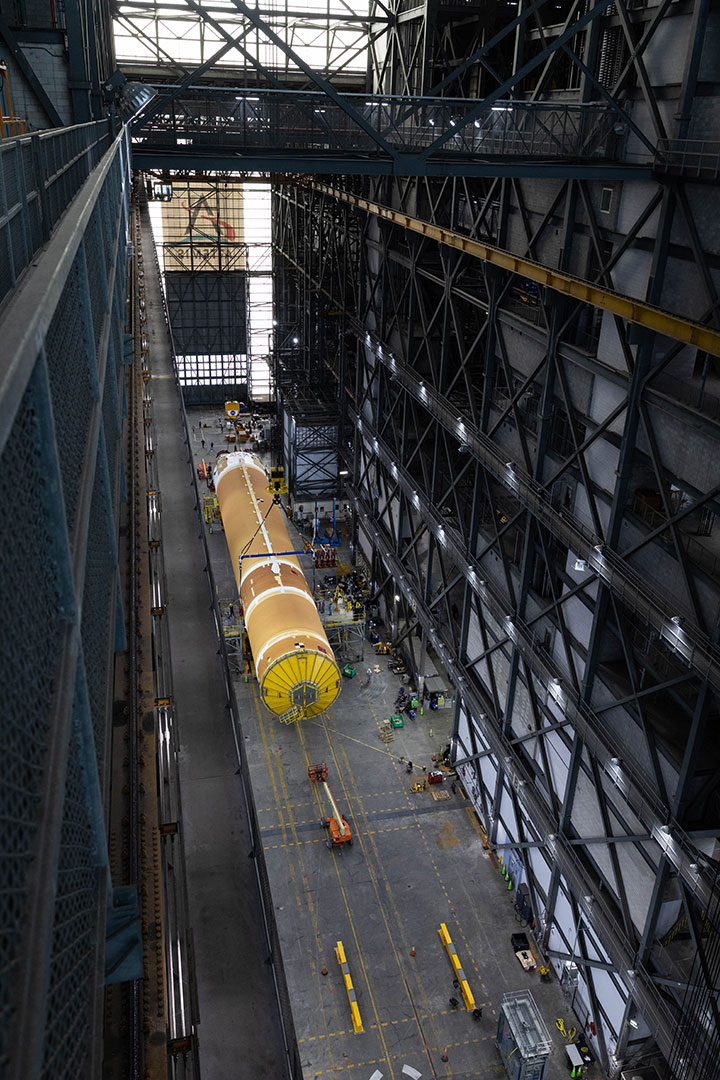
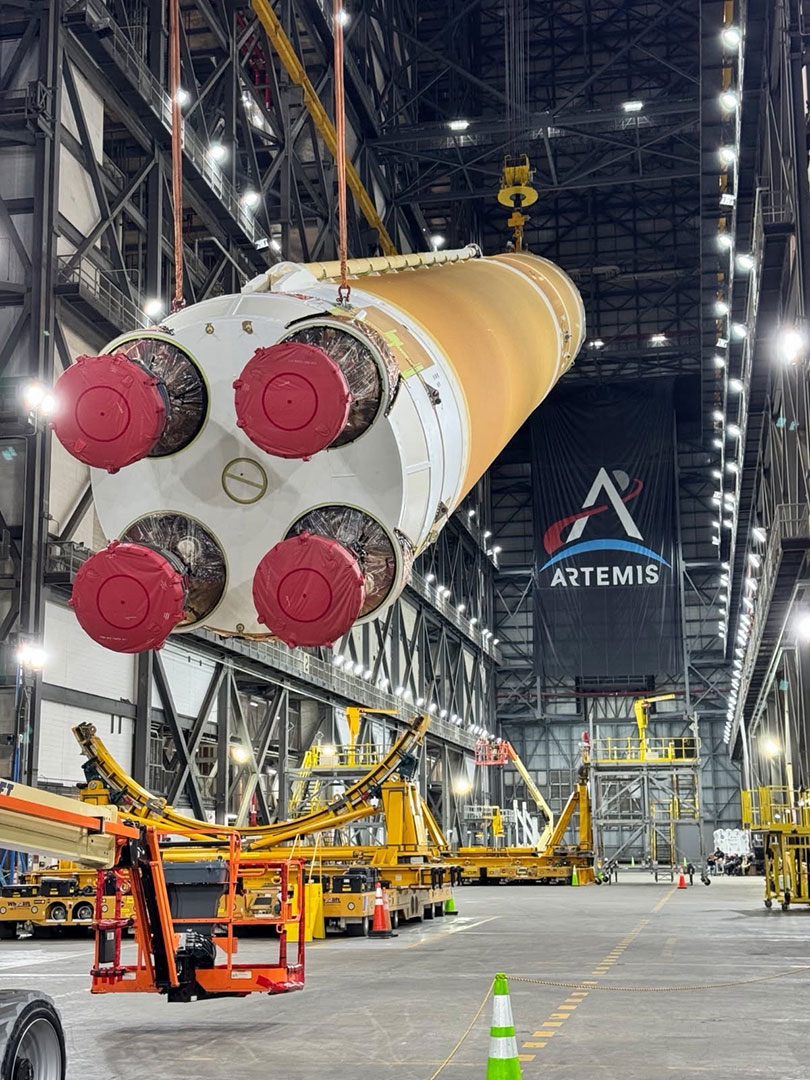
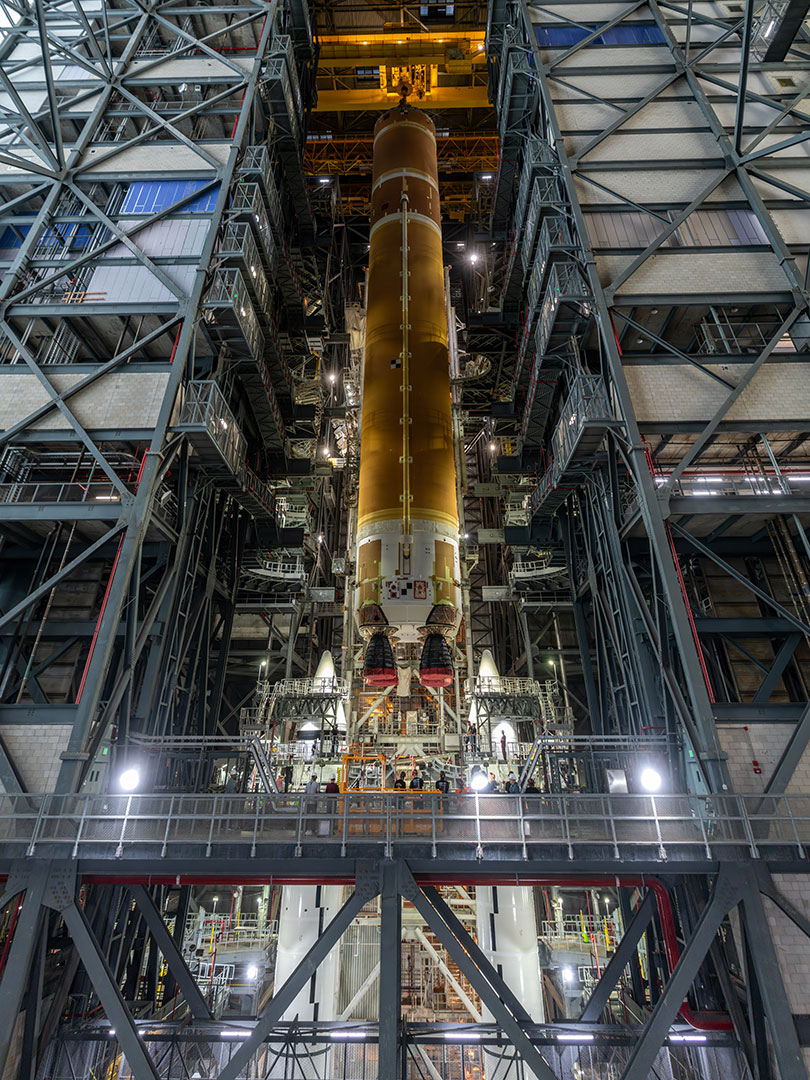
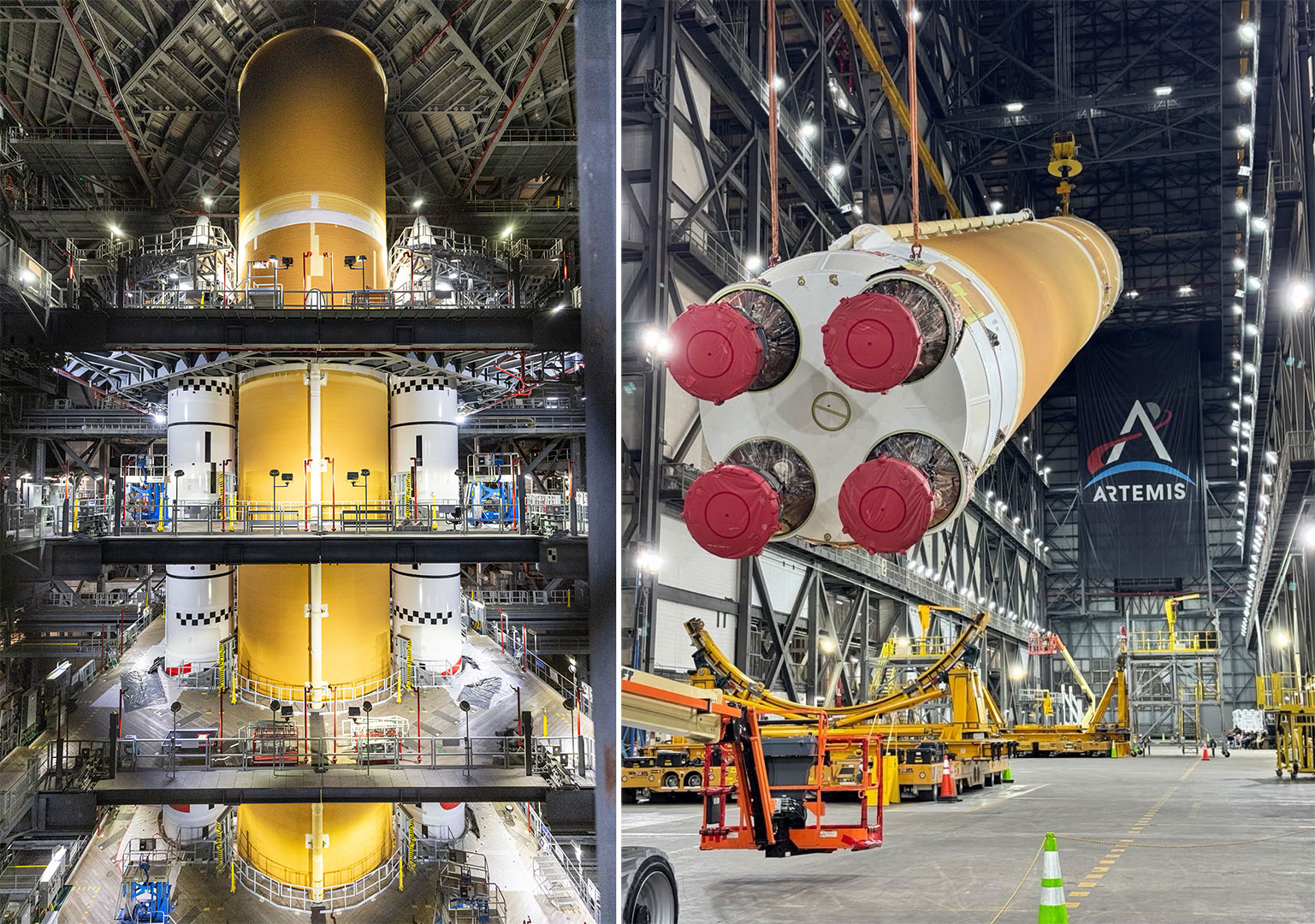 The core stage for the Artemis III mission's Space Launch System moon rocket was raised, moved across NASA's Vehicle Assembly Building and then lowered into position beside twin solid rocket boosters. (Photos NASA)
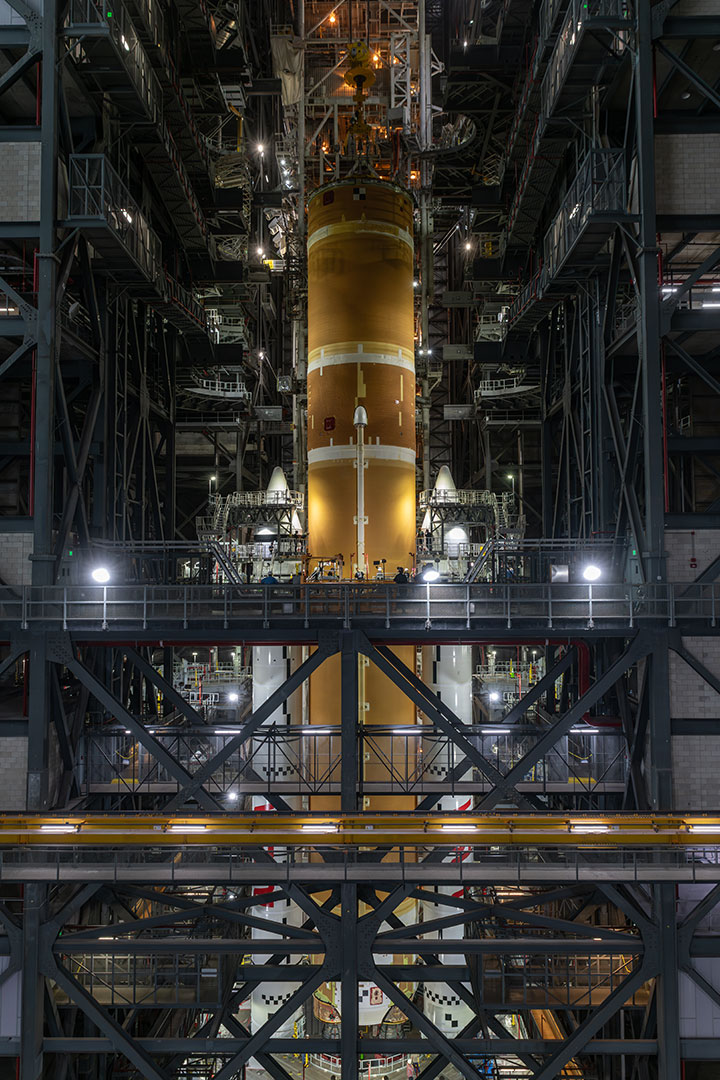
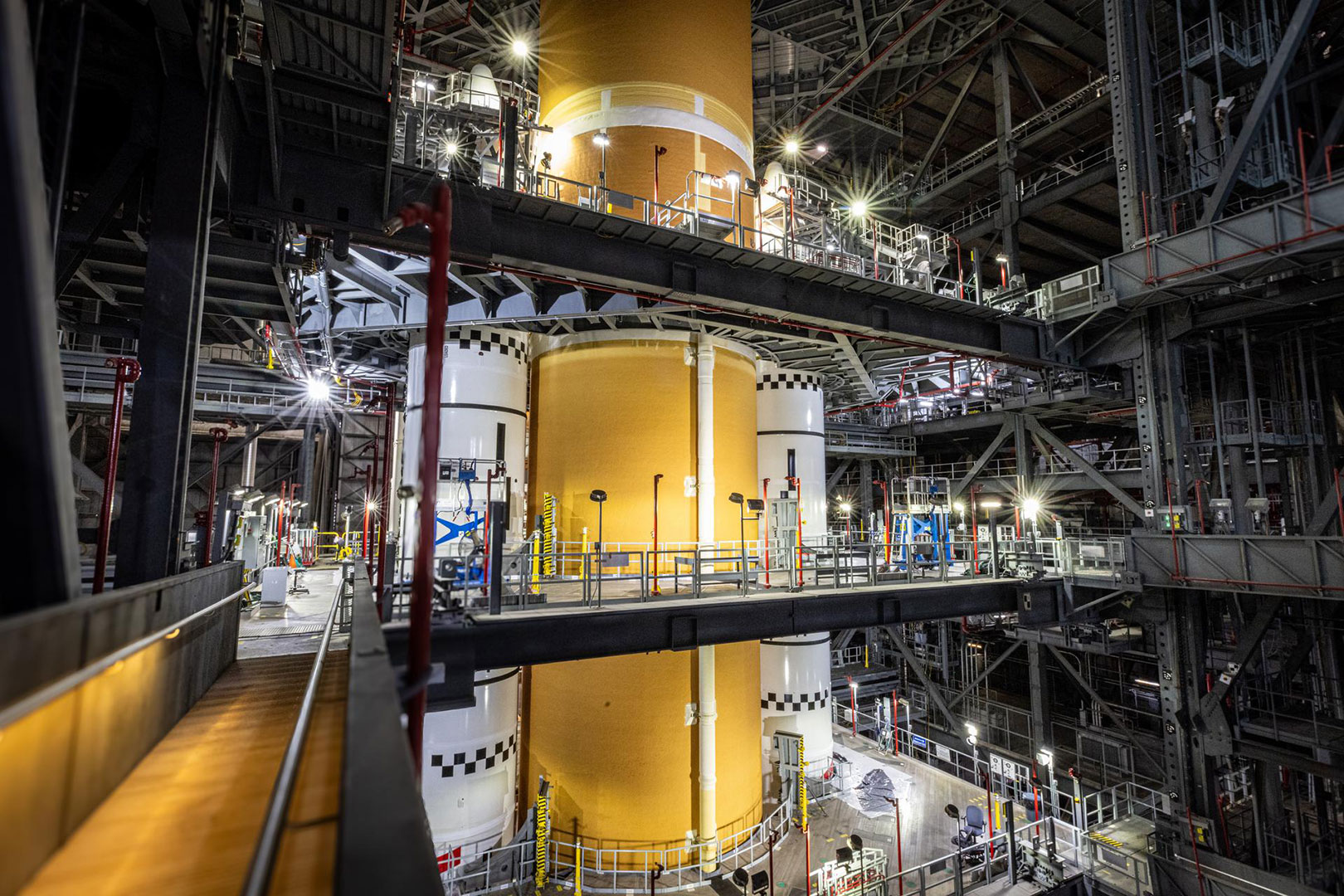 The core stage for the Artemis III mission's Space Launch System moon rocket is lowered into position beside twin solid rocket boosters inside NASA's Vehicle Assembly Building at Kennedy Space Center in Florida. (Photo NASA)
Why it matters: The move advances preparations for the third Artemis mission, which will test capabilities needed for a future moon landing.
How it happened: Teams moved the core stage from the Core Stage Vertical Integration Center (CSVIC) into High Bay 3.
- The core stage was raised 225 feet (69 meters) out of the integration center, rotated to a horizontal position and placed on a stand in the Vehicle Assembly Building transfer aisle for final checkouts.
- Teams then lifted it back to a vertical position in High Bay 3, where it is being stacked on the mobile launcher platform.
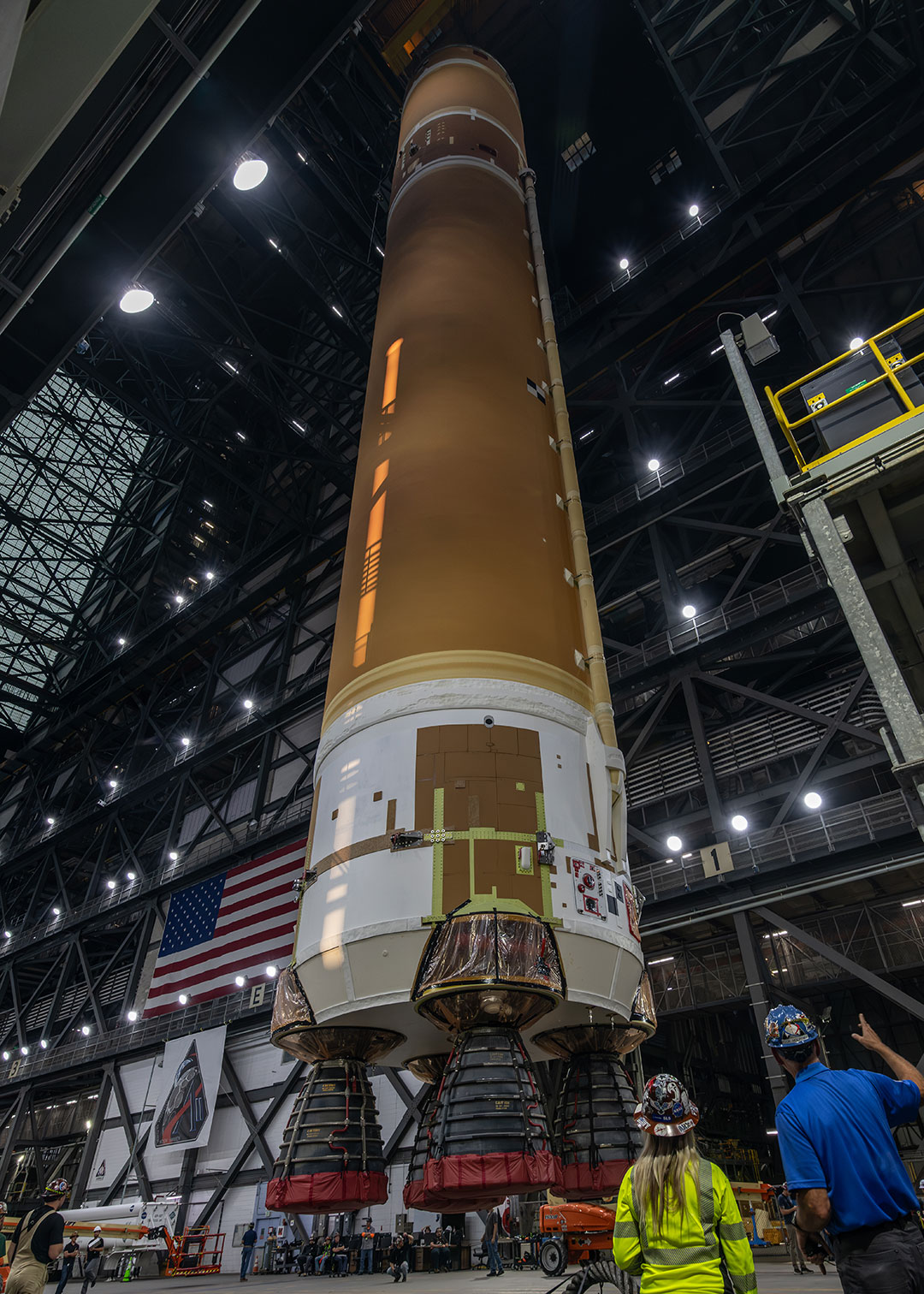
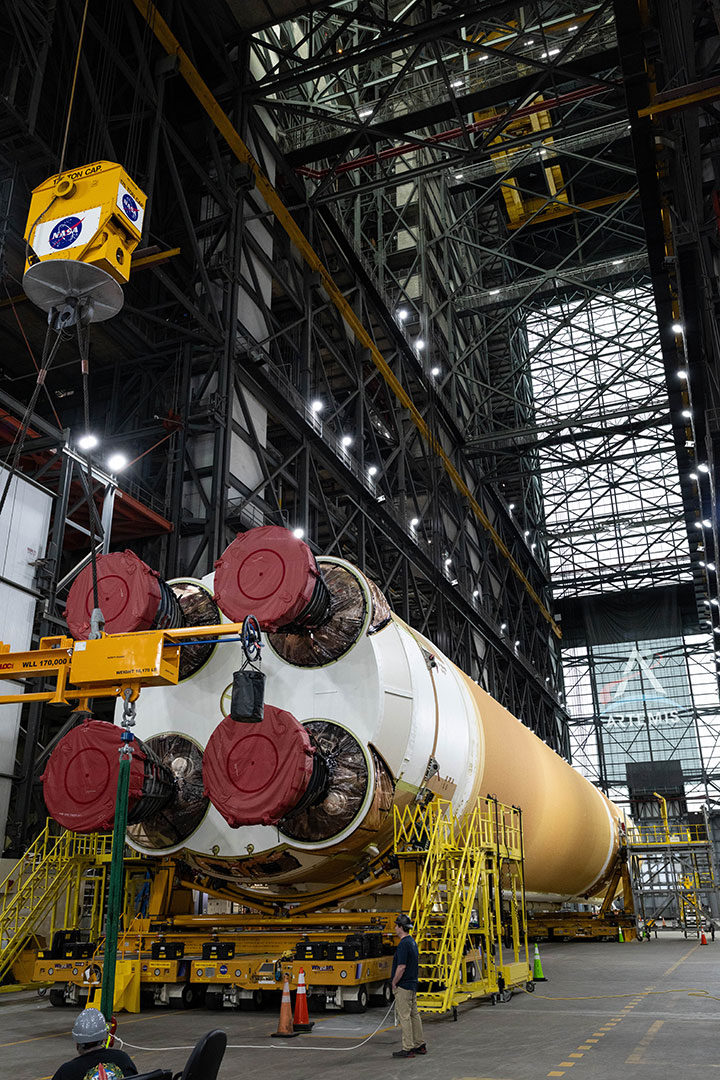
A faster build approach: Activating the integration center allowed Boeing to streamline the SLS core stage assembly.
- The engine section was installed vertically at Kennedy Space Center in Florida, rather than horizontally at NASA’s Michoud Assembly Facility in Louisiana.
- This was the first core stage shipped from Michoud to Kennedy Space Center without its engine section, enabling vertical integration of the core stage at the center.
What’s next: The core stage will remain in High Bay 3 for stacking and final processing in preparation for a short-stack tanking test later this year and a 2027 launch.
By Casey Cappa