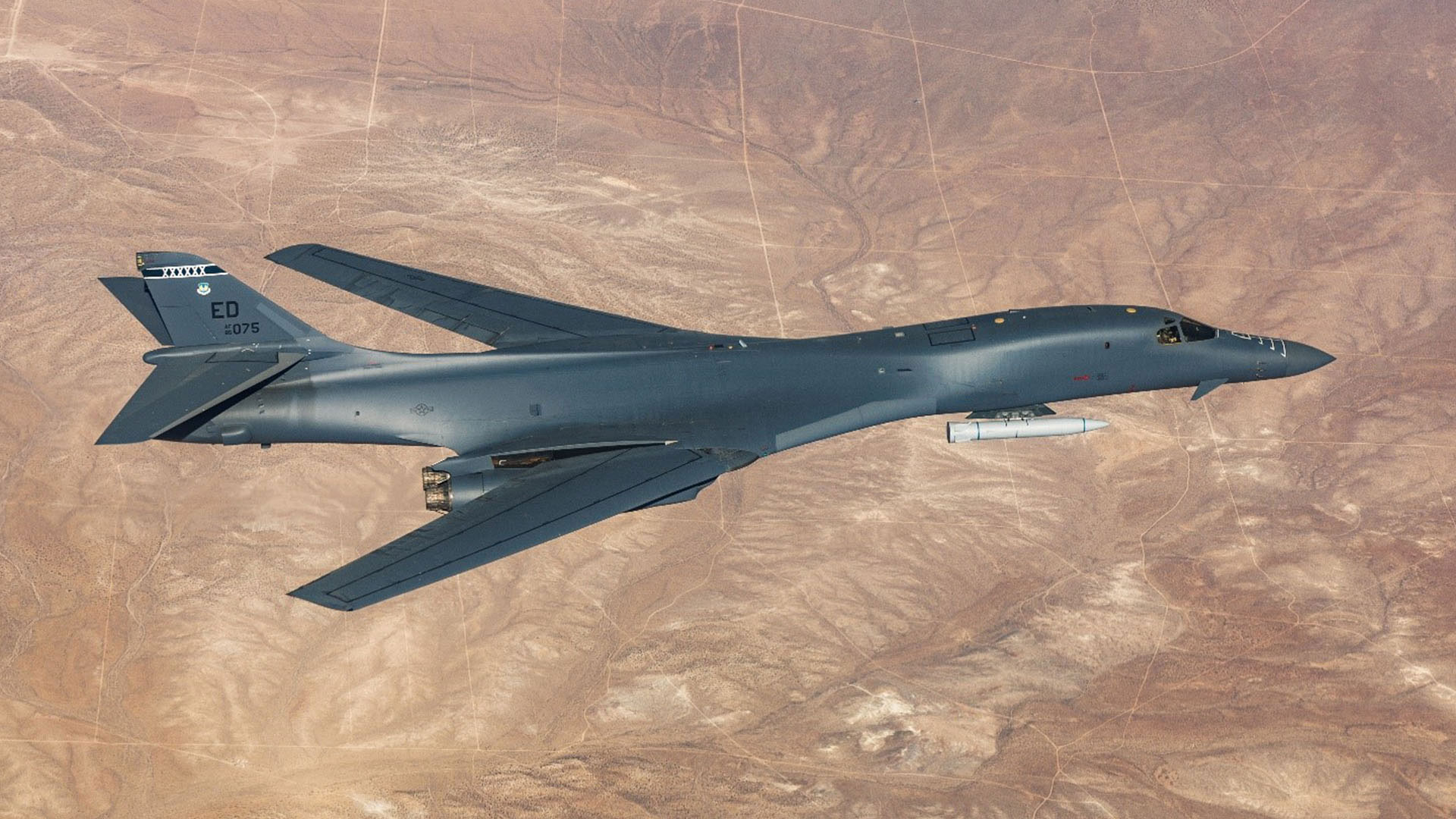
Driving the news: Critical design review is a key checkpoint in a complex engineering program. It shows that the system design is complete, technically sound and ready to support the work ahead.
- For the B-1 external carriage effort, the review means Boeing and the U.S. Air Force have agreed that the design can move forward into the phases needed to build and test the system. At the end of the review, the U.S. Air Force B-1 program office accepts the design and establishes the system product baseline, creating a formal reference point for future work.
“We are starting a new chapter in this journey,” Brannock said. “This is the moment when we shift from designing the solution to preparing to produce and test it.”
How it works: The LAM pylon is designed to mount on the B-1 using six existing hard points originally intended for the Air-Launched Cruise Missile. By repurposing those hard points, the pylon enables the bomber to carry external payloads, including future advanced munitions such as hypersonic weapons.
- That flexibility could help keep the B-1 relevant through 2040 and beyond as the U.S. Air Force modernizes its bomber fleet.
“The LAM pylon gives commanders more options,” said Dan Ruder, Bombers Advanced Programs manager. “It supports future advanced weapons and additional payload types, helping the aircraft adapt to changing mission needs.”
Doing cool things: The Oklahoma City B-1 team, led by engineer Tristin Lam, after whom the pylon is named, came up with the concept under Boeing’s independent research and development, allowing the company to own the intellectual property and start the program before it was even requested by the U.S. Air Force.
“This is what makes this company special,” Ruder said. “No matter who you are or where you work, you can create something innovative for the warfighter and something that helps create sustained work for Boeing and suppliers.”
By Peter Agnitsch