Operators say the 787 still feels like the future

The 787 Dreamliner continues to open routes, expand networks and show how much more it can do 15 years after entering service.

November 12, 2026 in 787 Dreamliner, Commercial

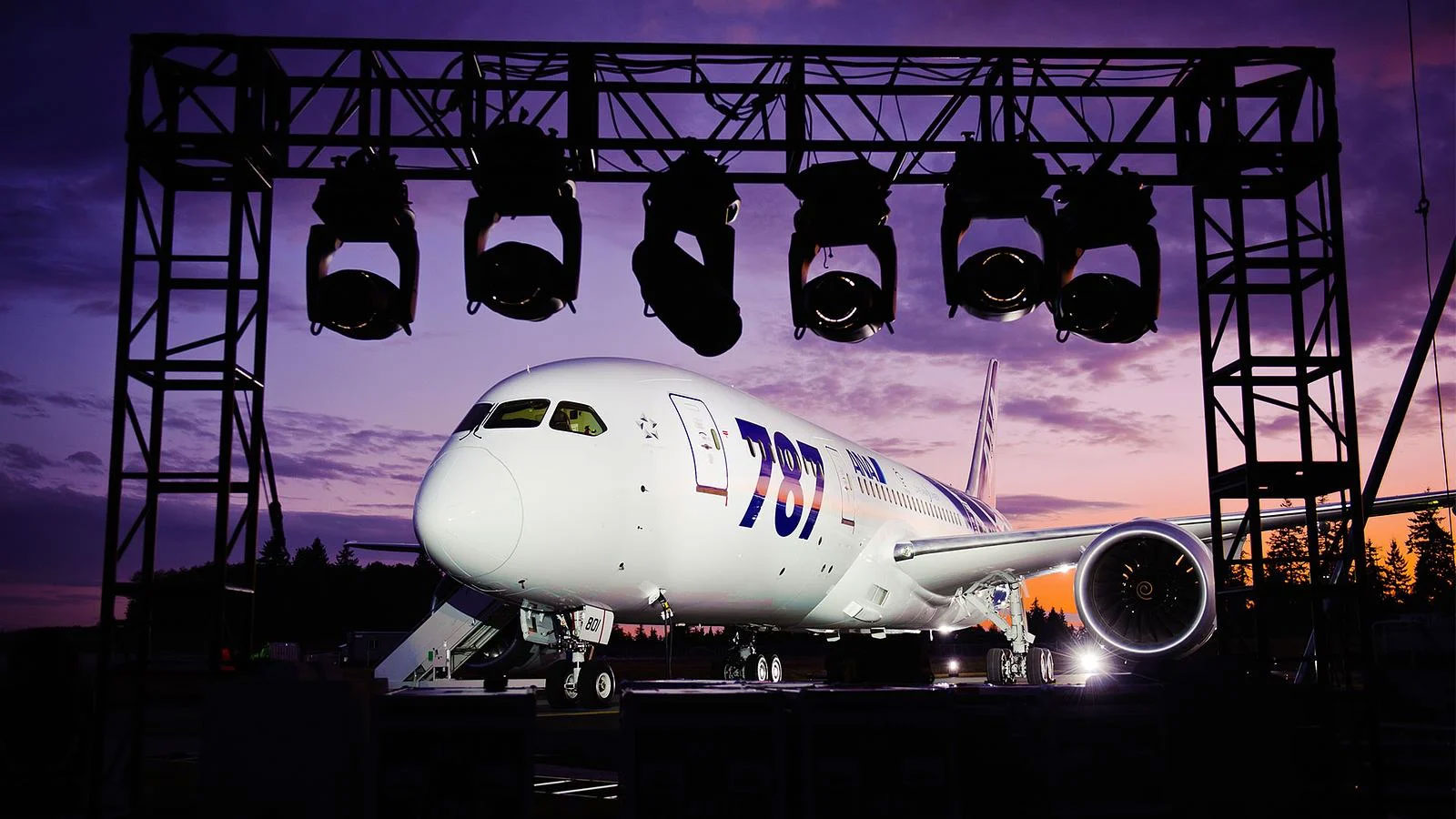
The first 787 Dreamliner staged at the Future of Flight in 2011 awaiting its delivery to launch customer ANA. The first 787 Dreamliner staged at the Future of Flight in 2011 awaiting its delivery to launch customer ANA.

Since entering service on Oct. 26, 2011, the 787 Dreamliner has carried more than 1.3 billion passengers and helped airlines connect cities and continents in new ways.  Yet talk to those who know the airplane best, and they’ll describe a jetliner that, in many ways, still feels new.

“The technology that was put into that airplane, in the design, was so advanced at the time that even now, 15 years later, you feel like you’re dealing with new technology,” said Jordan Becroft, senior fleet engineering manager for Jetstar Airways.

For operators, that technology has translated into greater versatility in how they plan and grow their networks.

Zoom into the 787 global fleet: The 787 Dreamliner is the world’s bestselling passenger widebody in history, with more than 2,450 orders from 91 customers – many of whom marked the airplane’s 15th anniversary at this year’s 787 Fleet Team Conference in Huntington Beach, Calif.

 The 787 has enabled airlines to open more than 550 new nonstop routes between city pairs that were never previously served. In total, the 787 global fleet connects more than 530 destinations around the globe, enabling some of the longest nonstop routes in commercial aviation, including London–Perth at 7,829 nautical miles, Dallas–Melbourne at 7,811 and Auckland–New York at 7,670.

  • In 2025, the 787 flew 28% of all long-haul routes (4000 nmi - 8000 nmi) for airlines around the world.
  • The 787 is also proving its value on high-frequency, high-demand routes across Asia and beyond.

Becroft said the 787 “has fundamentally changed what’s possible,” by enabling Jetstar to operate long-haul international routes as a low-cost carrier.

Voice of the 787’s first customer: All Nippon Airways made aviation history on Oct. 26, 2011, when it began 787 service with a specially chartered flight from Narita Airport, Tokyo, to Hong Kong.

“Initially, we expected revolutionary fuel savings and a superior passenger experience. But the 787 is so much more. It has completely reshaped ANA’s global network,” said Shinchiro Ohya, ANA’s director and 787 fleet chief. “Its range and efficiency are used to open brand new direct routes to midsize markets that simply weren’t profitable before. The 787 truly changed the game for ANA.”

But launching a new airplane came with some expected growing pains and learning opportunities for both ANA and Boeing.

“Operating the 787 first and longest means we were the very first to encounter the brand new technological challenges,” Ohya described. “With the 787, there was no prior history. So, our engineering record was the only outlet to find answers. This experience taught us the critical value of our own data and accelerated our shift toward real-time monitoring by using Boeing’s Airplane Health Management and Monitoring system (AHM).”

  • Today, ANA operates one of the largest 787 fleets in the world, with 92 airplanes in service, making up a large share of the carrier’s operations.
  • ANA JA817, the 59th 787 ever assembled, leads the 787 fleet worldwide with roughly 20,600 flight cycles (one takeoff and the following landing) as of October 2026.

“The 787 makes up 40% of ANA’s entire fleet. So, it is not just part of our network — it is absolutely our backbone,” Ohya said.

He emphasized the importance of the relationship between Boeing and ANA.

“Our relationship has evolved into a true partnership, built on transparency and shared problem-solving,” Ohya said. “Together, we have shown how an airline and an OEM can collaborate to overcome technical challenges and improve fleet reliability.”

ANA was recognized at the 787 Fleet Team Conference in 2026 for its role as the 787 launch customer, helping bring the airplane into service and working closely with Boeing as the fleet developed. ANA was recognized at the 787 Fleet Team Conference in 2026 for its role as the 787 launch customer, helping bring the airplane into service and working closely with Boeing as the fleet developed.

15 years and beyond: As the 787 fleet has matured, Boeing program leaders say the airplane’s value has shifted to proving how much more it can do.

“When we designed this airplane, we set it up for multiple generations of service. There’s so much capability yet to unlock,” said John Sims, Boeing’s 787 fleet chief.

Over the last decade and a half, customer needs have evolved along with the global market. Sims said the 787 continues to deliver on its promise of fuel efficiency at a time when fuel prices remain a major concern, while also helping operators open new routes and expand their capabilities.

“Our customers have always had a big voice in what we do here,” said John Murphy, the 787 chief project engineer. “That was true from the beginning with ANA, and it’s still true today — but now we have more than 90 customers on this airplane, from operators with just a few airplanes to airlines like United and ANA with more than 90. Their perspectives are very diverse, and our job is to listen and sort out what we can do to help the greatest good for all of them.” 

Boeing leaders and customer representatives with Jetstar and ANA share their perspectives on the opportunities still ahead for the 787 Dreamliner fleet.

In many ways, program leaders say the 787 jets being delivered today are different than those that launched the program, building on lessons learned from the fleet and continuous improvement.

  • Since 2011, Boeing has completed more than 500 projects to improve airplane reliability. Additional enhancements have included performance improvements, such as this year’s largest-ever increase in maximum takeoff weight, as well as ongoing cabin updates that have helped make the airplane a flagship for many carriers. Boeing has also continued to advance the industry’s most sophisticated cockpit.

That evolution is part of what program leaders say makes the 787’s 15-year milestone so significant.

“It’s remarkable to me what we’ve done in 15 years. None of us could have imagined the success the airplane has had, the way it’s changed aviation and the way people fly and how they feel when they fly,” Murphy said.

By Kaitlin Stansell