Boeing has repeatedly demonstrated its commitment to the health of the Lower Duwamish Waterway and surrounding communities over the last two decades by making significant investments in sediment cleanups that, when combined with the other “early action” work in the waterway, reduced polychlorinated biphenyl (PCB) risks in the sediment by 50 percent. Boeing’s early action and habitat restoration work spans nearly one mile of the Lower Duwamish Waterway to the north and south of the South Park Bridge.
Boeing transformed more than a half mile of industrial waterfront back into natural shoreline. This shoreline is in the footprint of the original Plant 2 facility, where B-17 bombers were assembled during World War II. The facility, which spanned over the water on more than 700 pilings, was demolished in 2011 and 85-percent of the demolition materials were recycled or reused.
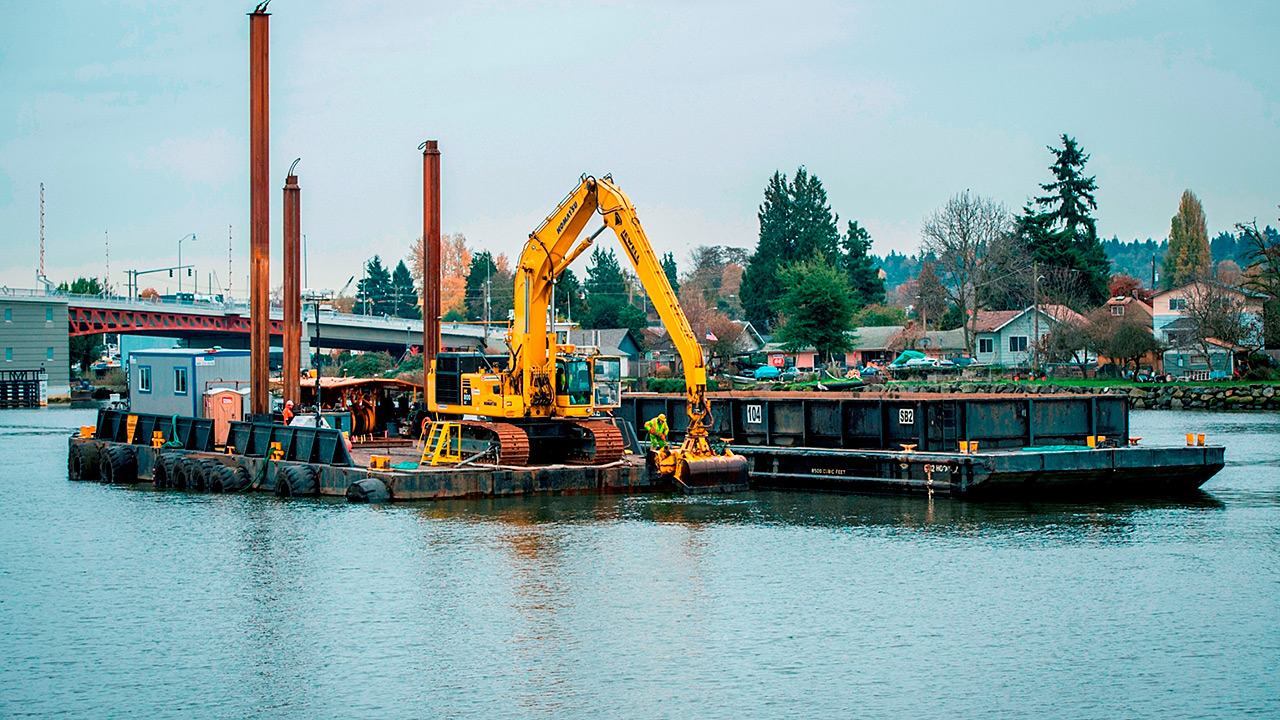
In 2013, Boeing began excavating sediment that contained polychlorinated biphenyls, or PCBs, and other chemicals from the waterway near Plant 2 using state-of-the-art cleanup technology. At the completion of dredging in March 2015, a total of 265,000 cubic yards of sediment and bank soil – enough to fill approximately 4,000 railcars – was removed and replaced with clean sand to restore the waterway.
This in-water work was conducted during “construction windows” when juvenile salmon are not migrating. Dredging was being done under the direction and oversight of the U.S. Environmental Protection Agency (EPA) and Washington State Department of Ecology.
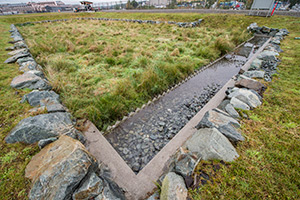
Boeing also constructed multiple state-of-the-art stormwater treatment systems at its sites near the waterway. These systems help improve the quality of water that enters the Duwamish.