Join us
Join the Artemis Generation on humanity’s return to deep space — this time to stay. Sign up to receive the latest updates.

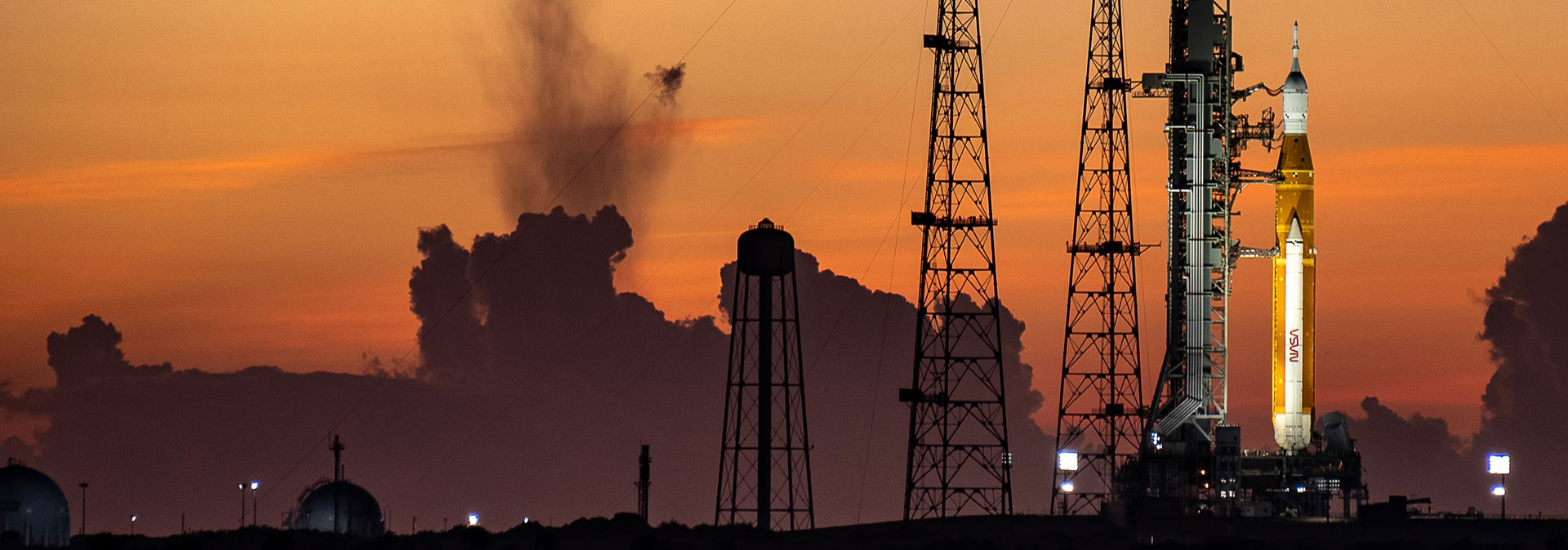
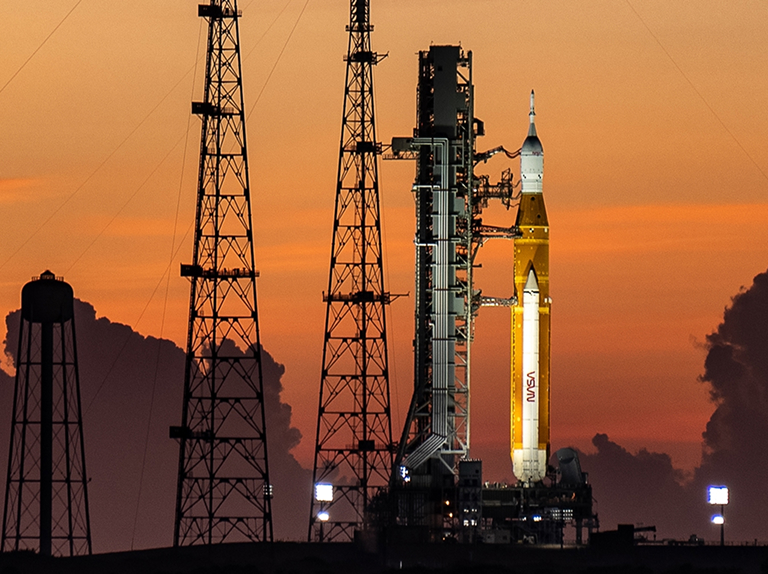
Boeing people and products have powered giant leaps in human space exploration for over six decades. Now, with NASA’s Artemis campaign, the Space Launch System (SLS) rocket — powered by a Boeing-built core stage — will help return humanity to the moon and enable sustainable exploration of its surface like never before.
NASA’s SLS is the only proven deep-space optimized, super-heavy lift rocket designed to carry astronauts and cargo to the moon in a single launch. Initially capable of sending 59,500 pounds (27 metric tons), the SLS rocket will evolve to the Block 1B configuration with the more-powerful Exploration Upper Stage, allowing it to send more than 83,000 pounds (38 metric tons) to destinations beyond the moon.
With greater payload volume and lifting power, SLS is set to take us farther — and faster — than we’ve ever gone before.
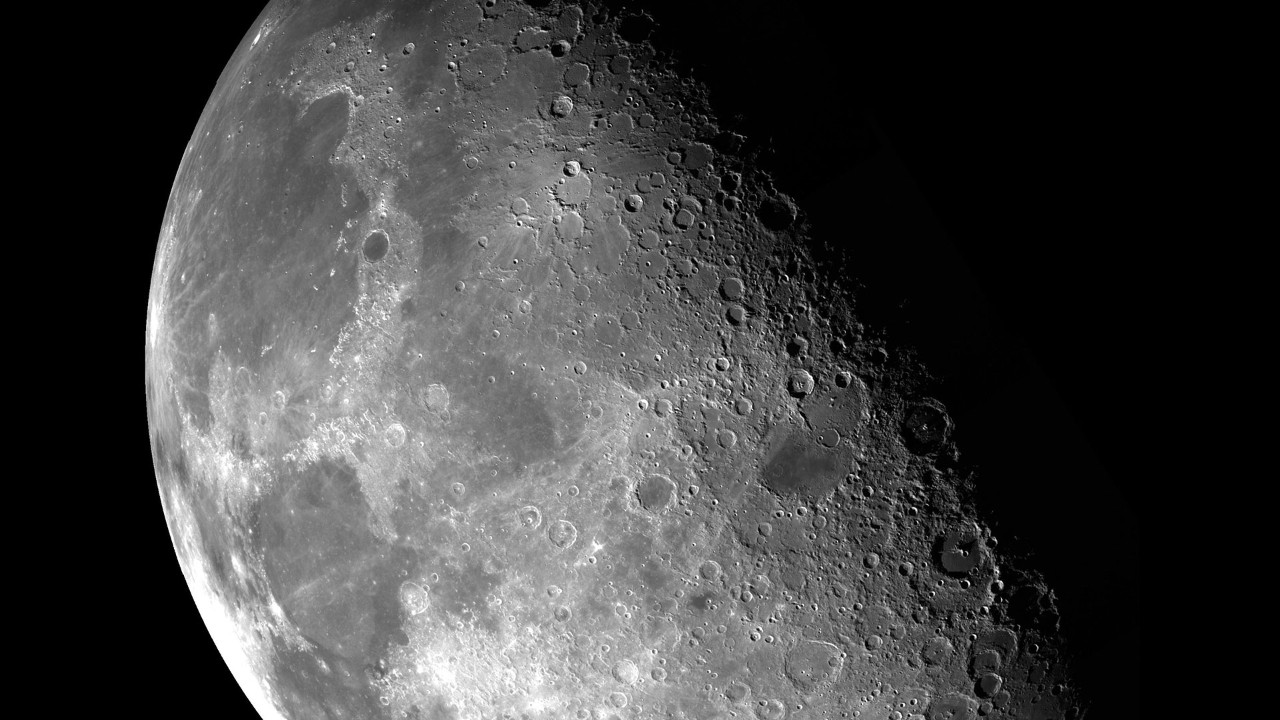
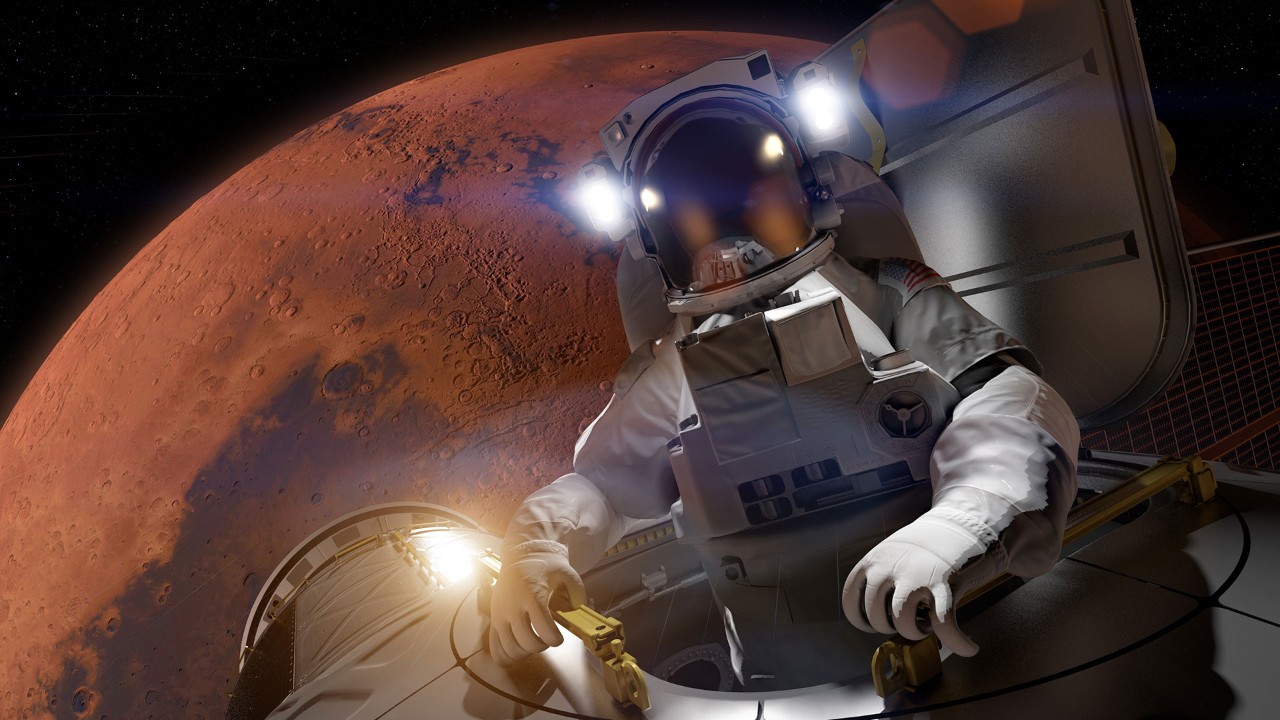
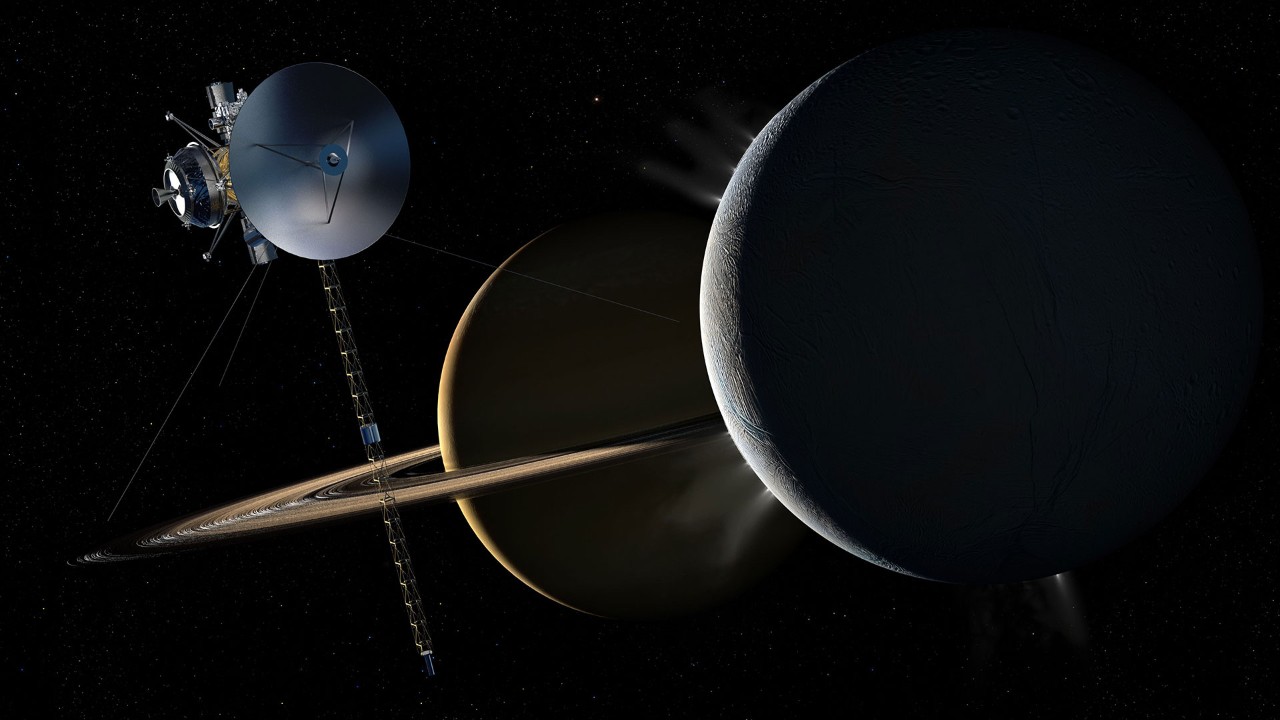
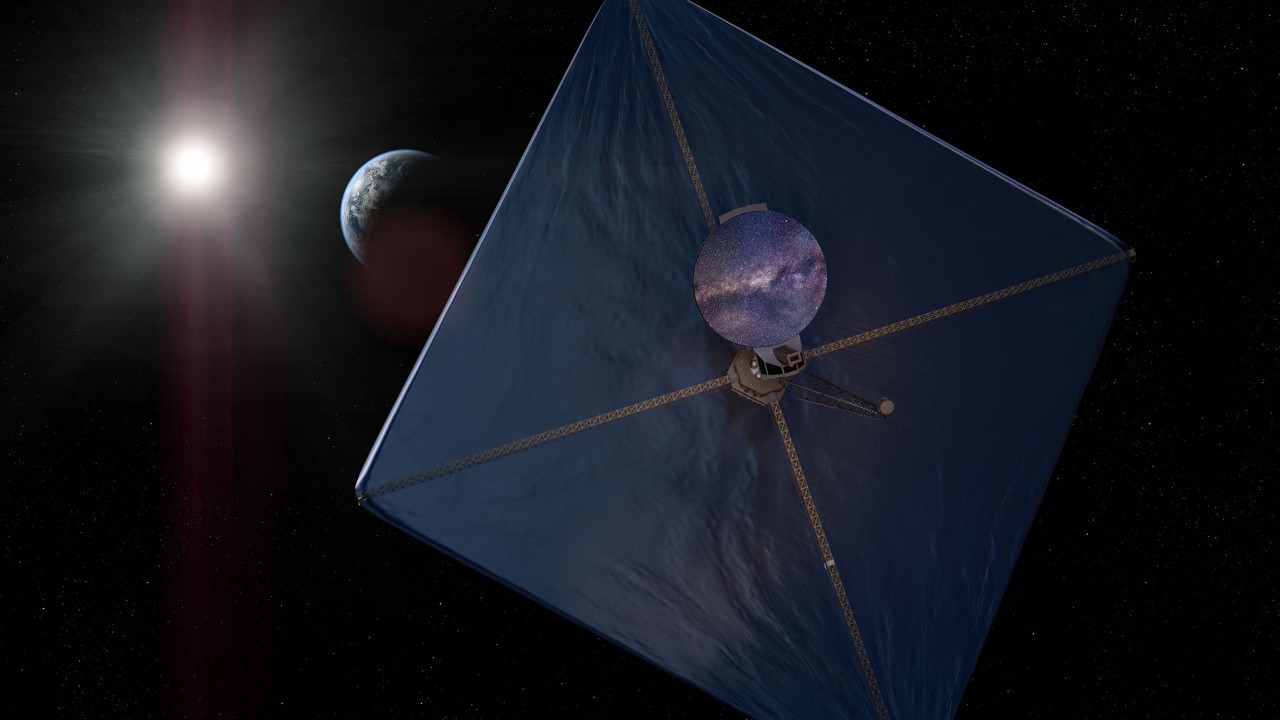
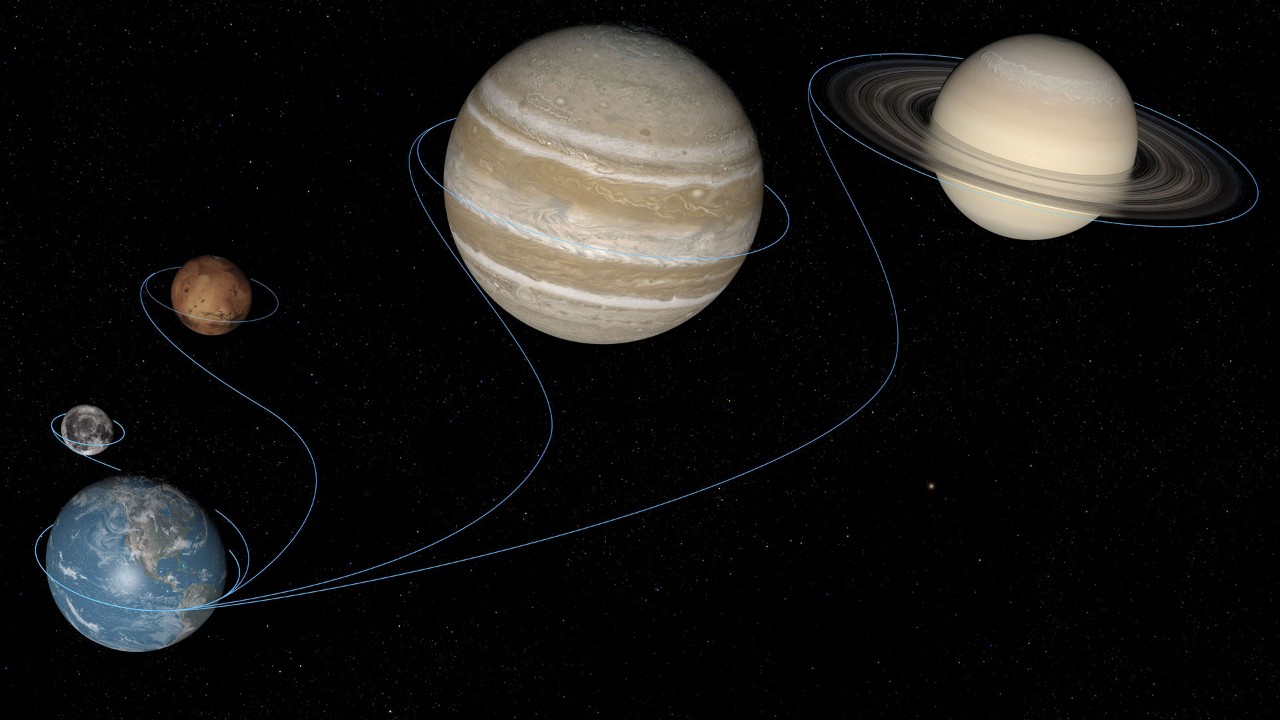
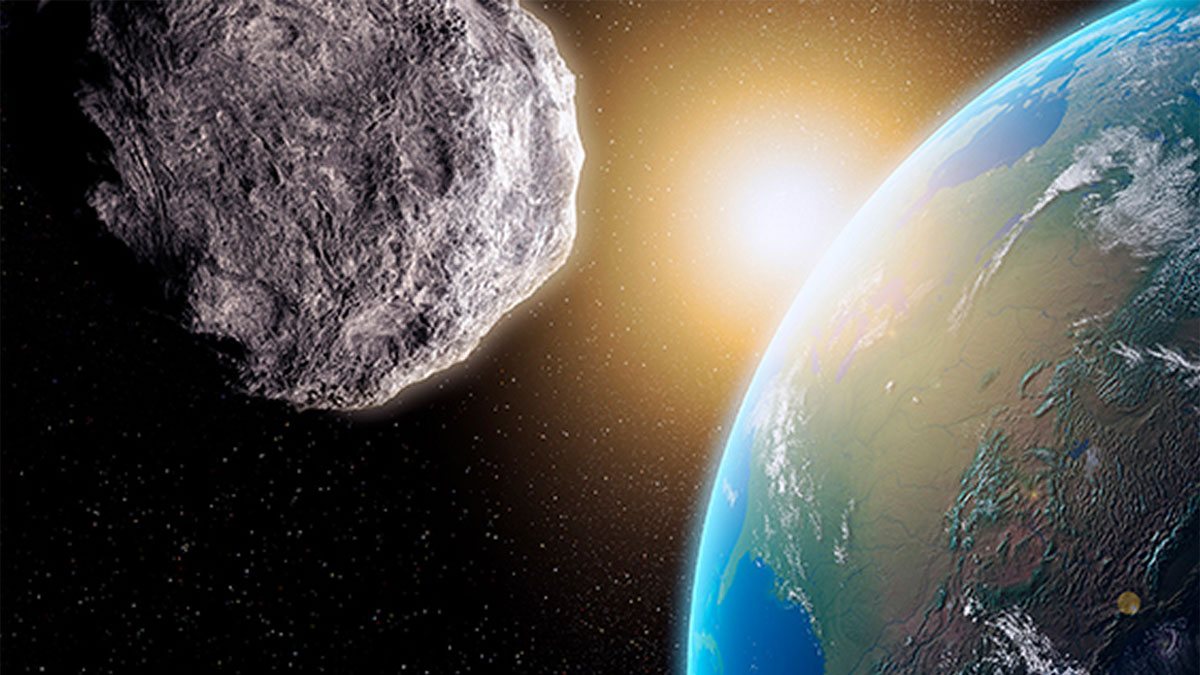
New explorers are going to the moon to make discoveries that will pave the way for future missions to Mars and beyond. NASA’s Artemis missions, named for Apollo’s twin sister, will demonstrate America’s commitment and capability to extend human existence to deep space, for the benefit of life on Earth.
Artemis II is the second deep space mission for the campaign and will return humans to lunar orbit for the first time in 50 years. During the Artemis II mission, NASA’s Space Launch System (SLS) rocket will propel the crewed Orion spacecraft out of Earth’s atmosphere to travel around the moon and back.
Launch speed
(24,500 mph or 39,430 kph)
Crew
Reid Wiseman, NASA commander
Victor Glover, NASA pilot
Christina Hammock Koch, NASA mission specialist 1
Jeremy Hansen, CSA mission specialist 2
Mission duration
July 2024
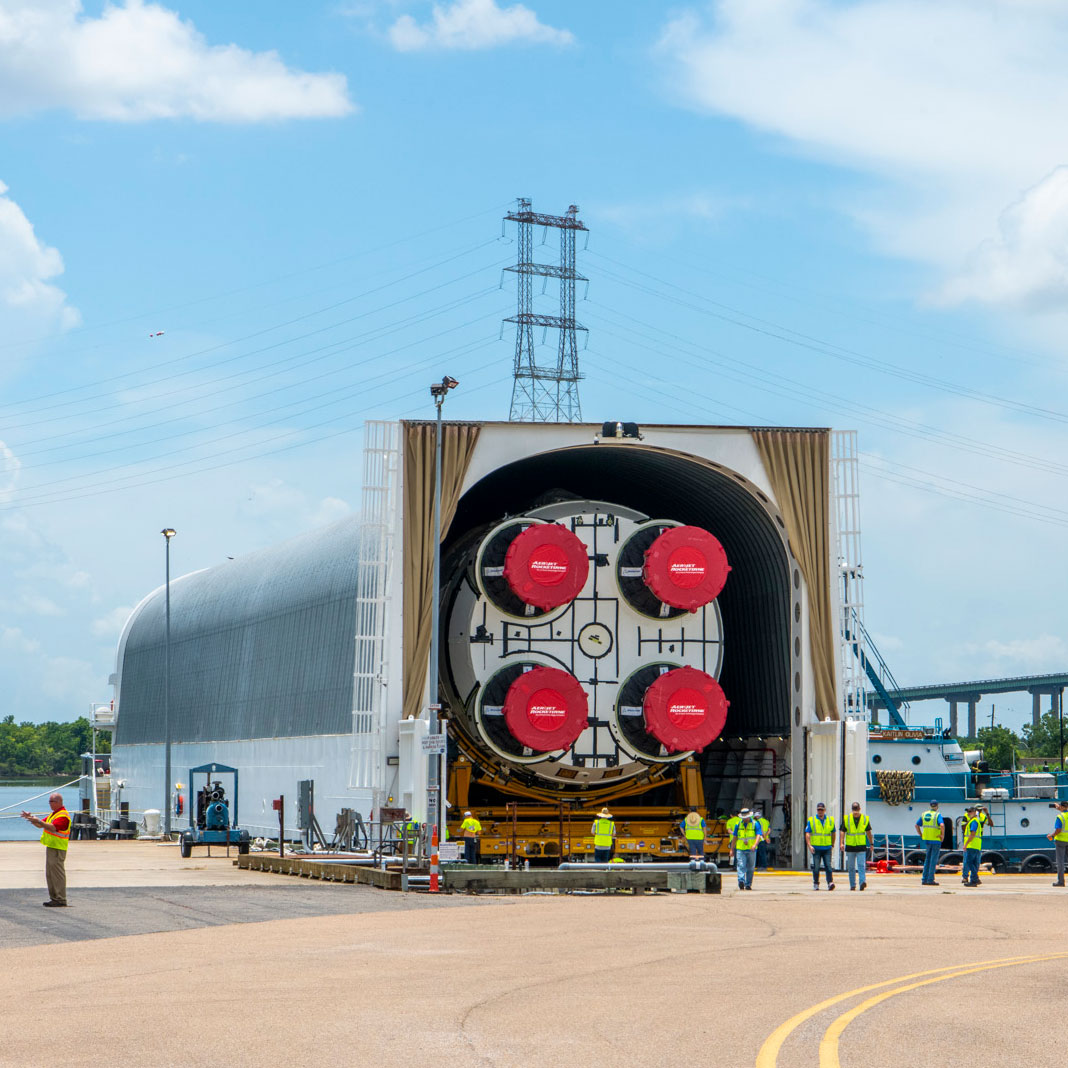
Boeing successfully rolled out the second Space Launch System (SLS) Core Stage 2 (CS2) to NASA on July 16, 2024, a major milestone in the agency’s Artemis campaign to return astronauts to the moon.
July 2024
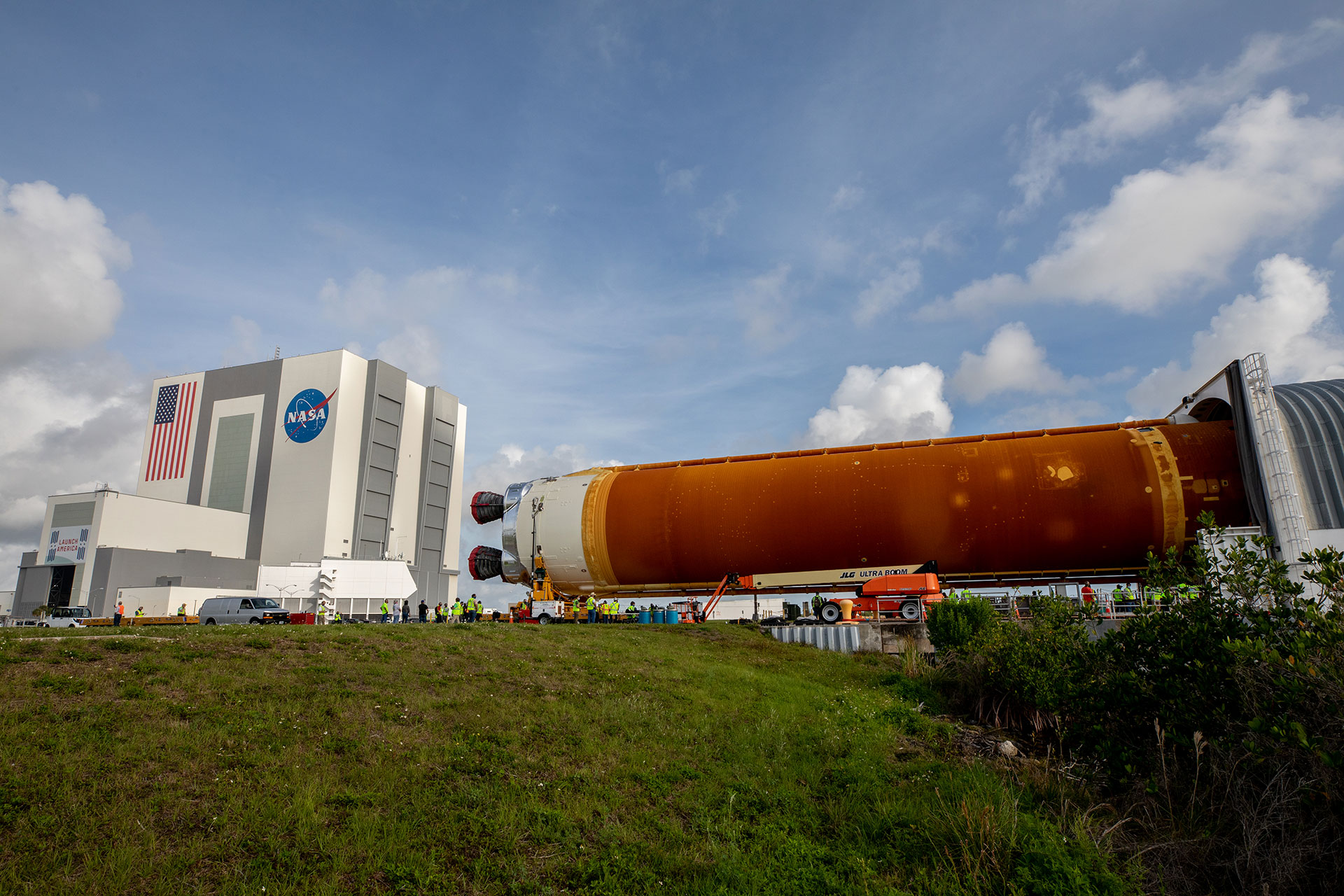
On July 23, CS2 was delivered to NASA’s Kennedy Space Center in Cape Canaveral. It was transported to the Vehicle Assembly Building on July 24 where it will be integrated with the upper stage, boosters and NASA’s Orion spacecraft.
October 2025
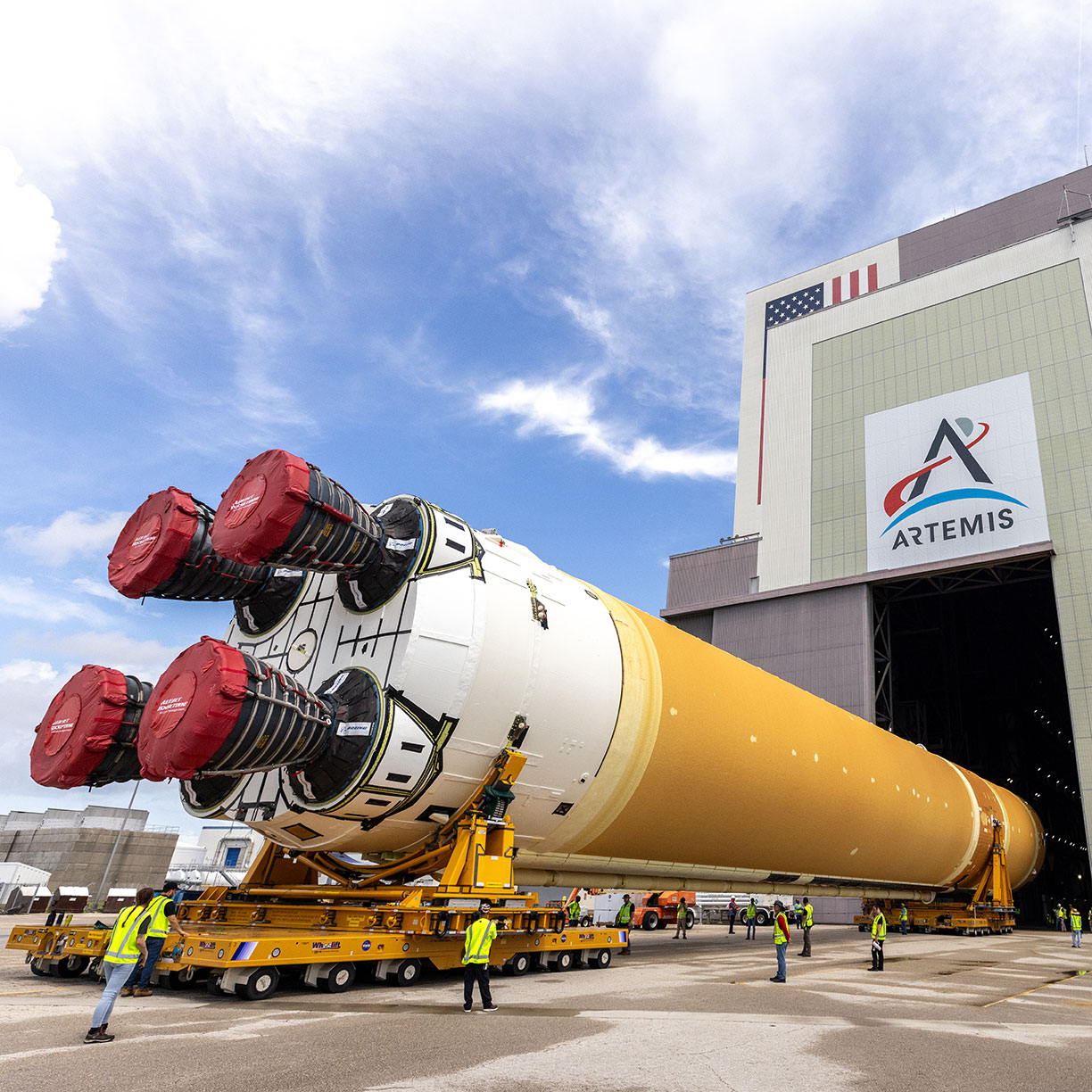
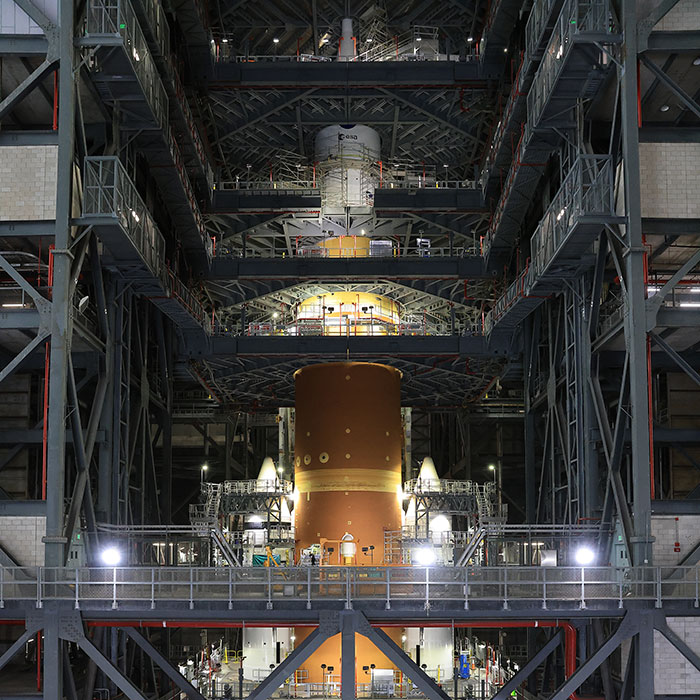
On October 20, all components of the Space Launch System (SLS) were assembled in the Vehicle Assembly Building through a series of lifts. These components included the solid rocket boosters, the core stage, the Launch Vehicle Stage Adapter, the Interim Cryogenic Propulsion Stage, the Orion Stage Adapter, the Orion spacecraft, and its Launch Abort System.
January 17, 2026
March 20, 2026
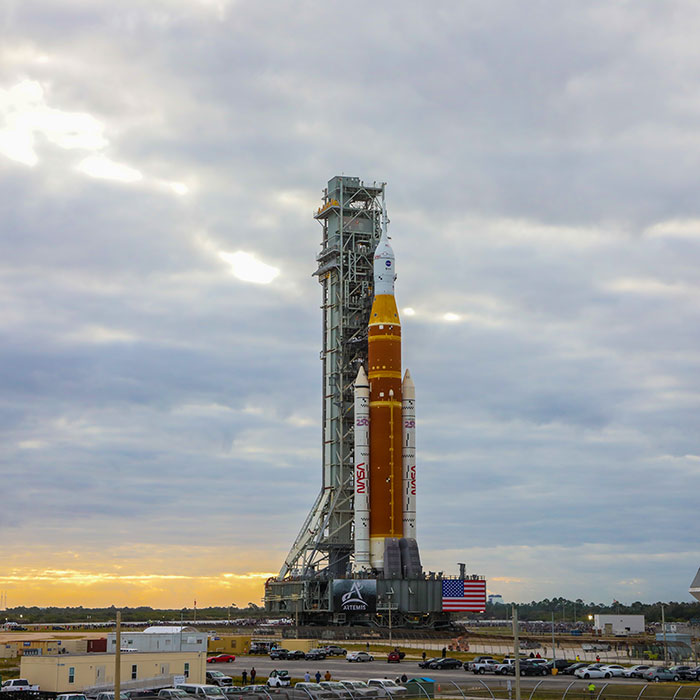
Boeing and other industry partners helped NASA carry out additional tests of the Artemis II system inside the Vehicle Assembly Building (VAB) and rehearse launch and mission procedures. During two rollouts, NASA moved the entire rocket through the VAB’s 456-foot (139-meter) doorway on a 6.6 million-pound (3 million-kilogram) crawler-transporter for a nearly 11-hour, 4-mile (6.4-kilometer) journey to Launch Pad 39B to complete its final prelaunch checks.
February 3, 2026
February 19, 2026
The SLS rocket conducted an initial wet dress rehearsal (WDR) on February 3, followed by a successful WDR on February 19. During these operations, teams loaded, managed, and drained cryogenic propellants in the rocket’s core and upper stages and practiced a launch countdown.
April 1, 2026
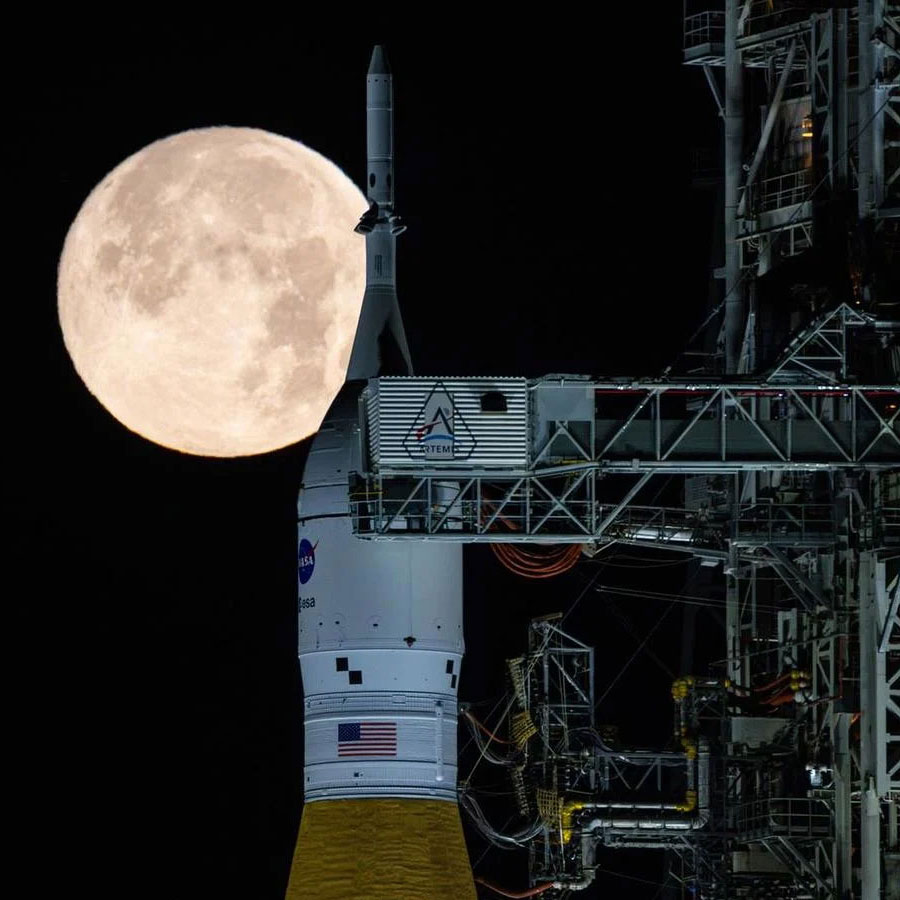
NASA’s Space Launch System rocket, powered by the Boeing-built core stage, lifted off at 6:35 p.m. Eastern time on April 1, from the Kennedy Space Center in Florida. Eight-and-a-half minutes into flight, the core stage completed its mission and separated from the upper stage of the rocket, sending NASA’s Orion spacecraft and NASA Astronauts Reid Wiseman, Victor Glover, Christina Koch and Canadian Space Agency Astronaut Jeremy Hansen on the first crewed mission around the moon in 50 years.
Artemis I marks the first deep-space mission to the moon since Apollo, ushering in a new era of scientific discovery, economic benefits and inspiration. During the Artemis I mission, NASA’s Space Launch System (SLS) rocket propels an uncrewed Orion spacecraft out of Earth’s atmosphere, allowing it to travel around the moon and back.
Launch speed
(24,500 mph or 39,380 kph)
Total distance traveled
(2.25 million kilometers)
Mission duration
Jan. 8, 2020
NASA declared the SLS core stage for Artemis I complete on Dec. 9, 2019, at the agency’s Michoud Assembly Facility. The New Orleans factory is where Boeing created a production system to build the SLS core and upper stages and avionics and to complete preliminary testing. After checkouts, employees escorted the first core stage to NASA’s Pegasus barge. It was the first time a completed rocket stage had shipped out of Michoud since the Apollo program.
Jan. 21-22, 2020
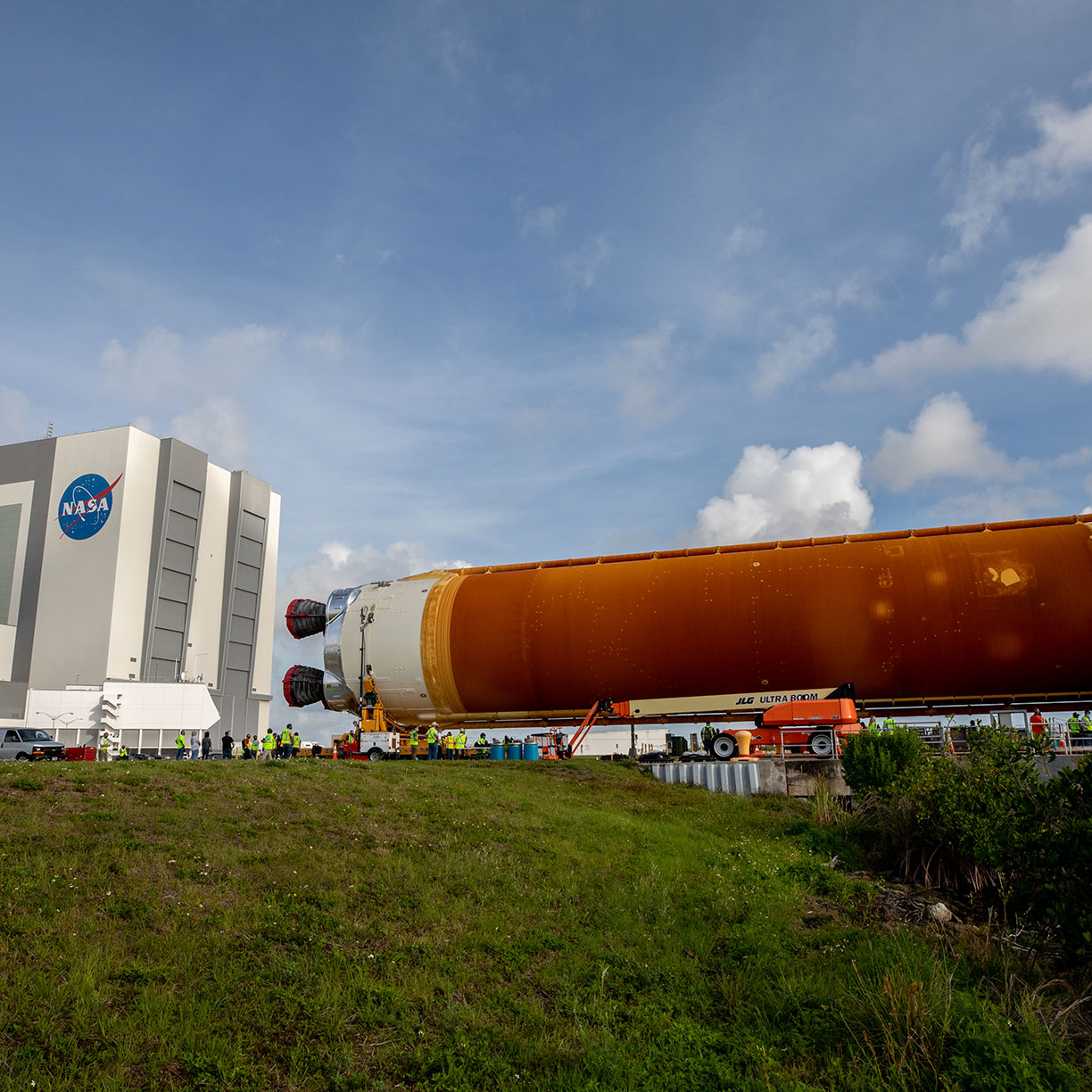
The Artemis I core stage traveled from NASA’s Michoud Assembly Facility in New Orleans to NASA’s Stennis Space Center in Bay St. Louis, Mississippi, for testing on the B-2 Test Stand used in the Apollo and shuttle eras. Boeing teams prepared the massive stand to receive the 212-foot (65-meter)-tall core stage, the largest NASA has ever built or tested. After days of careful handling, the core stage was safely lifted into the stand.
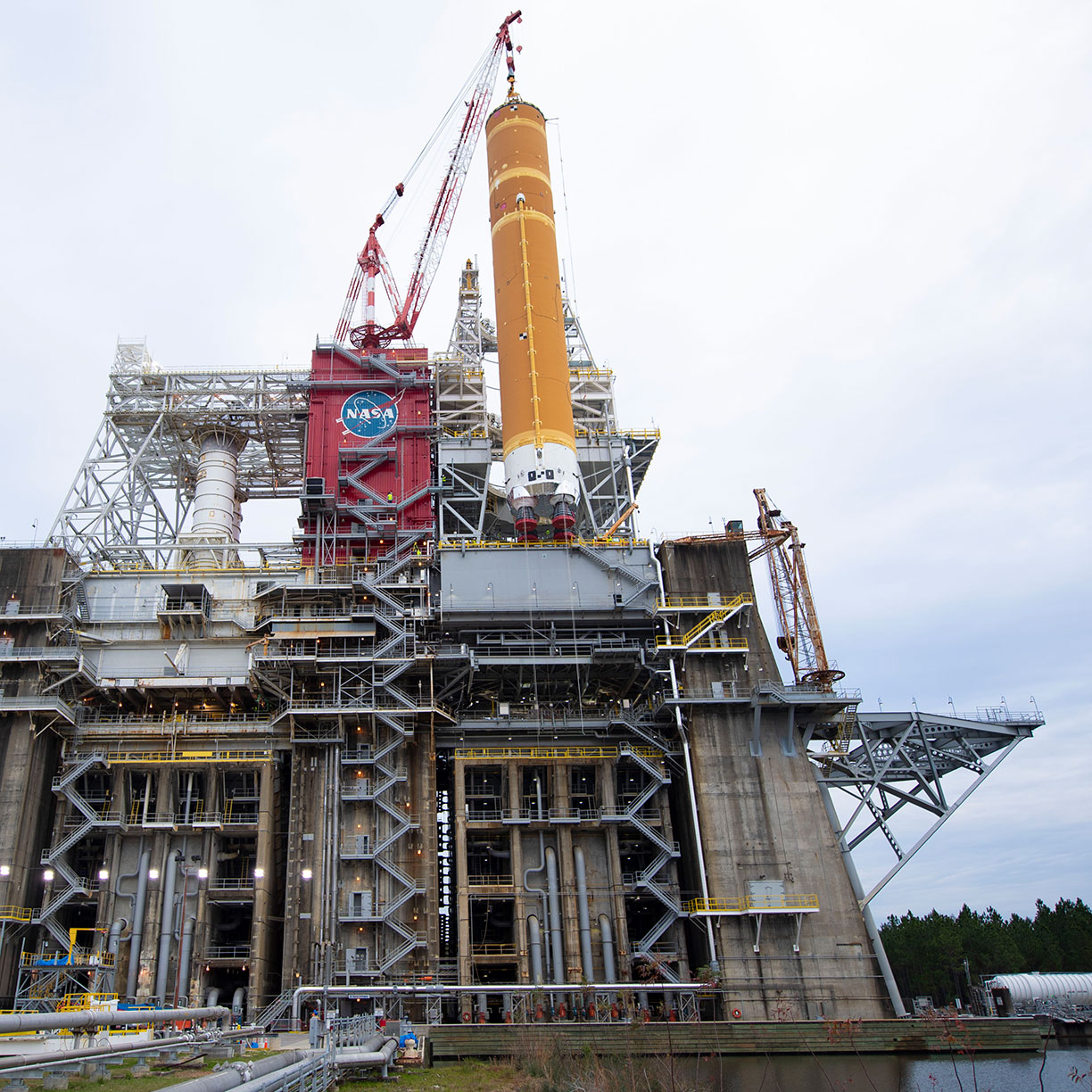
March 2021
The Green Run test series for the core stage took place over the next year. “Green” refers to the new hardware, and “run” refers to operating it all together. Engineers turned the components on one by one to assess the stage, then fully fueled it. Green Run culminated in an eight-minute firing of the four engines through a “launch” and “ascent” while the fully operational stage remained locked into the test stand.
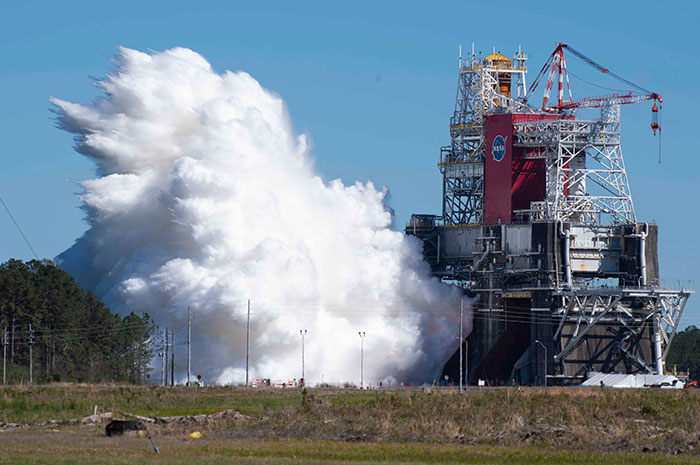
April 2021
Teams inspected and refurbished the core stage before removing it from the B-2 Test Stand at Stennis Space Center in Mississippi and preparing it for shipment to Kennedy Space Center in Florida. The stage traveled 900 miles (1,400 kilometers) on the NASA Pegasus barge, then was offloaded and rolled into the Vehicle Assembly Building. There, it was stacked on its mobile launcher between two solid rocket boosters.
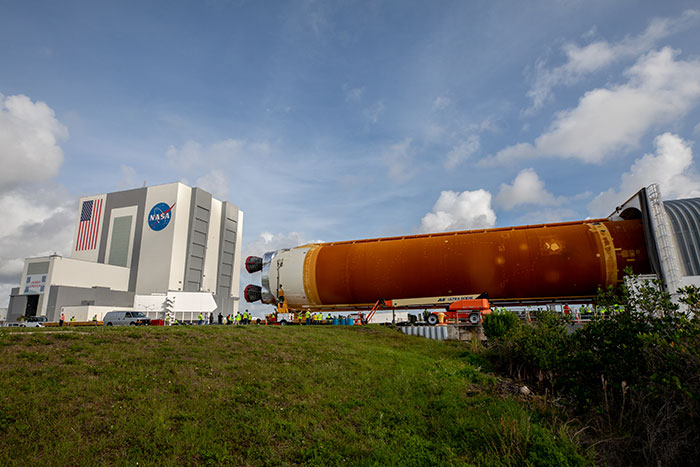
Oct. 19-20, 2021
A launch vehicle stage adapter, Interim Cryogenic Propulsion Stage and Orion spacecraft stage adapter were added to the top of the Artemis I SLS core stage in a series of lifts in the Vehicle Assembly Building.
Tests performed during stacking included release and retraction of the rocket’s “umbilical” connections to the mobile launcher. SLS also successfully completed its design certification review.
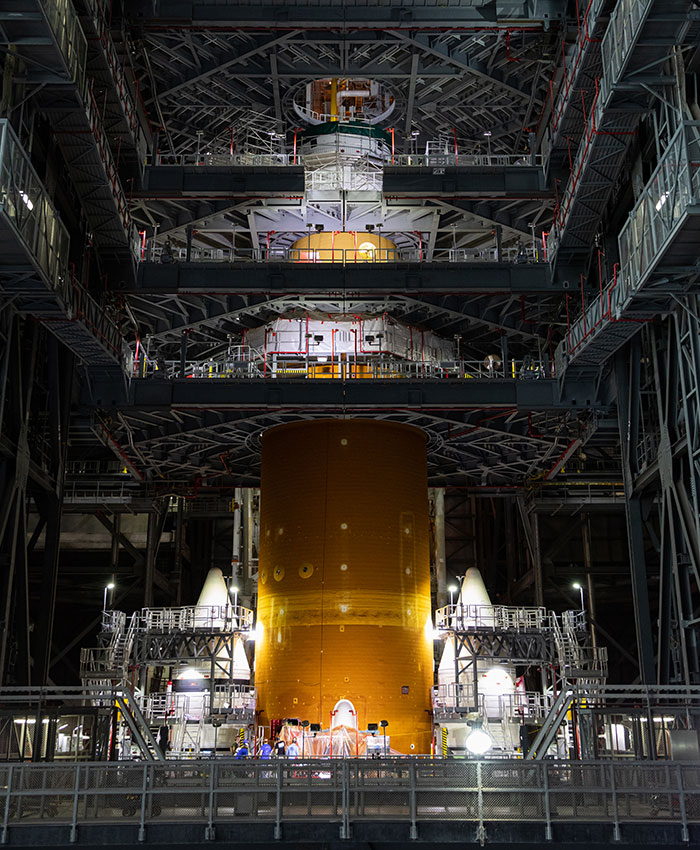
Oct. 20, 2021
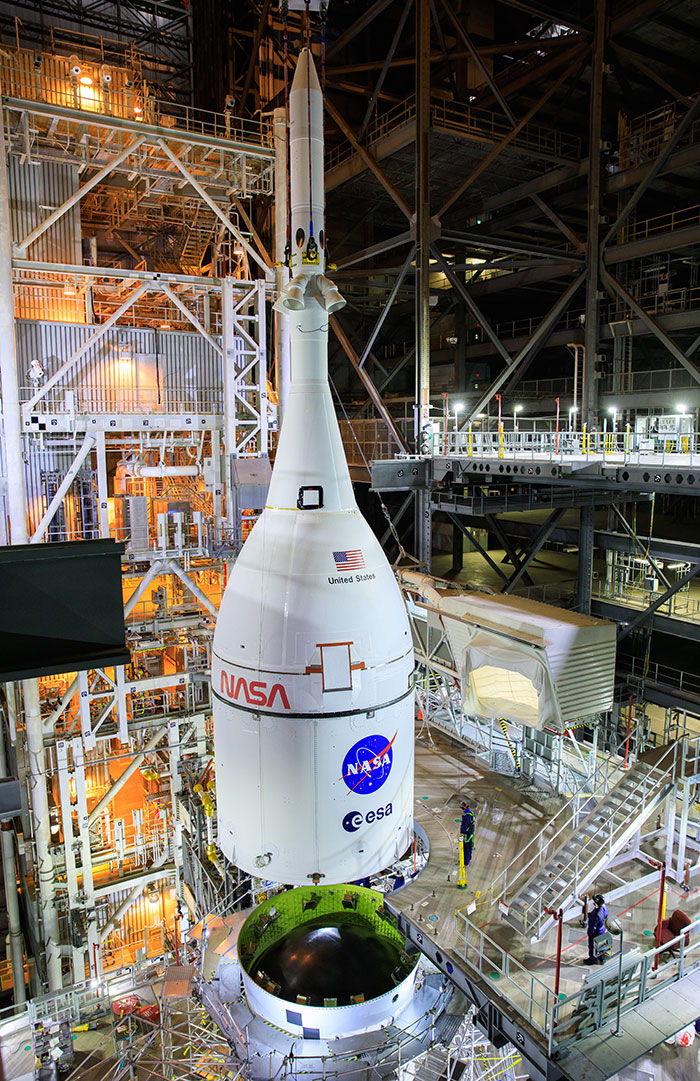
Crews added the Orion spacecraft and its launch abort system on top of the Orion stage adapter to complete the launch system for Artemis I.
March 18, 2022
Aug. 17, 2022
Nov. 4, 2022
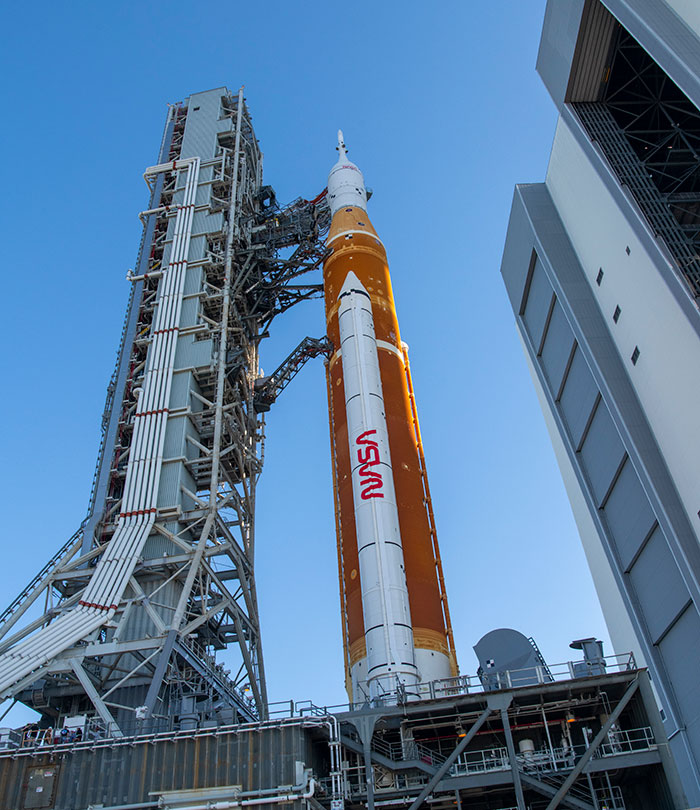
Boeing and other industry partners supported NASA as it completed more tests of the Artemis I system in the Vehicle Assembly Building (VAB) and practiced launch and mission operations. Across multiple rollouts in March, August and November of 2022, NASA moved the entire rocket through the VAB’s 456-foot (139-meter) door for a nearly 11-hour, 4-mile (6.4-kilometer) trip to launch pad 39B on a 6.6 million-pound (3 million-kilogram) crawler-transporter to undergo its final prelaunch tests.
April 3, 2022
April 4, 2022
April 14, 2022
June 20, 2022
The SLS rocket attempted its first three wet dress rehearsals (WDRs) in April 2022 before the successful WDR in June 2022. During these efforts, teams loaded, controlled and drained cryogenic propellants from the rocket’s core and upper stages and practiced a launch countdown.
Nov. 16, 2022
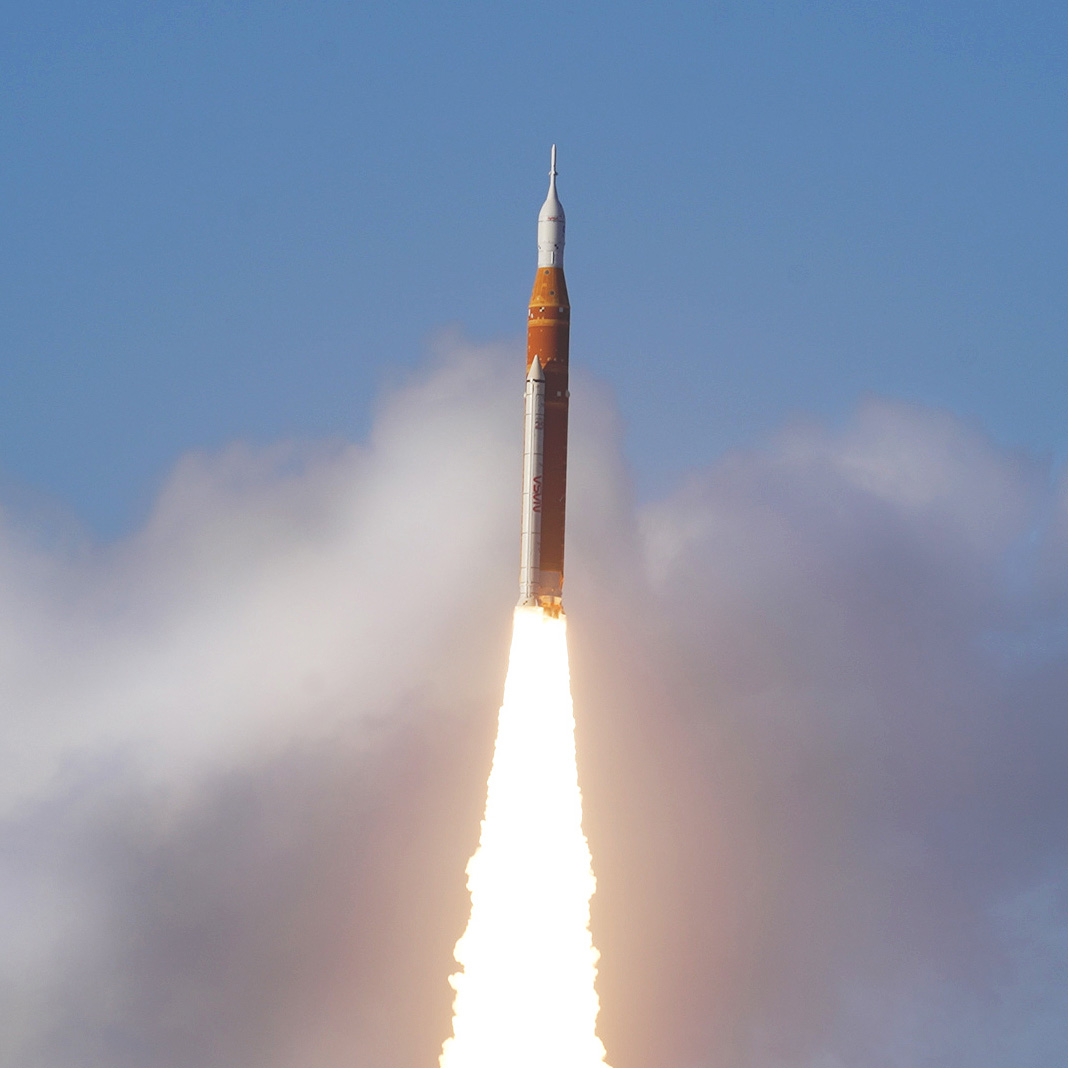
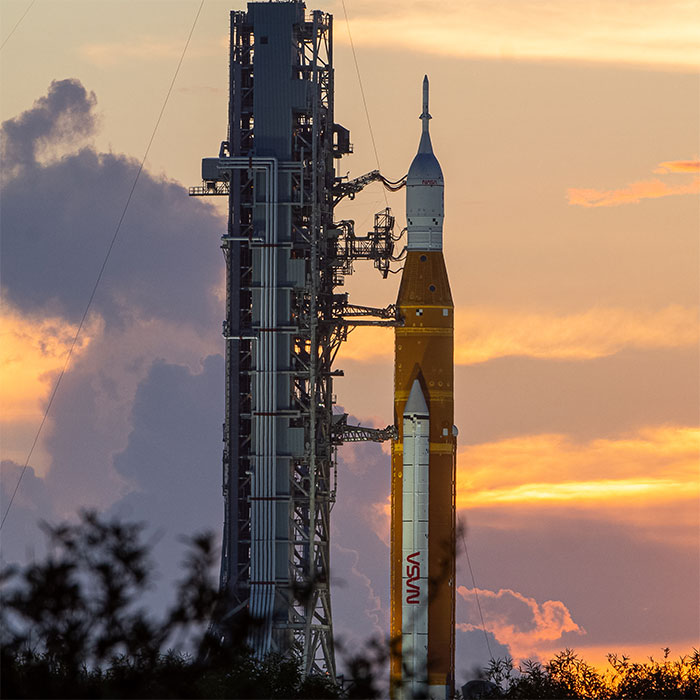
NASA’s Space Launch System rocket, powered by the Boeing-built core stage, lifted off at 1:47 a.m. Eastern time on Nov. 16, from the Kennedy Space Center in Florida. Eight-and-a-half minutes into flight, the core stage completed its mission and separated from the upper stage of the rocket, sending NASA’s Orion spacecraft on its first journey around the moon.
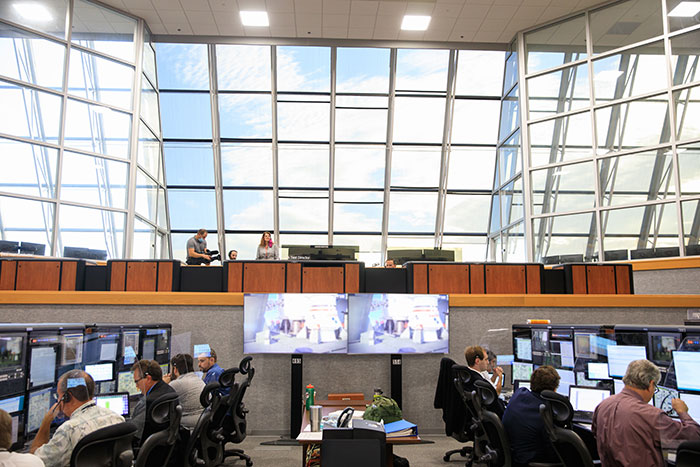
Boeing designs, develops, tests and produces the core stage, upper stages and avionics for the SLS. Read more below about the Boeing-built elements that make up the SLS rocket.
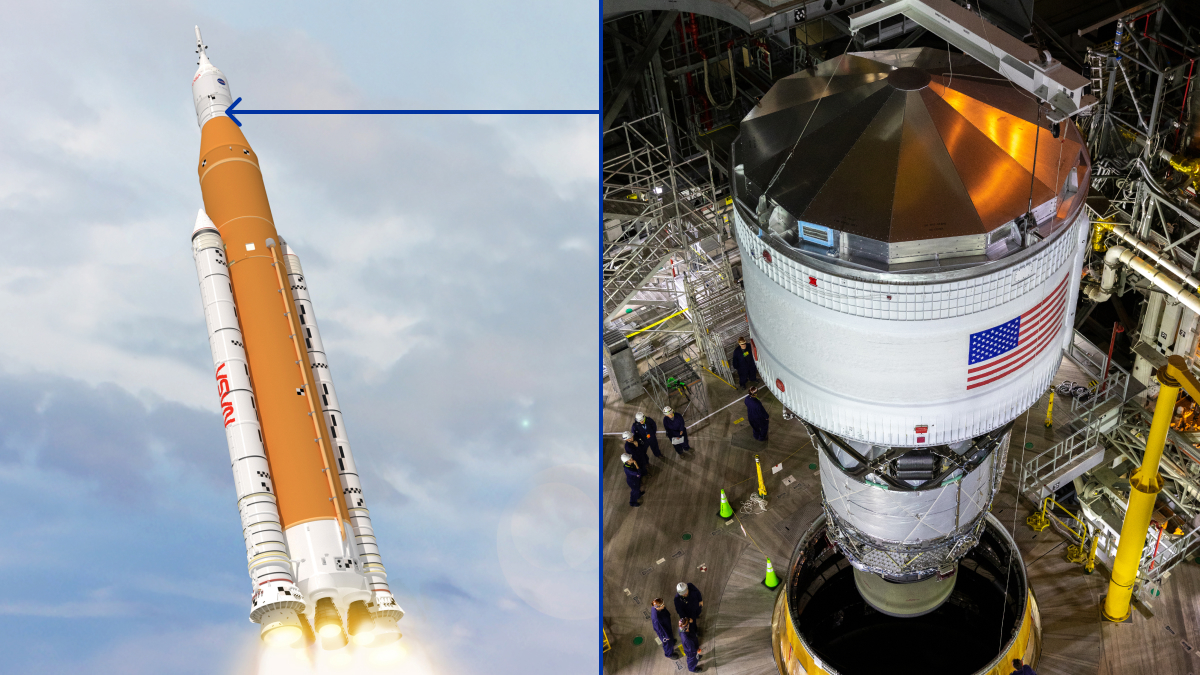
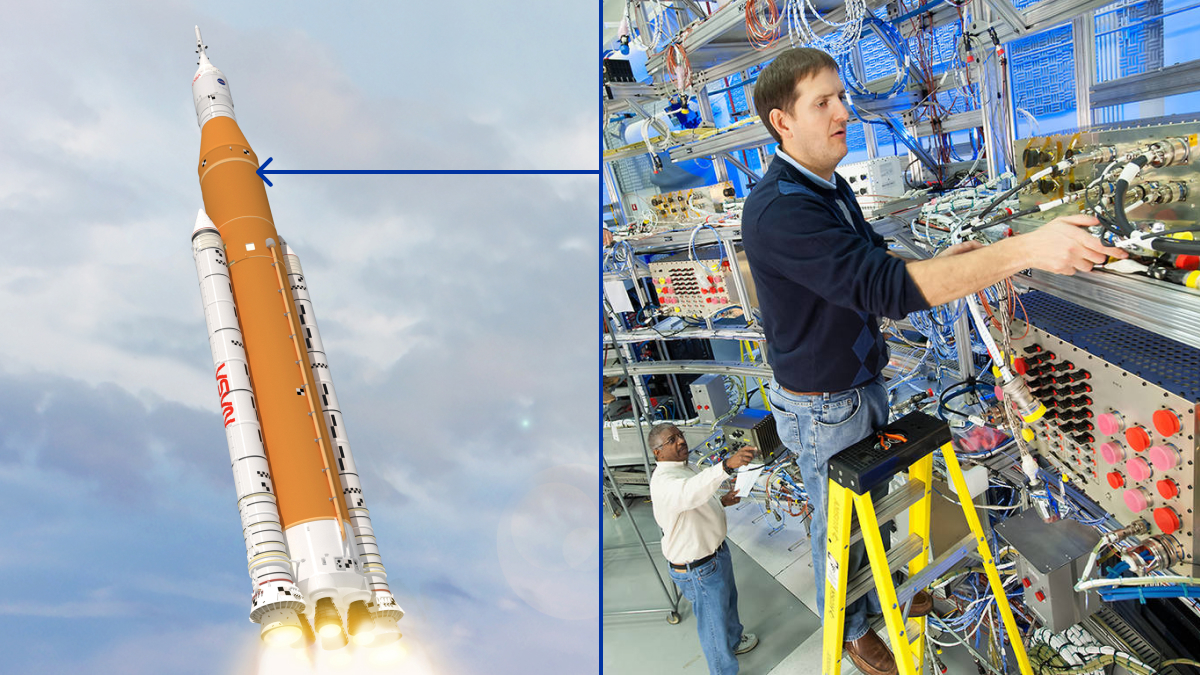
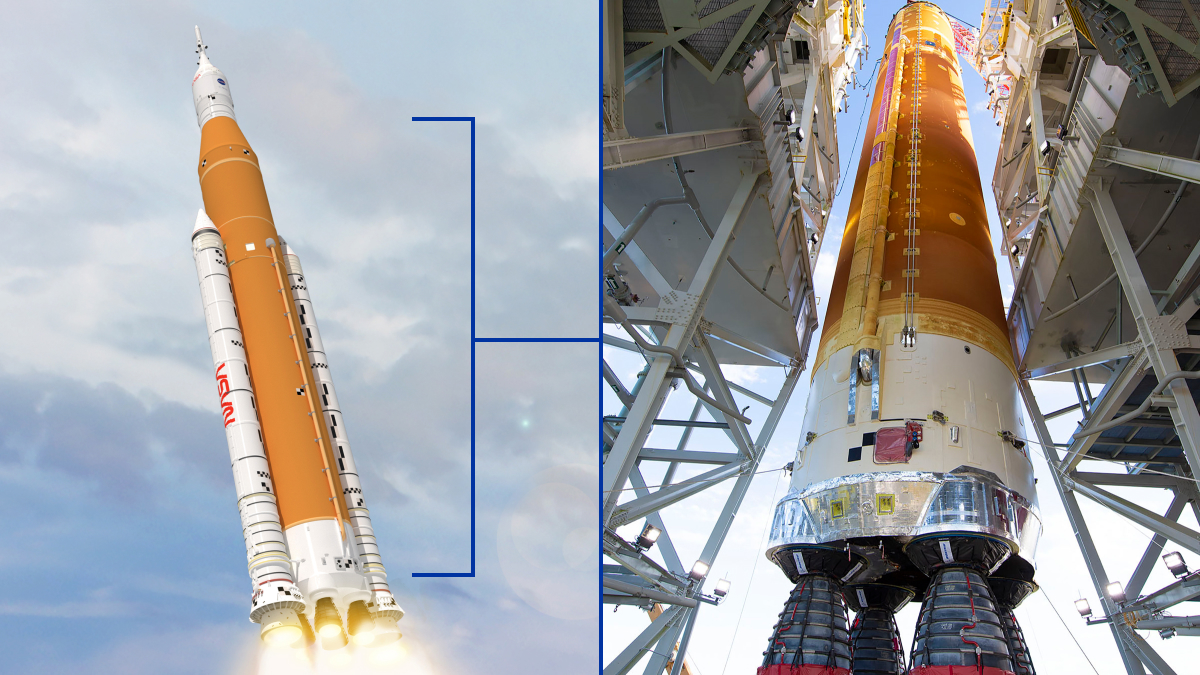
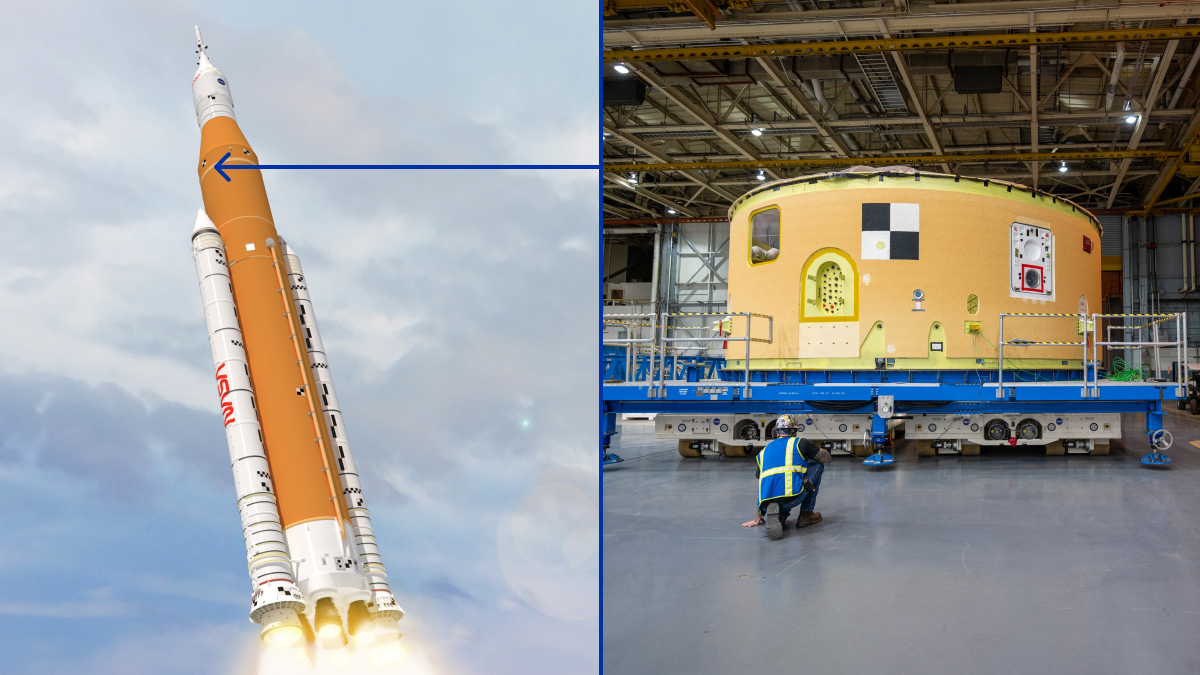
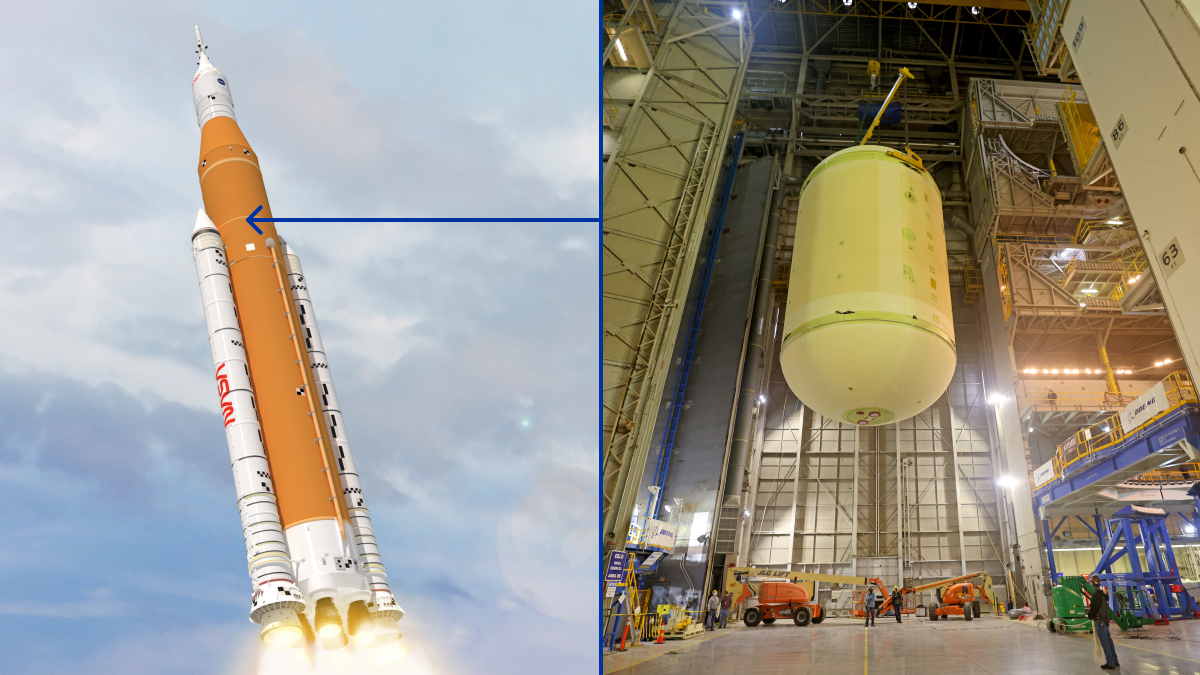
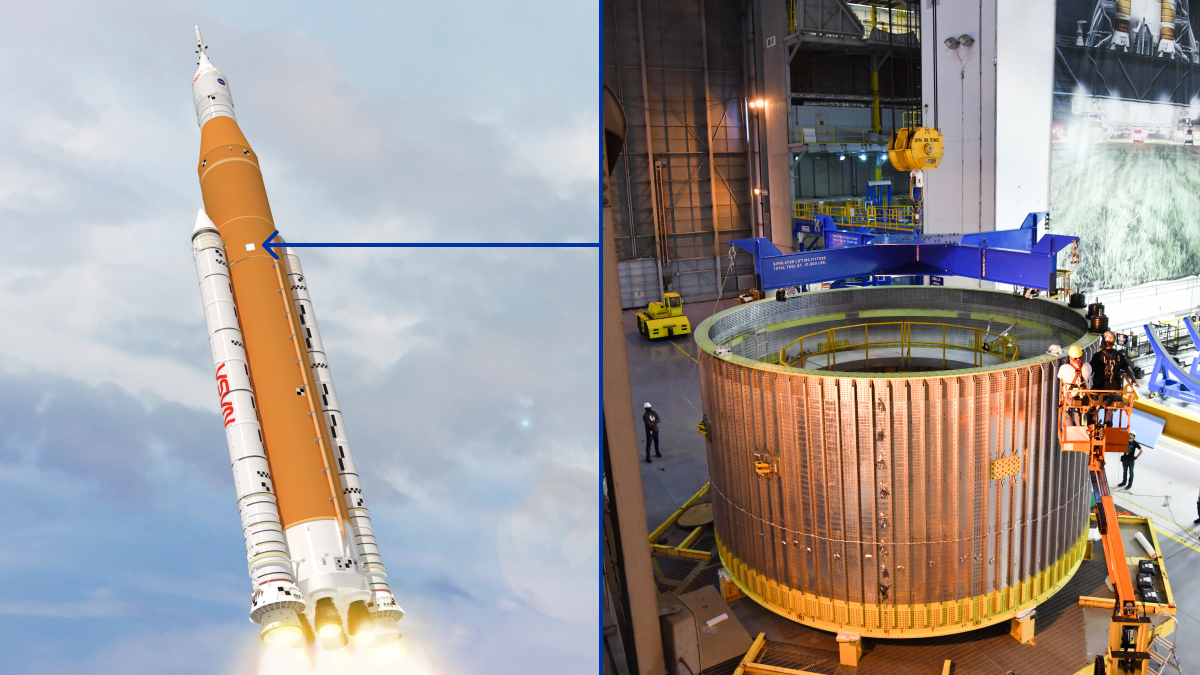
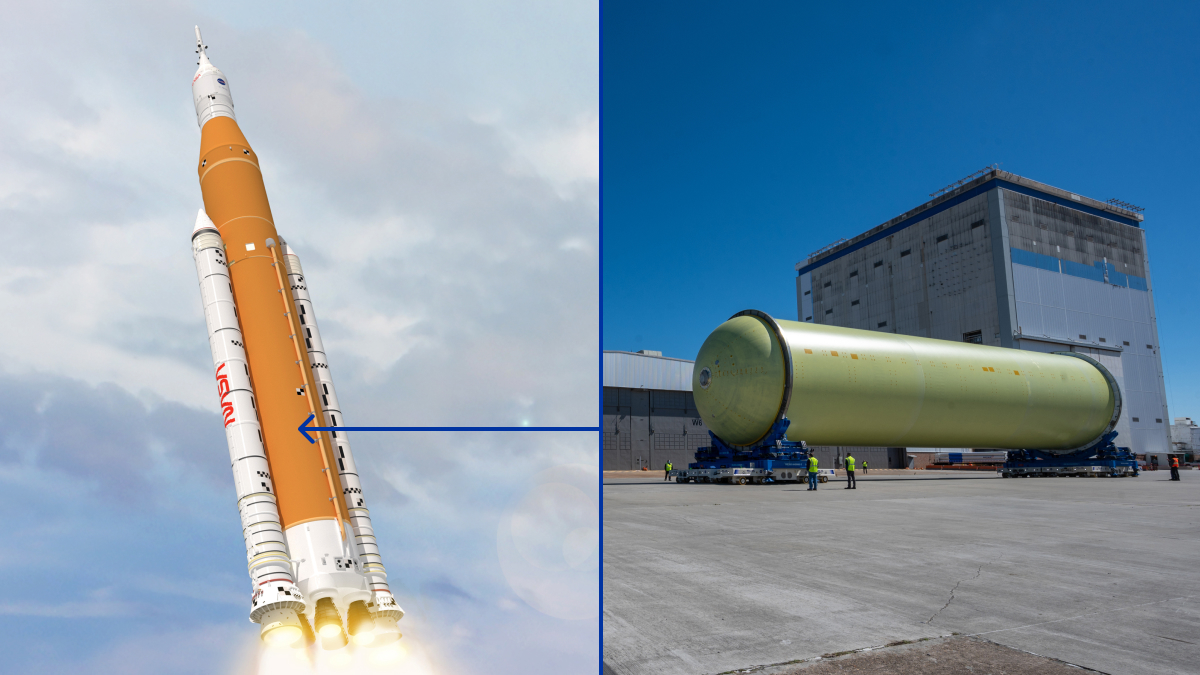
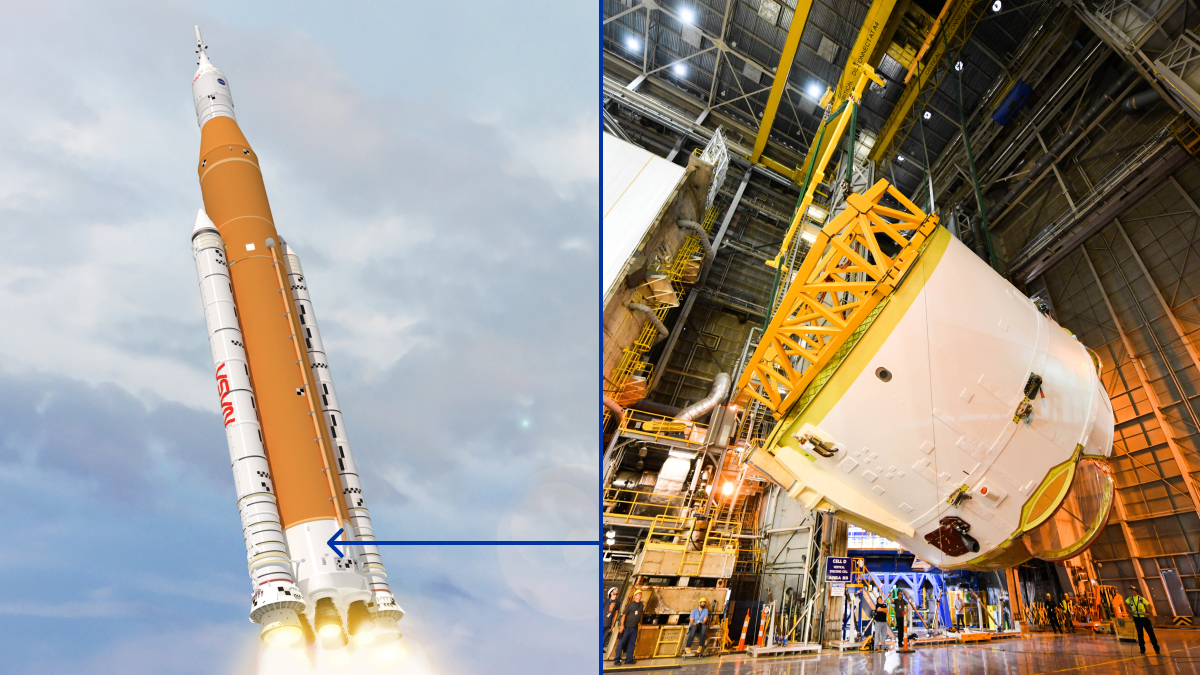
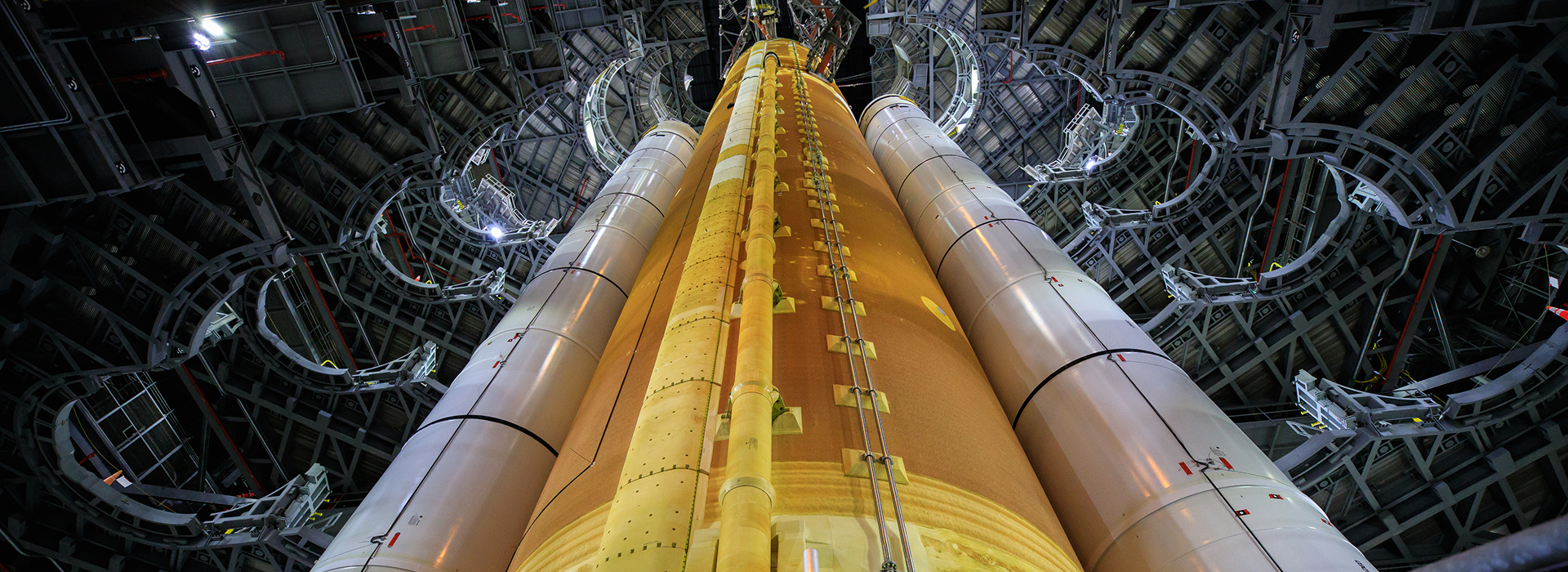
NASA is Boeing’s customer for the core stage, upper stages and flight avionics of Space Launch System — America’s rocket — which will support the Artemis moon missions and make the next generation of human spaceflight possible.
Boeing is committed to NASA’s Artemis program and to the National Space Council’s vision for continued American leadership and international partnerships in space.
The SLS’s unique capabilities mean that it can perform challenging science, national security and exploration missions for a broad scope of potential customers. Boeing is not interested in participating in the National Security Space Launch Phase 3 procurement. Boeing remains proud of its role in the SLS program and excited about SLS’s potential.
The Boeing SLS program is managed out of the company’s Space, Intelligence and Weapon Systems division and employs Boeing’s workforce in Huntsville, at NASA’s Michoud Assembly Facility in New Orleans, Kennedy Space Center in Cape Canaveral and at other Boeing sites, and with suppliers across the country. The Boeing Exploration Systems office supports NASA on strategy and policy for Space Exploration programs procured by the NASA Marshall Space Flight Center.
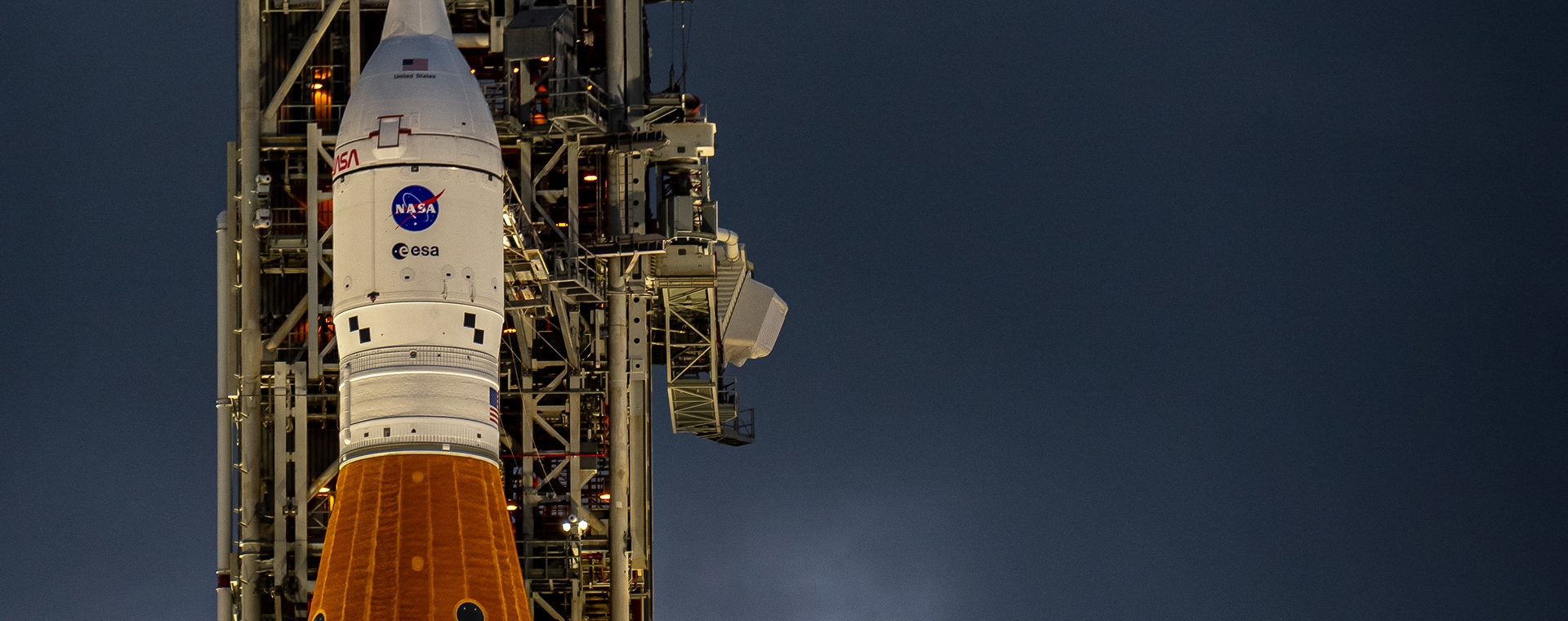
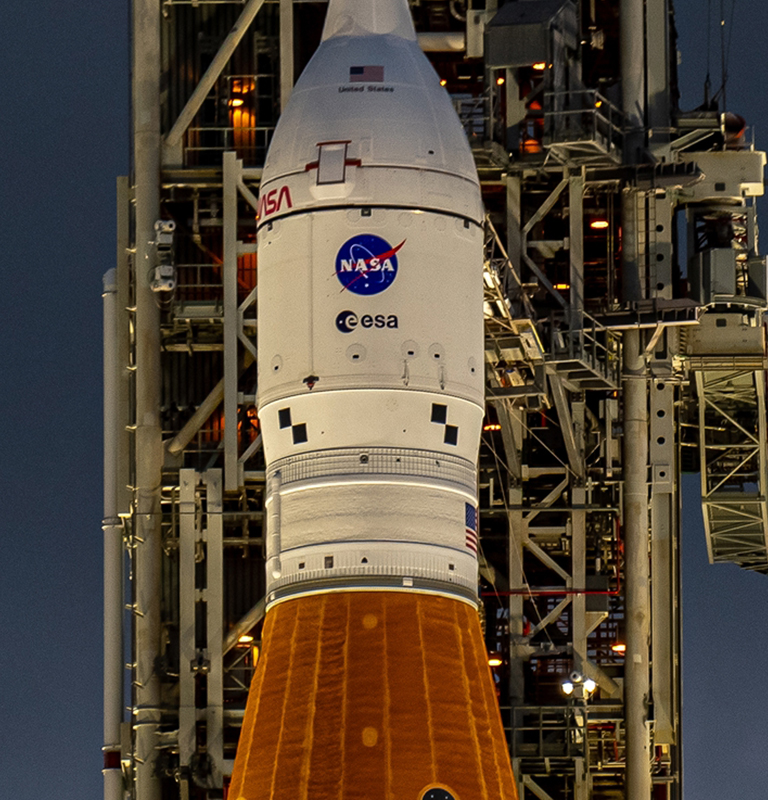
Join the Artemis Generation on humanity’s return to deep space — this time to stay. Sign up to receive the latest updates.