Inside IQ: Boeing creates lightning to study its effects on aerospace parts

Flash forward: Lightning lab enhances safety

March 30, 2023 in Innovation, Safety

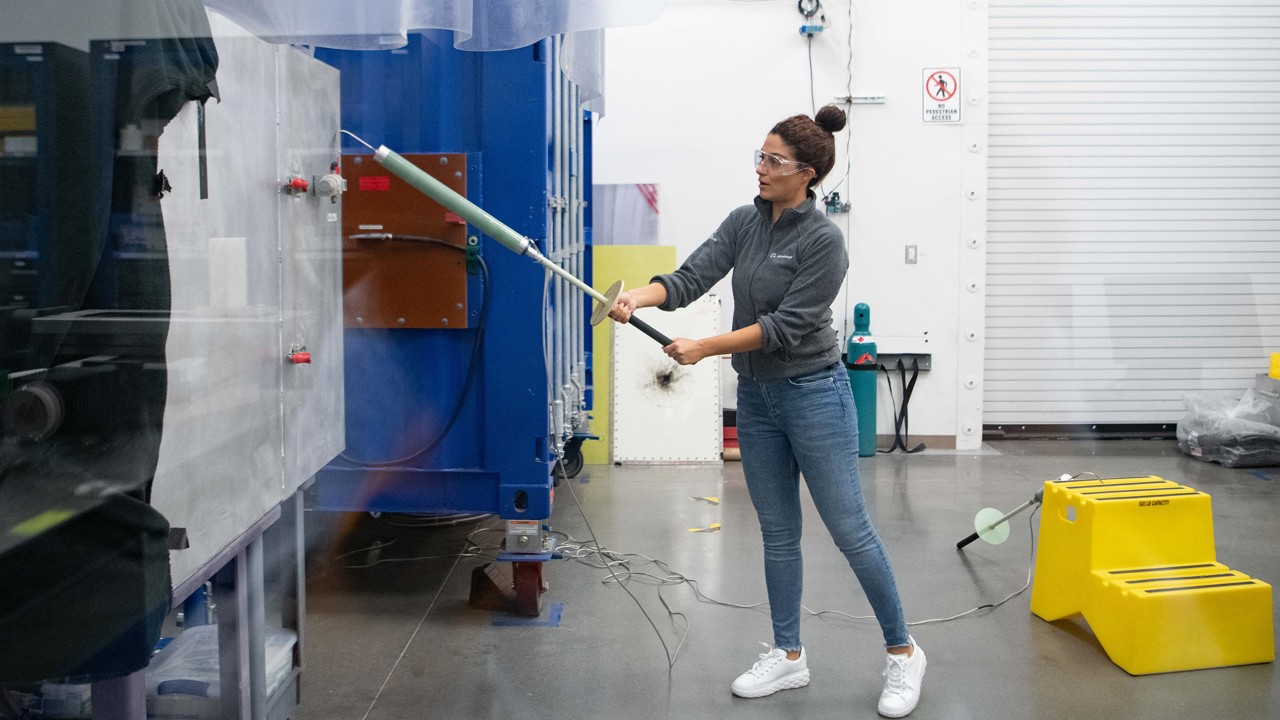
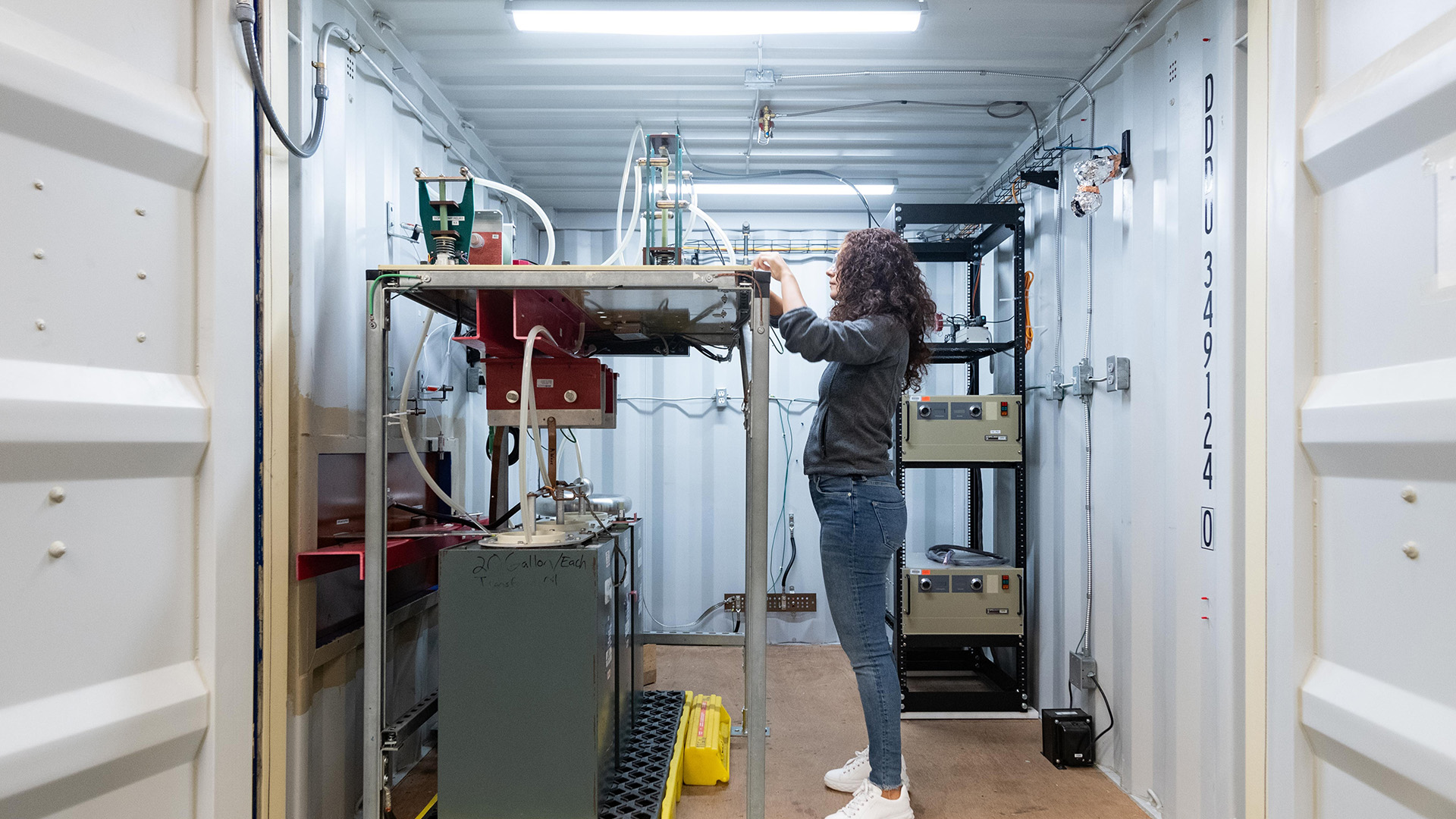
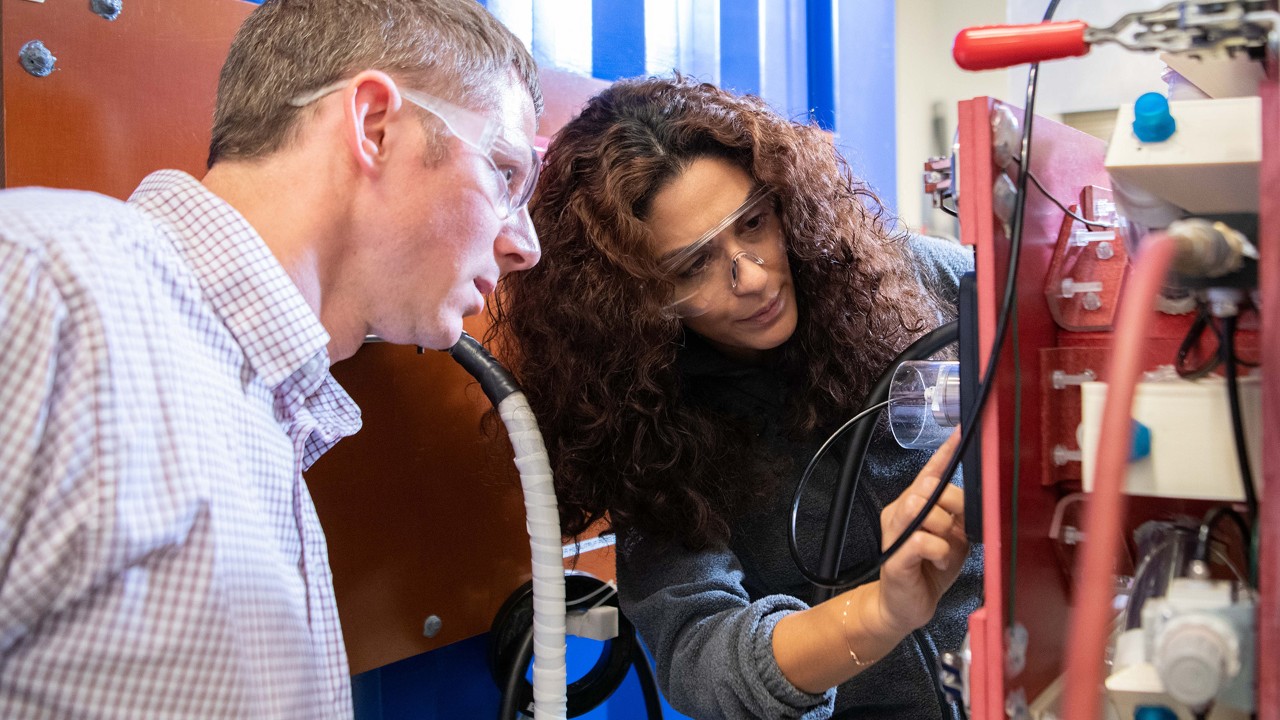
Bolt box: Inside a converted shipping container, electromagnetic effects engineer Louisa Michael and her colleagues create and test novel algorithms that simulate lightning effects on airplane parts in Boeing South Carolina’s lightning lab. Bolt box: Inside a converted shipping container, electromagnetic effects engineer Louisa Michael and her colleagues create and test novel algorithms that simulate lightning effects on airplane parts in Boeing South Carolina’s lightning lab.

It looks like just a storage closet. But you get a sense there’s something more going on inside. A sign on the door says, “High Voltage Test in Progress. Do Not Approach Test Area.”

Inside the room is a blue shipping container with metal tubes, lights and meters attached on one side. Boeing electromagnetic effects engineer Louisa Michael and her colleagues twist some knobs. Attach some wires. And double-lock the thick container doors.

Then they leave the room — out the door with the warning sign.

They’re ready to make lightning.

Lightning in a lab

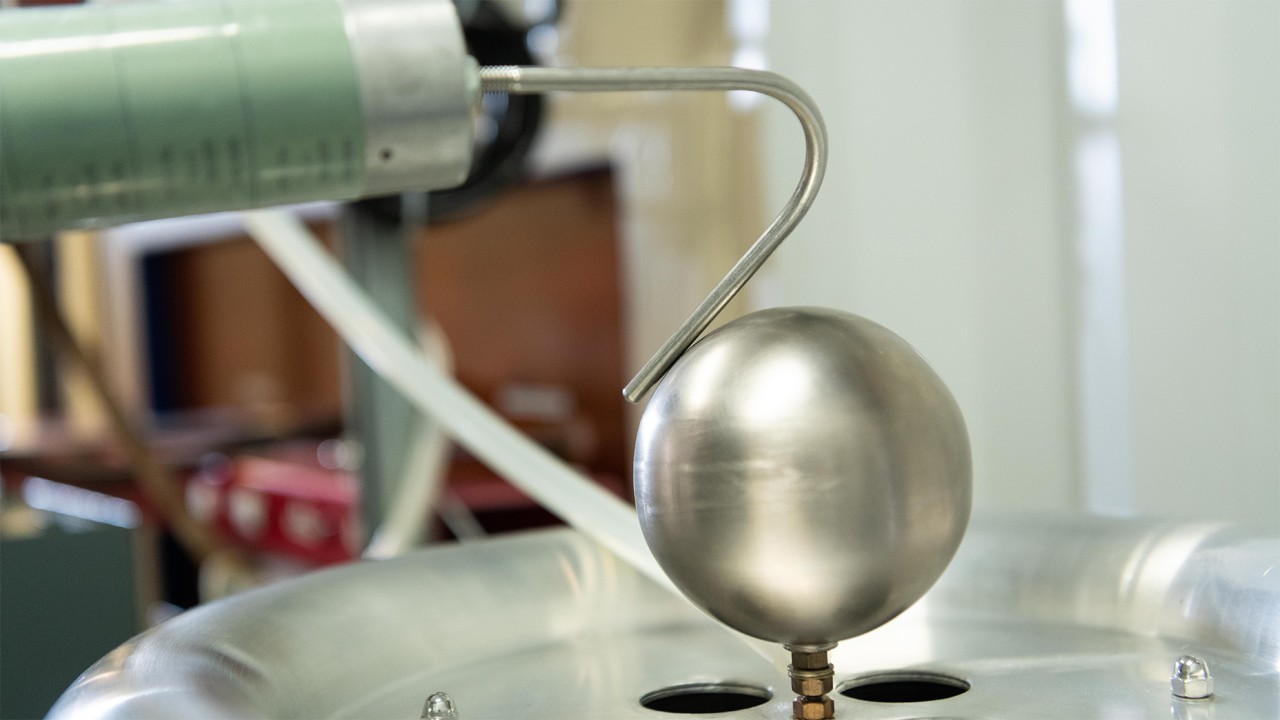
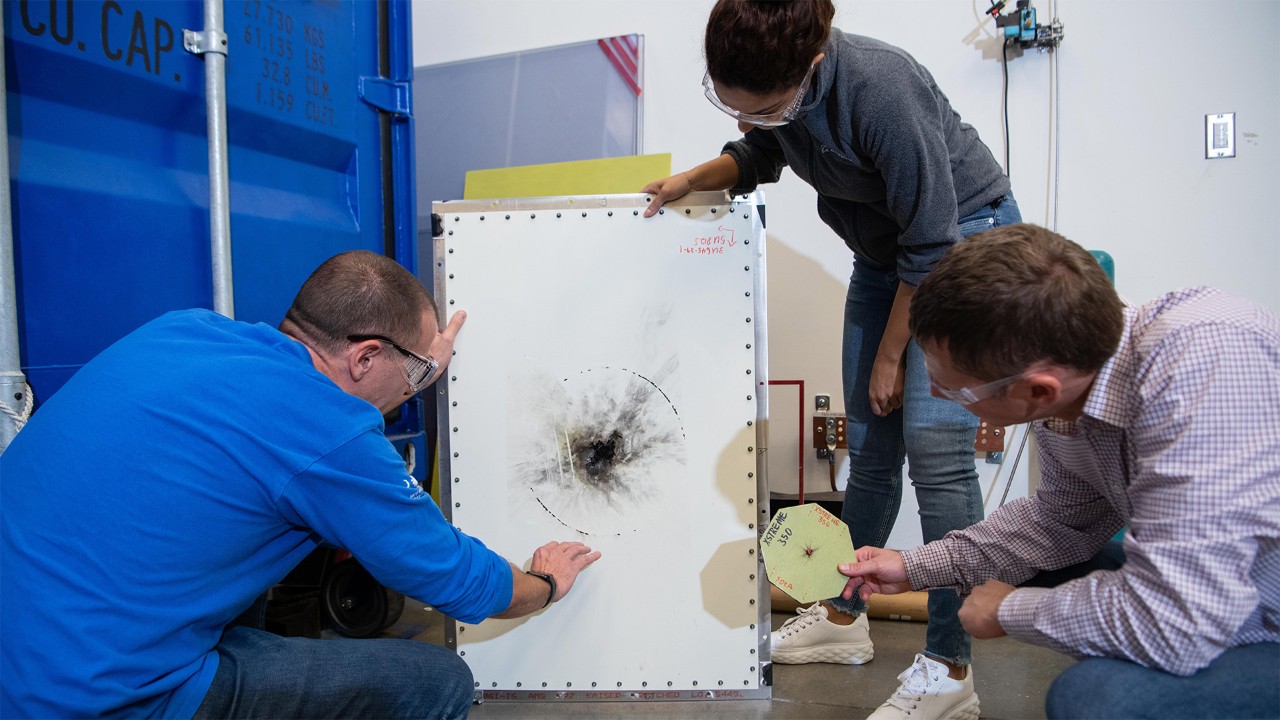
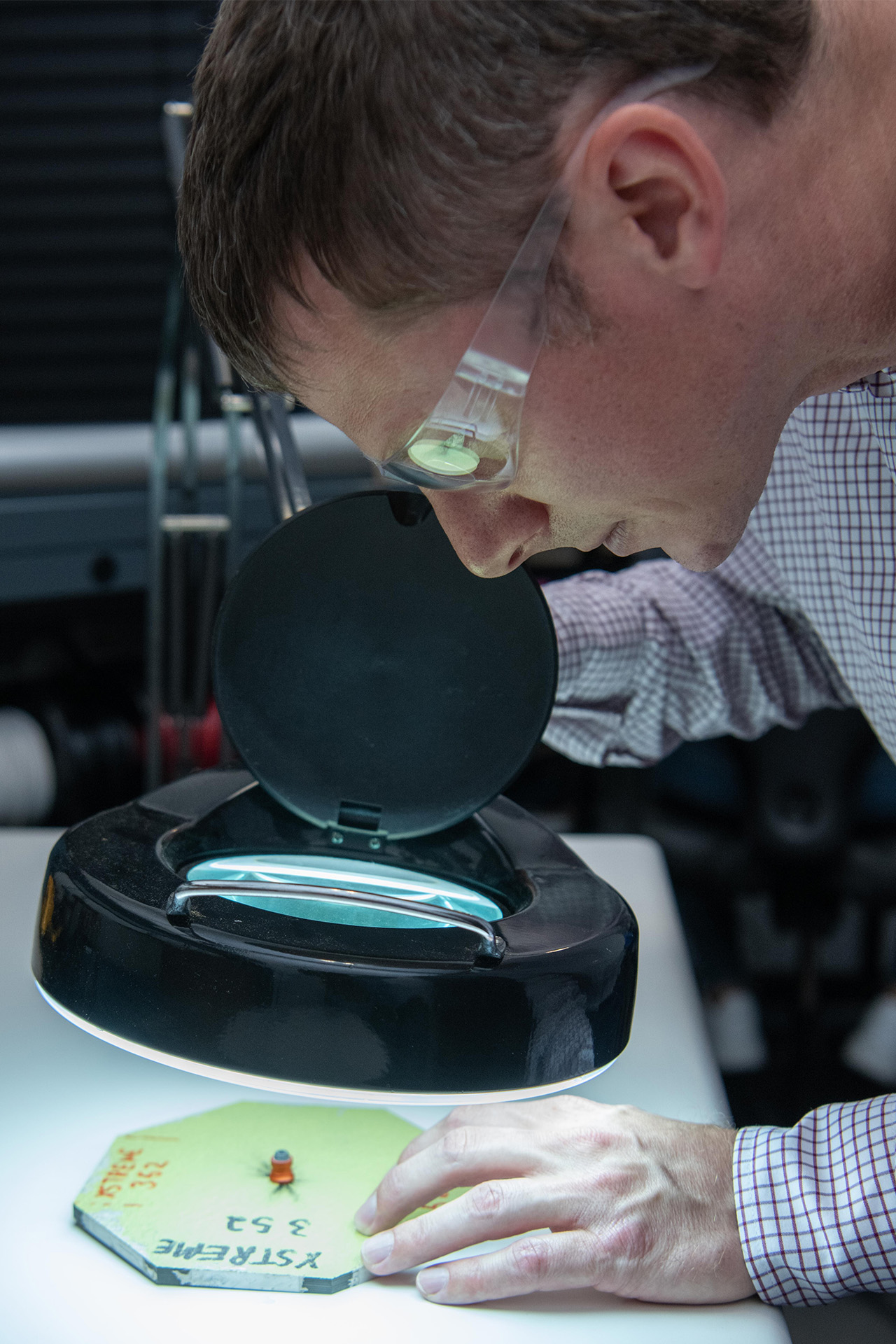
Just north of Charleston, South Carolina, in one of Boeing’s lightning labs, the Electromagnetic Effects (EME) team drives high levels of electric current through aerospace components large and small. The idea is to mimic the effects lightning strikes can have on airplanes and study how the parts respond.

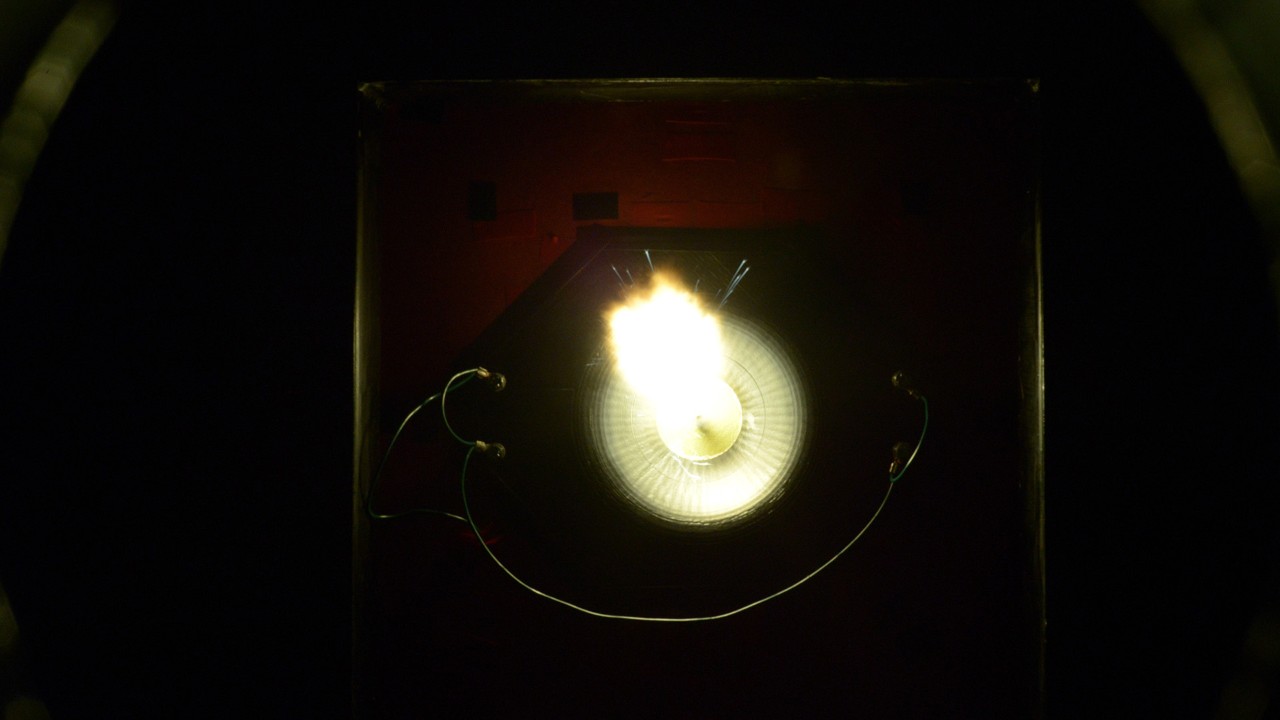
When capacitors discharge the current, the resulting strike emits a booming pop, but without the blue plasma arc typical of the bolts seen flashing across the night sky. Those in nature carry millions of volts and billions of joules of energy. For safety and practicality, the strikes in the lab are scaled so the results can be extrapolated mathematically to predict what might happen in the real world.

Michael and fellow researchers simulate these strikes through numerical modeling and by running actual current through airplane materials.

Getting struck by lightning is a metaphor for something extremely rare. But it does happen on occasion to airplanes, so the physics at play in the lightning lab is relevant to just about every airplane in service.

Airplanes are designed to withstand lightning strikes as they soar through the clouds and through weather. And when a strike happens, ground inspections identify any potential damage and evaluate if any repairs are needed before the airplane returns to service.

Lightning protection is engineered into Boeing airplanes and their sensitive electronic components. The EME crew’s research can inform how parts are designed, the recommended allowable damage limits, and maintenance and repair practices.
Collaborative partnerships

Michael joined the EME team in 2020 with a doctorate from the University of Cambridge. Her current work is an unexpected departure from her research, which focused on sensitized explosions that could break down rock more efficiently.

It served as her first foray into multi-physics modeling, or mathematical simulation, that accounts for interactions between the four states of matter: gases, liquids, elastoplastic solids and plasma.

“It was cool to work with detonations,” Michael said of her early research. “And I thought I could never top that. And yet, I ended up working with lightning.”

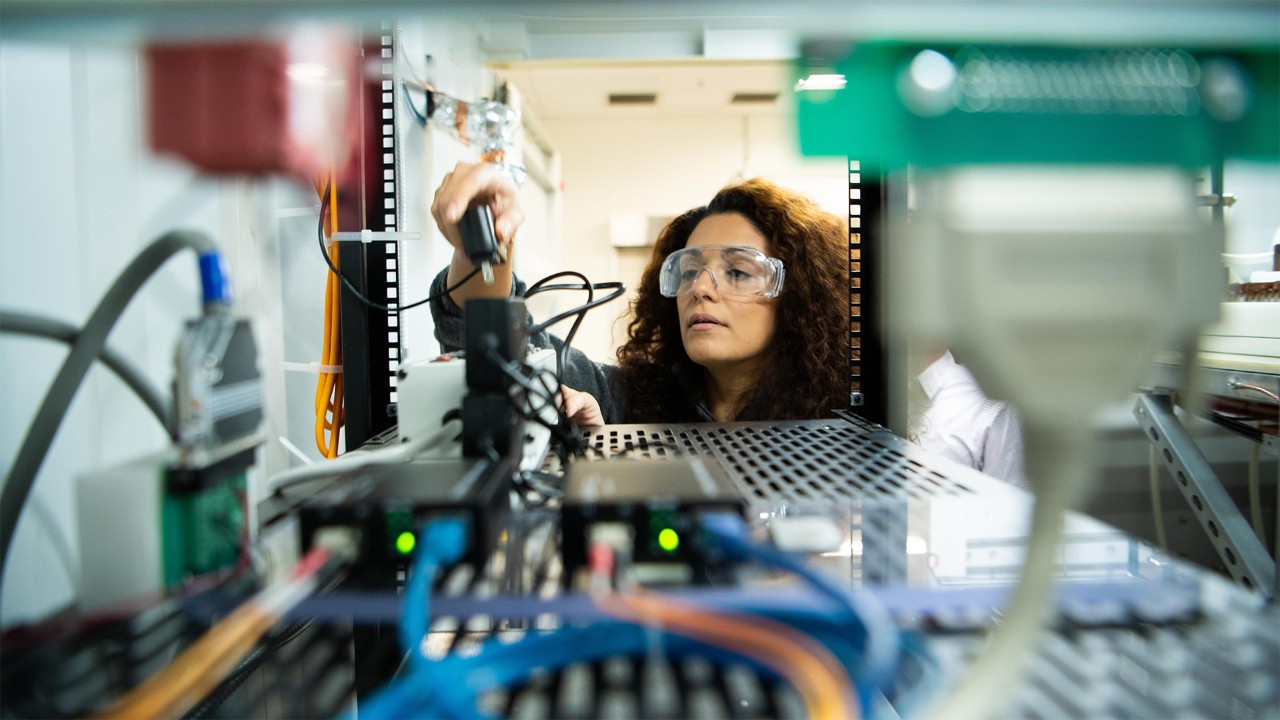
After several industry-led projects as a postdoctoral researcher, Michael joined a new Cambridge team working in partnership with Boeing’s EME group. The aim was to create novel algorithms simulating the effects of lightning on airplane parts.

While the task was different from her past projects, Michael says that mathematically, the challenge itself was quite similar: employing differential equations to describe a physical problem. Her work and research at Cambridge and the university’s collaboration with Boeing led to Michael joining the EME team full time.

At Boeing South Carolina’s EME lab, the experiments take place in an enclosed shield room, with Michael and colleagues observing from a separate wing of the facility. A thermal camera measures how lightning heats up each part. A high-speed camera takes footage of flying particles. And an open-shutter camera can capture all light emitted: from the moment the current strikes the material and creates a spark to outgassing.

Nuts and bolts and volts 

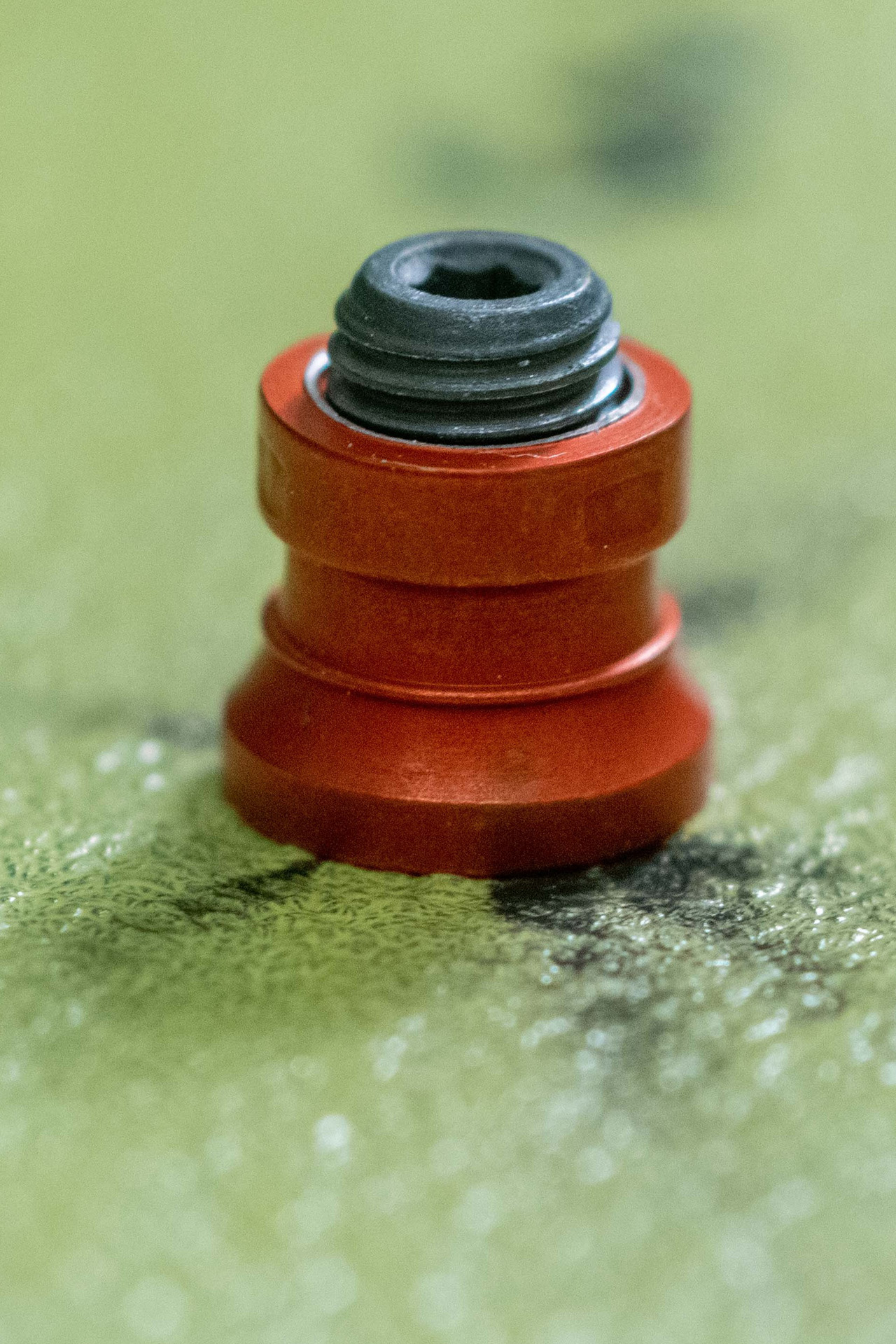
The Boeing-Cambridge partnership continues to shape the EME unit’s approach to future research and model-based engineering. The studies can assess the impact of lightning down to an airplane’s nuts and bolts. Teams will ultimately determine how Boeing might apply findings to its aerospace technology.

Now two years into her role, continuing to work with Cambridge has allowed Michael to keep one foot in both worlds — industry and academia — after finding an unexpected niche.

“There’s this small part of the world focused on lightning and aviation research. An even smaller subset falls in the intersection between academia and industry,” Michael said. “It’s fascinating to work on such complex but very real problems.”

“I get to experience them firsthand. I get to collaborate with other people around the world who share my expertise in this area,” she continued. “And all this would have not been possible without the very talented Cambridge research team and my exceptional Boeing EME teammates. It’s pretty exciting to see all of that coming together.”

By Maksim Goldenshteyn

Inside IQ: This article first appeared in Innovation Quarterly, 2023, Q1. Boeing researchers are continuing their work to protect aircraft against lightning.