Swept wing pioneer

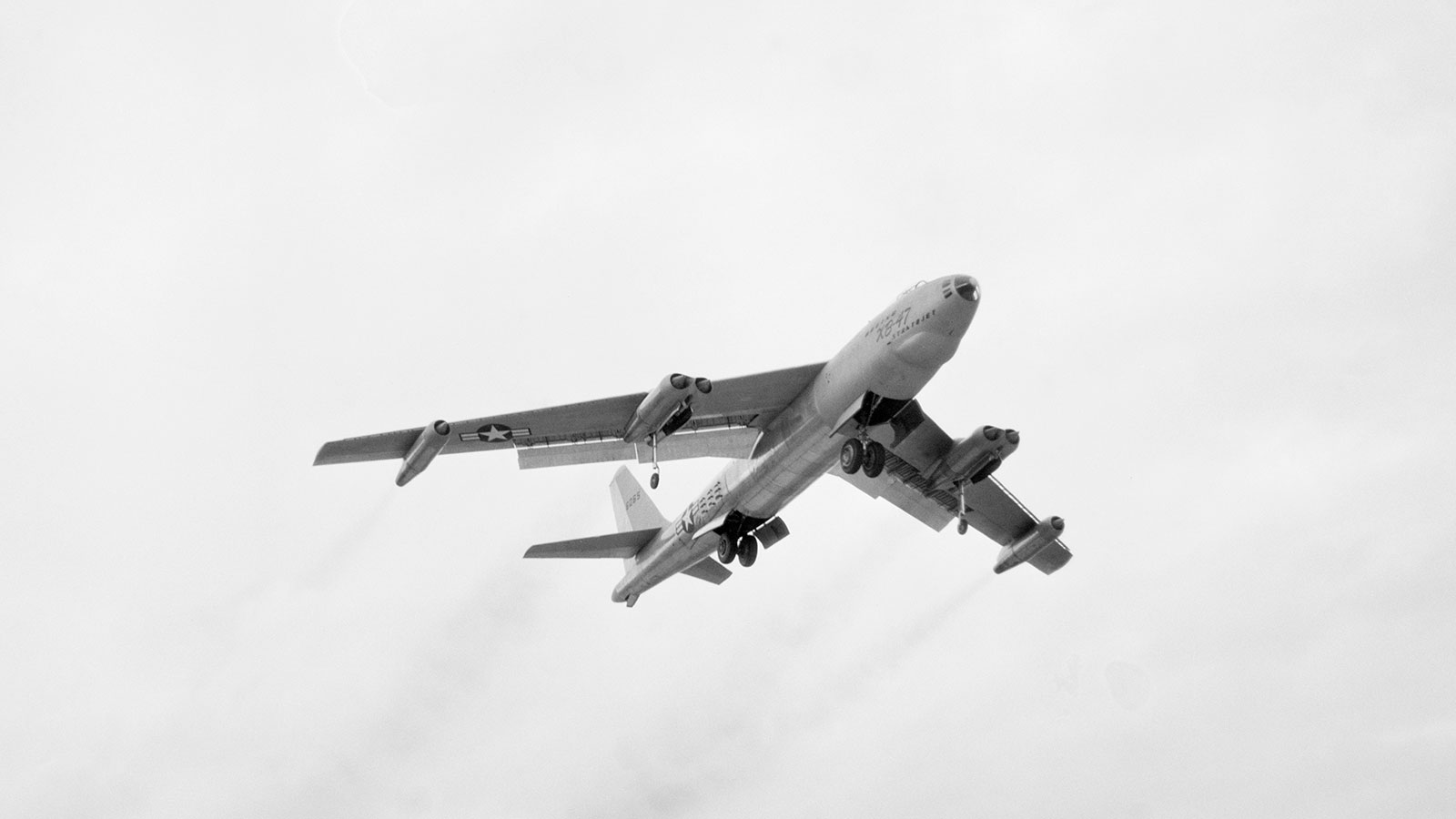
The B-47 Stratojet was Boeing’s first swept-wing, multiengine bomber and set a lasting pattern for large jet aircraft design.

October 12, 2026 in History, Innovation, Defense

A black-and-white photo of a B-47 military jet viewed from below in flight, with its landing gear deployed and wings extended against a cloudy sky.

On Dec. 17, 1947, the 44th anniversary of the Wright brothers’ historic flight, an event took place at Seattle’s Boeing Field that nearly rivals that famed accomplishment as one of the most important in aviation history.

The event was the first flight of America’s — and arguably the world’s — first large swept wing jet: the B-47 Stratojet. The Stratojet’s revolutionary design was the first to pair swept wings with jet engines suspended from the wings in podded nacelles. Developed through testing in Boeing’s high-speed wind tunnel in 1945, this basic design is still the blueprint for all large jets built today.

A cornerstone event in Boeing’s journey to becoming a pioneer of large swept-wing jets was the April 1939 hiring of famed test pilot Edmund T. “Eddie” Allen to head the new Flight and Research organization.
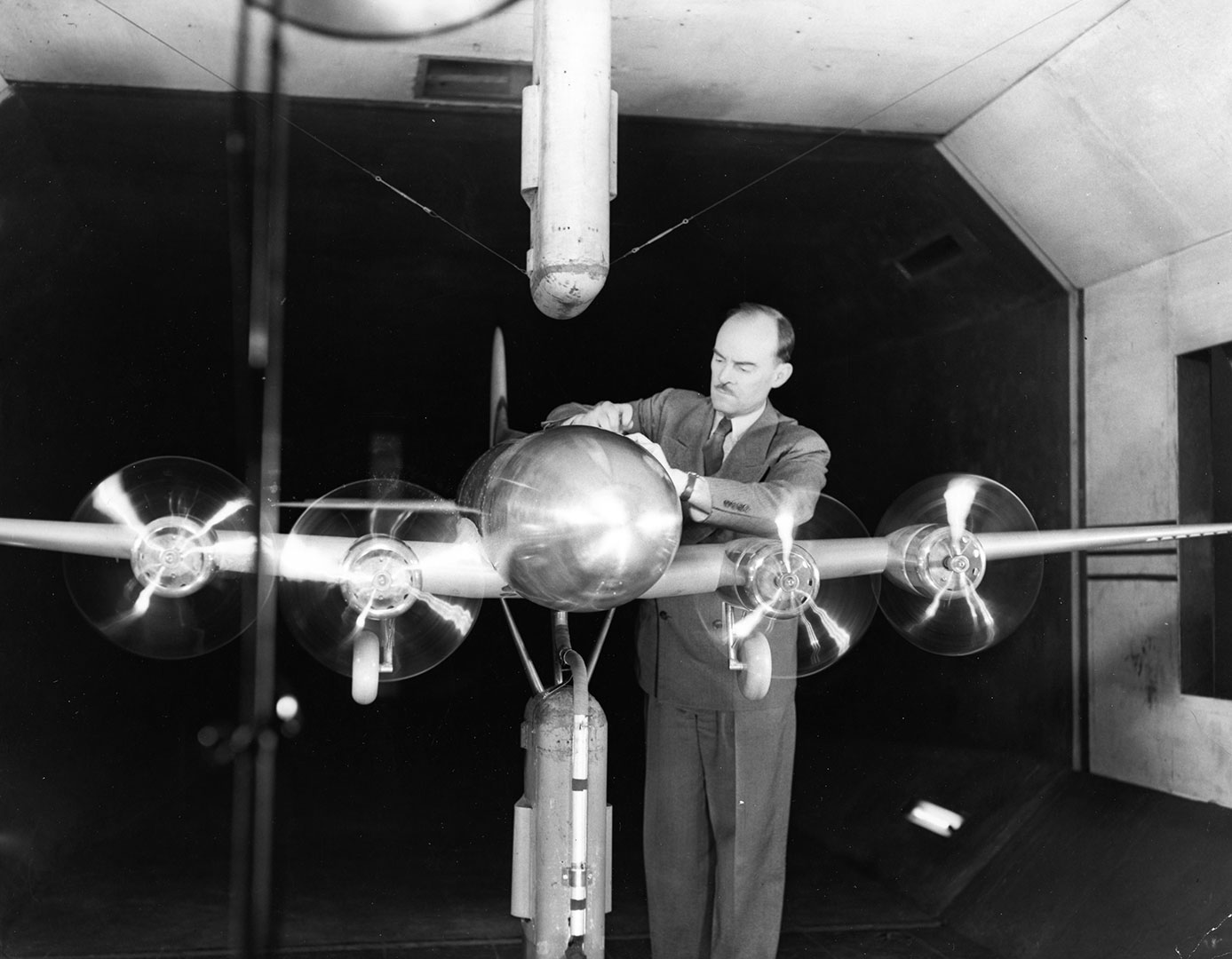
A black-and-white photo of a man standing beside a four-engine airplane model or test setup inside a wind tunnel, with the aircraft facing forward and propellers visible. Eddie Allen in the wind tunnel

Considered the United States’ greatest test pilot and a respected scientist, Allen was accorded the freedom to do whatever was necessary to advance Boeing’s flight research efforts – including the construction of a private wind tunnel. At the time, aircraft manufacturers did not have their own wind tunnels. The fierce competition to use the few wind tunnels operated by NACA (forerunner of NASA) and a handful of universities resulted in Boeing falling behind the competition.

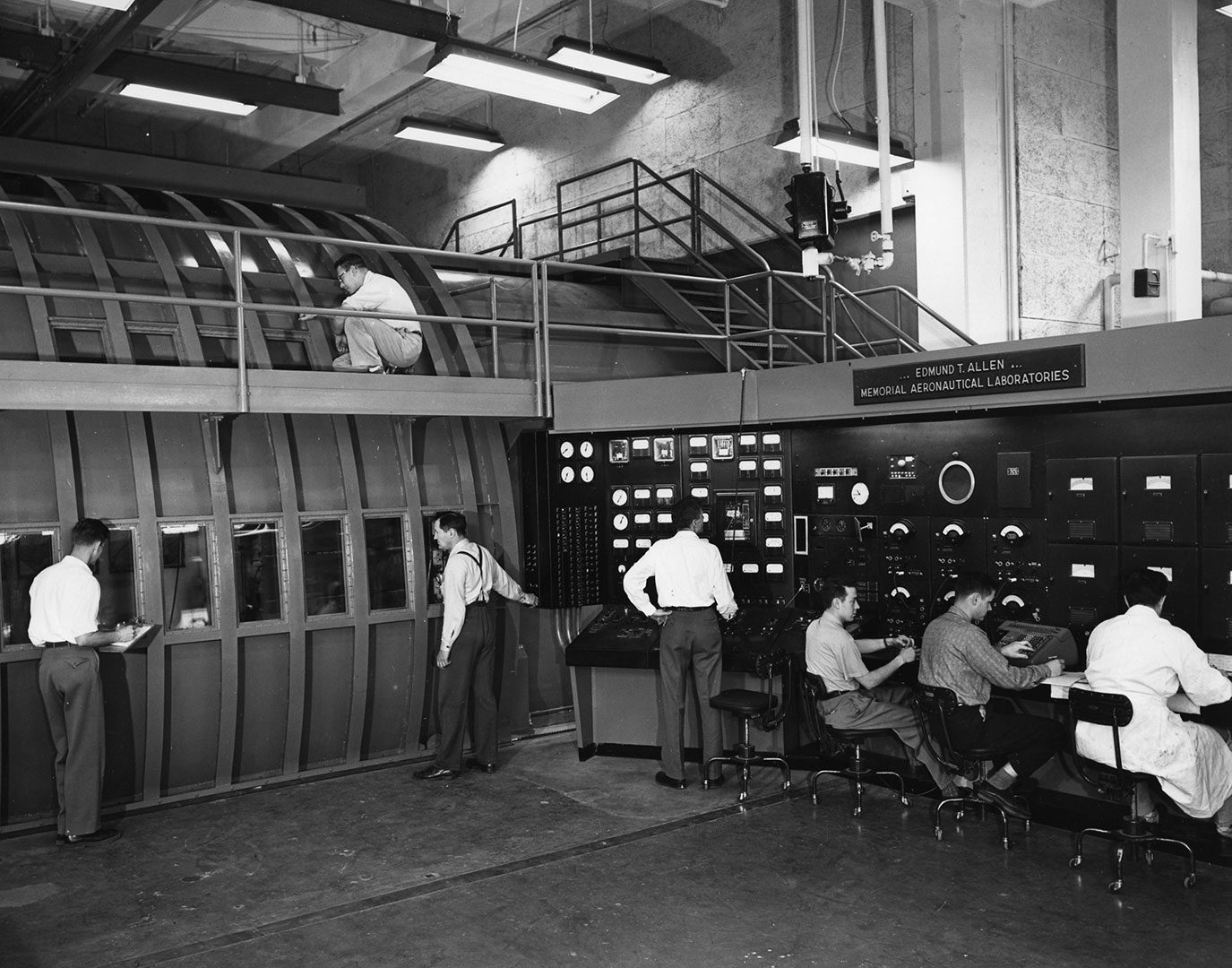
Allen championed the idea of a company-owned wind tunnel capable of near transonic speeds, based on a recommendation by world-leading aerodynamic theoretician Theodore von Karman. The wind tunnel’s estimated cost of $1 million was a tremendous risk for Boeing that also presented a great opportunity. In August 1941, Boeing President Phil Johnson authorized construction of a high-speed wind tunnel capable of speeds of Mach 0.9, or 625 mph (1,006 kph).

A black-and-white photo of a laboratory control room with several men working at consoles beside a large wind tunnel, with a raised catwalk overhead. Following Allen’s death in 1943, the wind tunnel was named in his honor.

The new high-speed wind tunnel was completed just in time to give Boeing the proper laboratory to discover the near-perfect form for a subsonic jet with the design of the B-47 bomber. The B-47 was the first full design tested at the Boeing wind tunnel.

Although other companies had surpassed Boeing in the development of jets, Boeing designers knew they could build a better plane. However, it would require something radical to overtake the competition – the discovery of swept wings and podded engines.

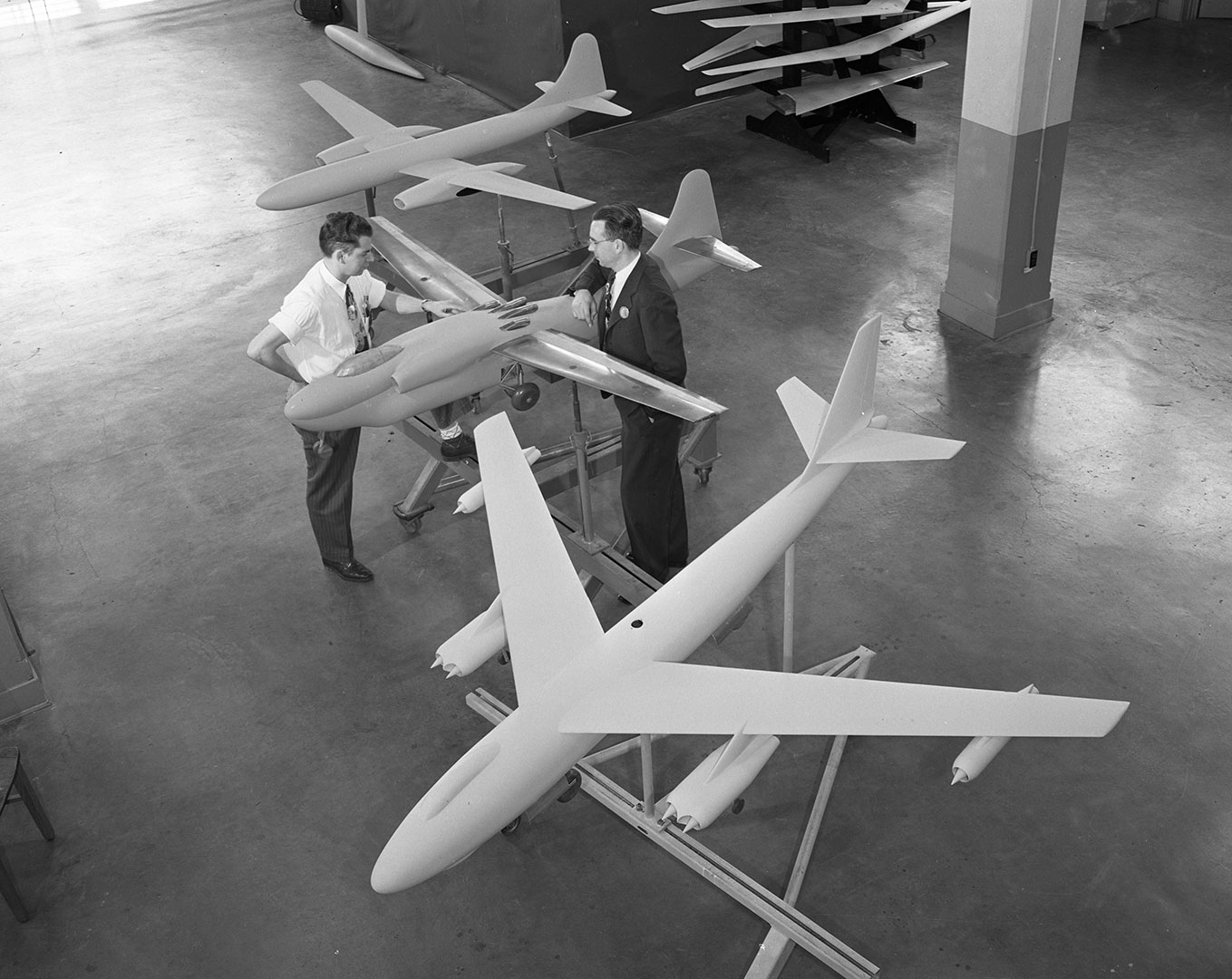
A black-and-white photo of two men standing in a workshop or museum among several aircraft models mounted on display stands, viewed from above. Evolutions of models leading to the B-47

The concept of the swept wing reached Boeing in May 1945 by way of a handwritten letter sent from Germany by Boeing aerodynamicist George Schairer. Schairer was serving on U.S. Air Force General Hap Arnold’s Scientific Advisory Group, which was tasked with securing Nazi aircraft and rocket research.

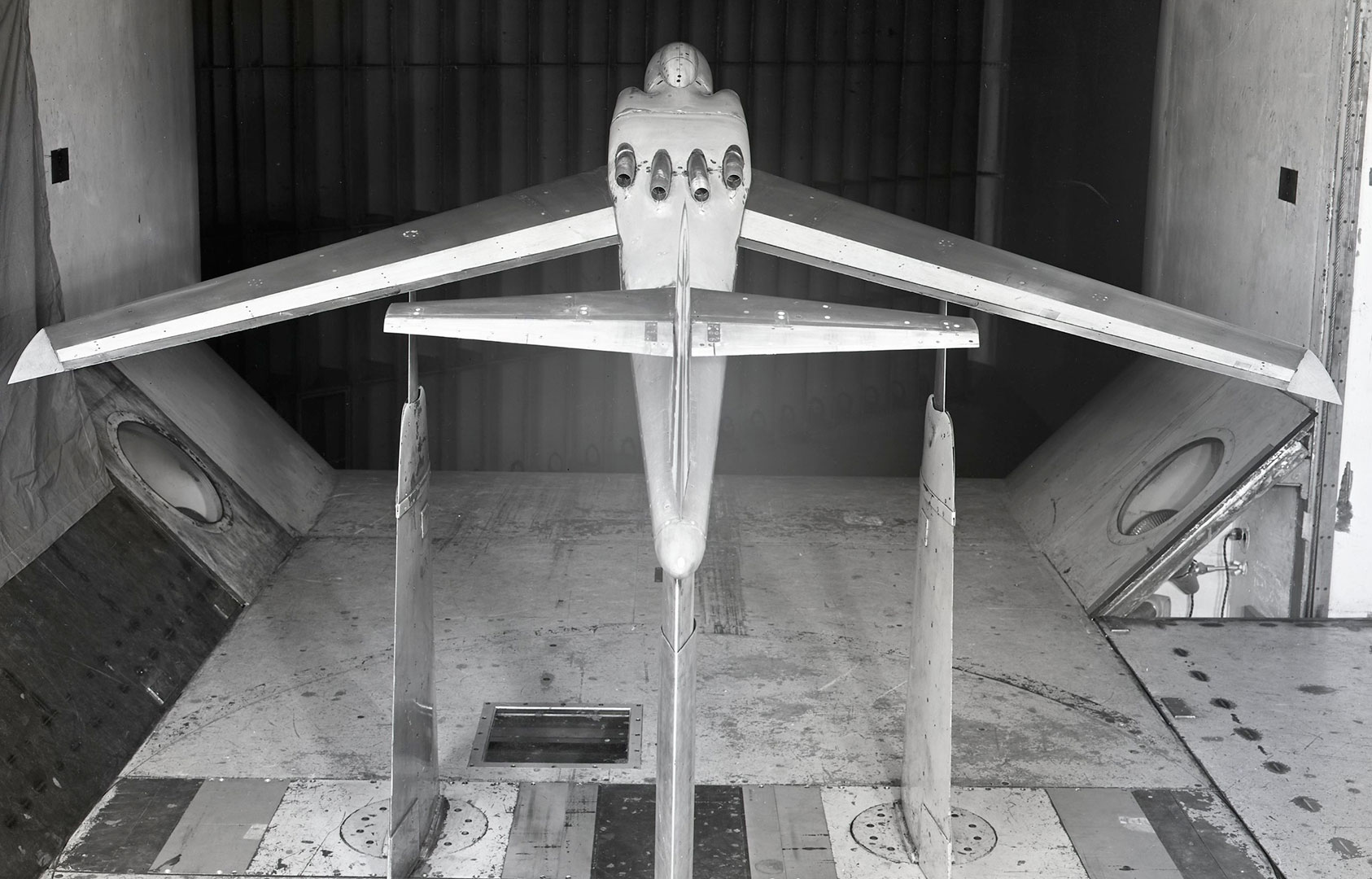
The group discovered swept wing designs in these Nazi files. Boeing engineers found dramatic results during wind tunnel tests of Schairer’s swept wing data. They also discovered that the wings had to remain clean to achieve high-speed benefits. Since the standard design for multiengine airplanes was to mount the engines on the wings, this was a problem. 

A black-and-white photo of an aircraft model or test article mounted in a wind tunnel, shown head-on with swept wings and support stands beneath it. Early B-47 wind tunnel model

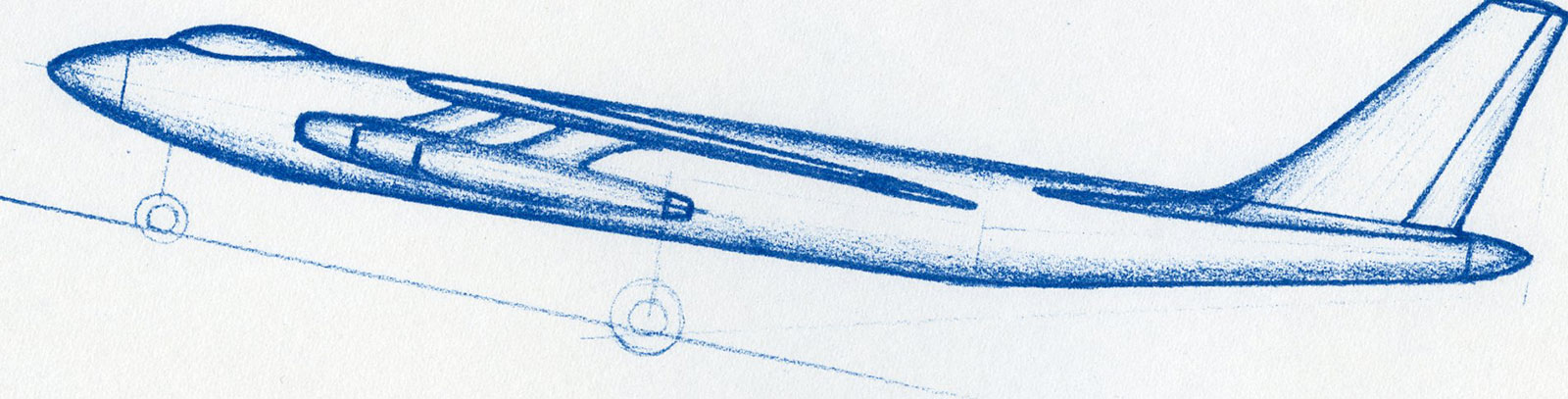
The first solution was mounting the engines in the fuselage, but that idea was rejected due to the danger of engine fire. The moment of discovery came to Boeing’s chief engineer Ed Wells. As he puzzled over the problem during a train ride back from Wright Field, Wells came up with the idea of engine pods that would be mounted off of the wings as shown in his sketch below.

A blue pencil sketch of a streamlined airplane concept with swept wings and a tail fin, shown in side view with landing gear indicated. Ed Wells’ sketch

The concept was tested in the Boeing wind tunnel by mounting model engine nacelles on the end of a pole (called the “broomstick” test) and moving them around the wing until the optimal position was discovered – forward and below the wing.

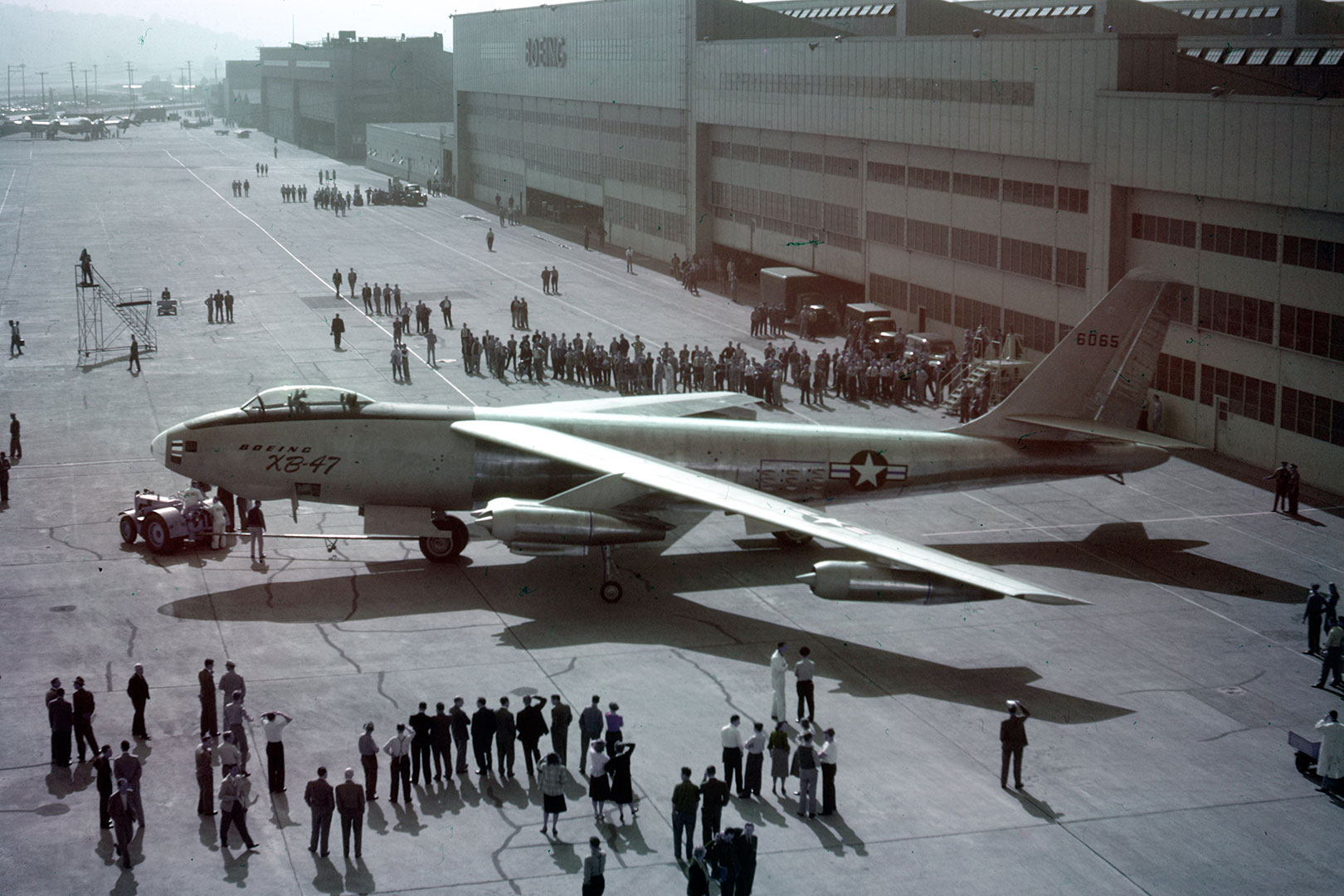
These discoveries came together in the Boeing wind tunnel as the optimal design for a subsonic jet and resulted in the revolutionary XB-47 that rolled out of Boeing Plant 2 on Sept. 12, 1947, just two years after Schairer sent his note from Germany.

A color photo of a B-47 parked on an apron outside a hangar, surrounded by crowds of people and ground support equipment. XB-47 rollout

When the B-47 was introduced, the U.S. Air Force called it revolutionary. Seventy-five years later, the Stratojet has proven that it was indeed a revolution in airplane design. Boeing engineers invented the basic pattern and arguably the optimal design for a subsonic jet that has been followed ever since in the jets built by Douglas, Boeing and Airbus – a formidable legacy that entitles the B-47 Stratojet to be one of the most important airplanes in aviation history.

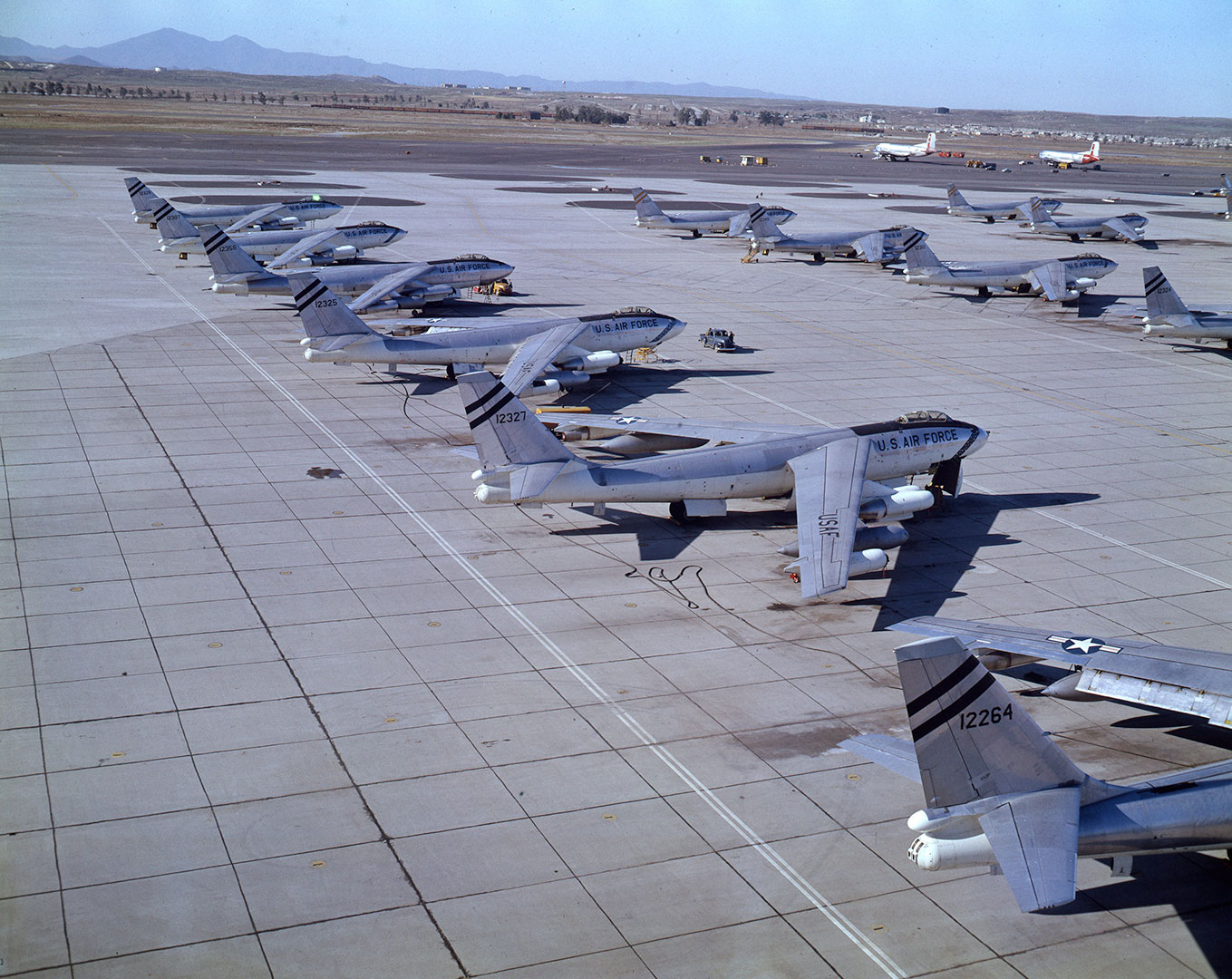
A color photo of several U.S. Air Force B-47 aircraft parked in rows on a large flight line, viewed from an elevated angle with mountains in the distance. Line of parked B-47s

At the peak of its service in 1958, the Air Force had 1,357 B-47s in 28 bomb wings and four more reconnaissance wings with 175 RB-47s.

A Boeing logo graphic showing a top-view outline of an airplane on the left and the word “BOEING” in bold letters on the right.

Outside of its military service, the B-47 has had a lasting impact on Boeing’s brand. In 1947, the same year the B-47 first flew, Boeing adopted a new logo. The angle of the Stratojet’s wing sweep influenced a typeface for Boeing that remains in use today. This Stratotype typeface has a distinctive Jet Age look with its squared-off letters and forward tilt.

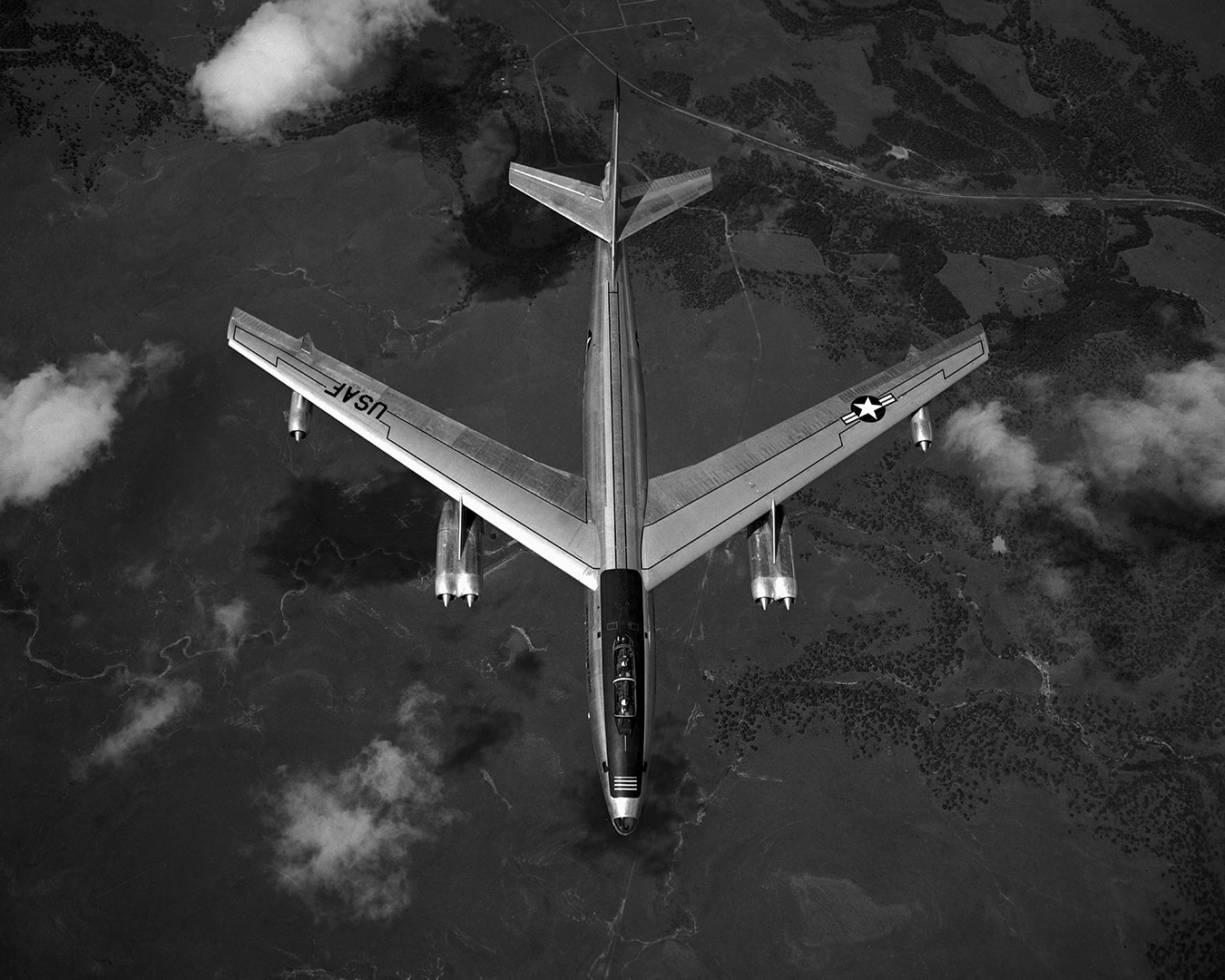
A black-and-white aerial photo of a B-47 flying over the landscape, seen from above with clouds scattered around it. B-47 Stratojet in flight

One of the final and more unique versions of the B-47 was the electronic reconnaissance aircraft designated RB-47H. In addition to the normal crew of three, the airplane carried a pod in its bomb bay with barely enough room for three electronic warfare officers, nicknamed “crows,” and their equipment.

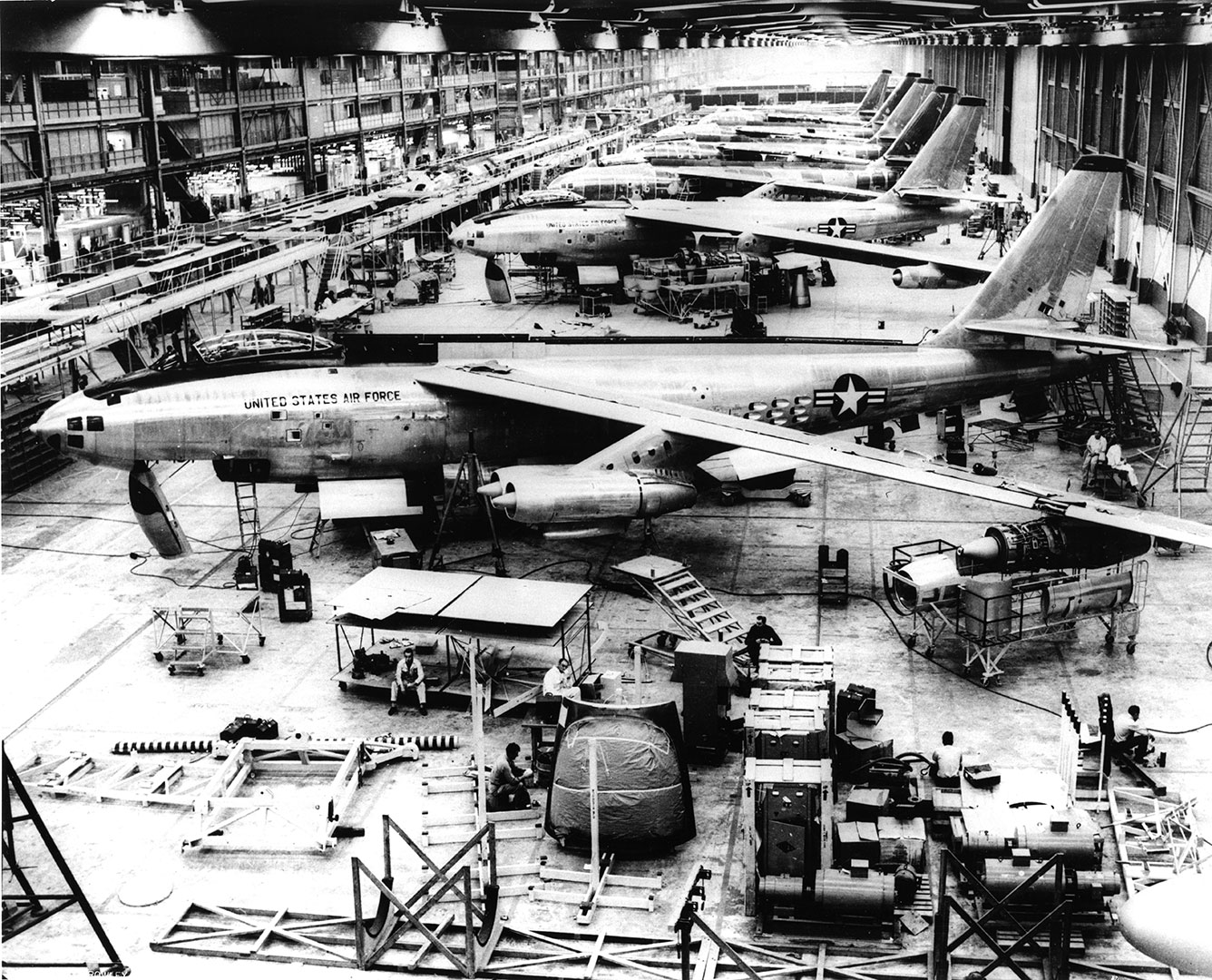
A black-and-white photo of a large aircraft assembly hangar with several B-47 U.S. Air Force bombers under construction, surrounded by workers, equipment, and parts. The B-47 line at Douglas Aircraft, Tulsa Feb. 23, 1953

In addition to the two XB-47s built in Seattle, 2,030 production versions of the B-47 were built, including 1,371 at Boeing Wichita, 385 by Lockheed and 274 by Douglas at the Tulsa plant pictured above. Production ended in 1957.

Learn more about wind tunnel innovation.