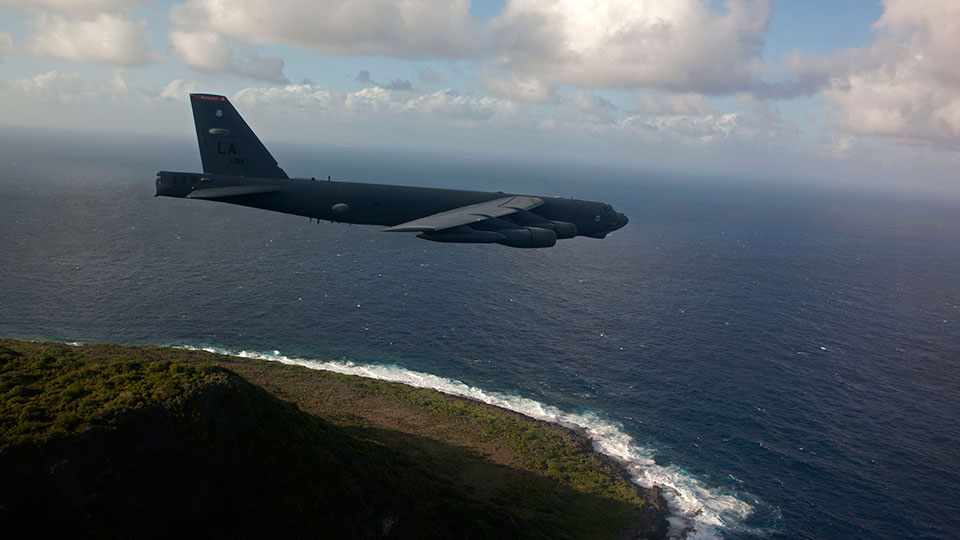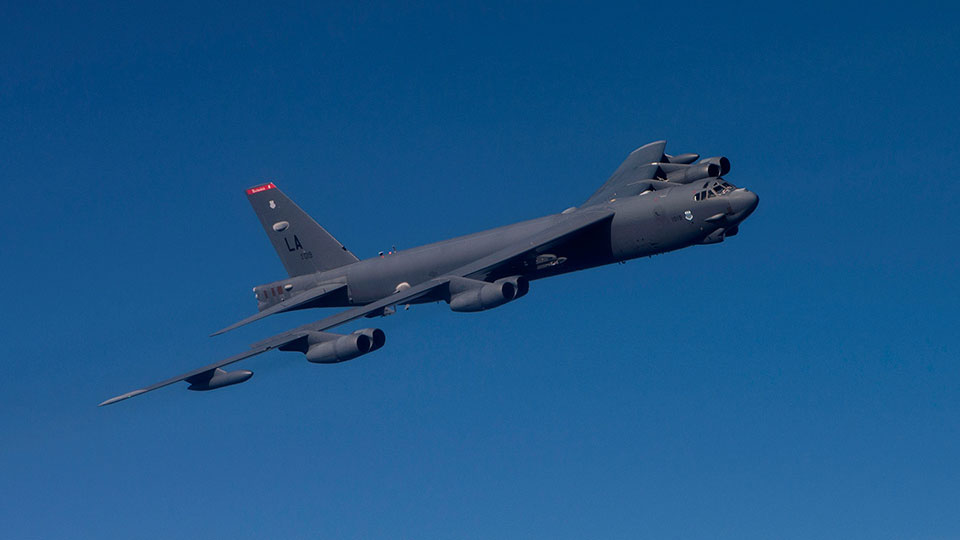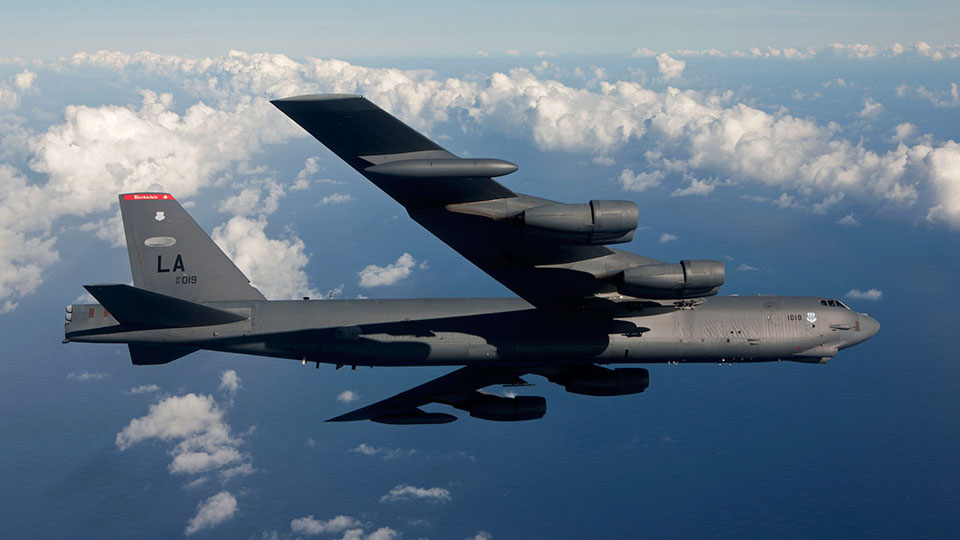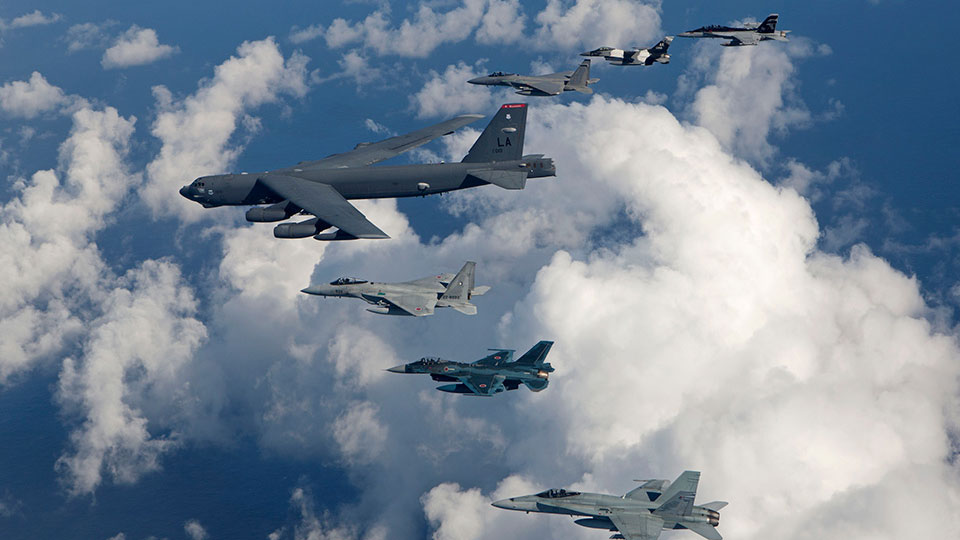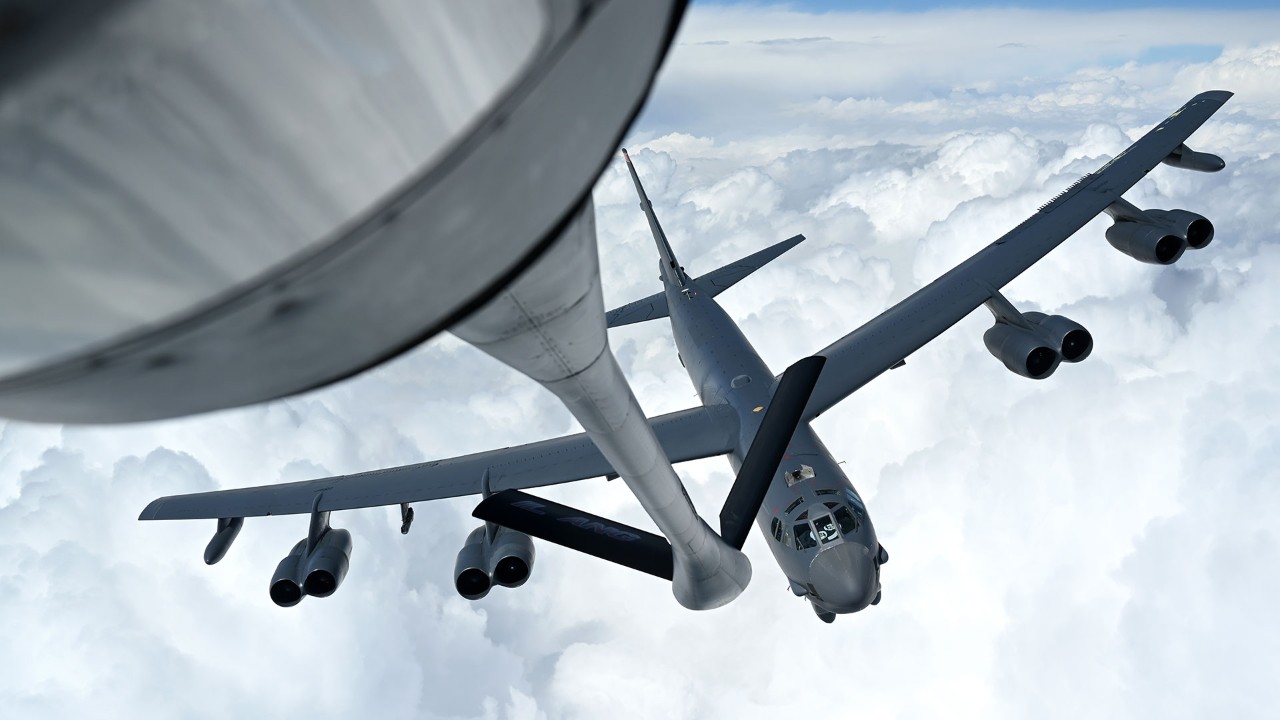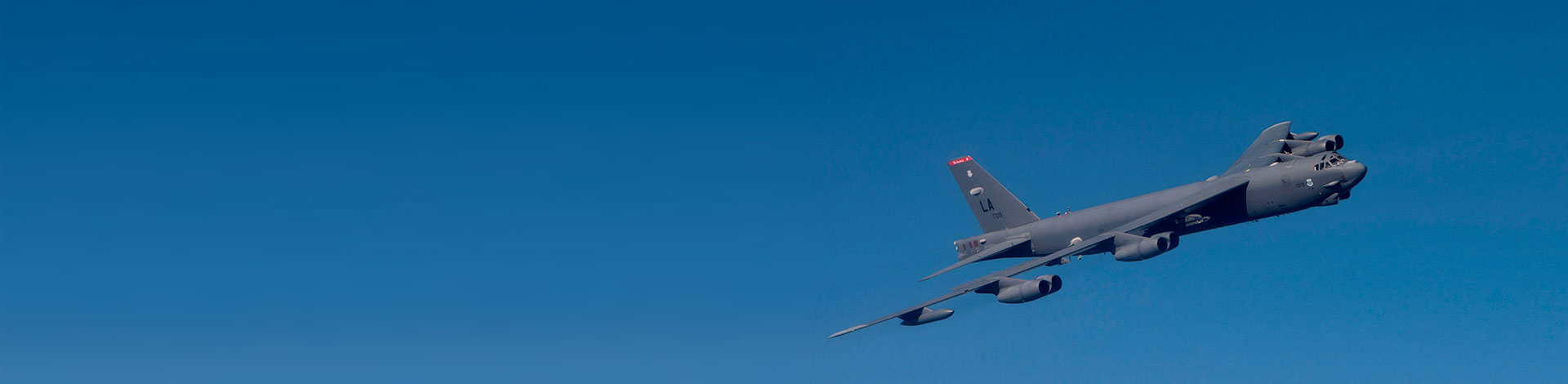

The Boeing B-52 provides the United States with immediate nuclear and conventional global strike capability. With a high missioncapable rate, large payload capacity, long range and persistence, and the ability to employ both nuclear and conventional precision standoff weapons, the B-52 remains a cornerstone of U.S. national security and strategic deterrence.
Serving the US for decades to come
Capabilities and Features
Performance
Enduring range, persistence and mission availability for global strike.
Long range and persistence
The B-52 projects power worldwide with long on-station time and aerial refueling for virtually unlimited reach.
High mission-capable rate and crewed operations
Proven fleet availability supports sustained operations and rapid response across theaters. Crewed by five mission personnel — aircraft commander, pilot, radar navigator, navigator and electronic warfare officer — the B-52 combines human mission management with modernized systems for effective, continuous operations.
Initial operating capability
May 1961 (current H model).
Payload
Large, flexible payload capacity for a wide range of weapons and mission sets.
Mass payload capacity
The B-52 can carry approximately 70,000 pounds (31,751 kilograms) of mixed ordnance, including bombs, smart weapons, mines and missiles.
Standoff weapons and decoys
Modified to deploy air-launched cruise missiles and Miniature Air Launched Decoys for extended-range strike options.
Modernization and Sustainment
Continued upgrades and sustainment extend relevance into the future.
Service life extension
Air Force engineering studies indicate the B-52 fleet can remain in service beyond 2040 with ongoing sustainment.
Design adaptability
Originally an intercontinental high-altitude bomber, the B-52 has been adapted over decades to meet evolving national defense needs.
Operational heritage
Boeing built 744 aircraft through 1962; the B-52H remains assigned to Air Force Global Strike Command and continues to support critical missions.
Specifications
Power Plant | Eight Pratt & Whitney engines TF33-P-3/103 turbofan |
Thrust | Each engine up to 17,000 pounds (7,711 kilograms) |
Wingspan | 185 feet (56.4 meters) |
Length | 159 feet, 4 inches (48.6 meters) |
Height | 40 feet, 8 inches (12.4 meters) |
Weight | Approximately 185,000 pounds (83,915 kilograms) |
Max Takeoff Weight | 488,000 pounds (221,353 kilograms) |
Fuel Capacity | 312,197 pounds (141,610 kilograms) |
Payload | 70,000 pounds (31,751 kilograms) |
Speed | 650 mph (Mach 0.88) |
Range | 8,800 miles (7,647 nautical miles) |
Ceiling | 50,000 feet (15,240 meters) |

Milestones

Program Highlights