
Boeing’s Gunner Santana made “ice” that would be useless keeping beverages cool. But the tooling and equipment designer’s creations played a critical role in certification testing of the new 777-9.
“I’ve always wanted to play a part in the development of an airplane,” Santana said. “It’s not easy, but this is one of the coolest things I’ve ever done.”
Santana and a team of engineers designed and printed hundreds of the shapes in a variety of precise sizes, which were then affixed to the airplane’s surfaces to replicate the buildup of ice in flight for testing.
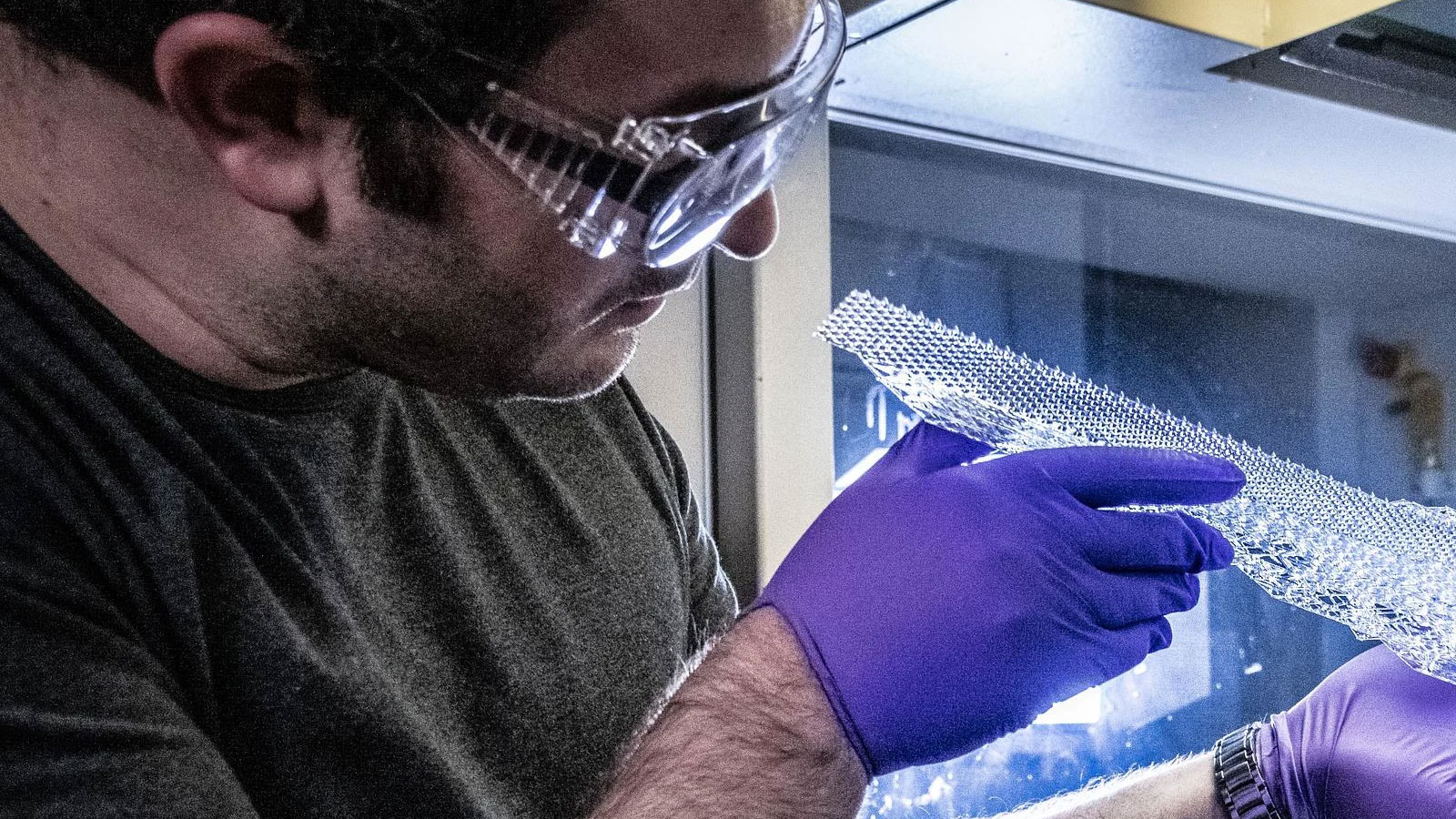 Engineer Gunner Santana inspects an ice shape in the Additive Manufacturing & Prototyping Lab. (Marian Lockhart photo)
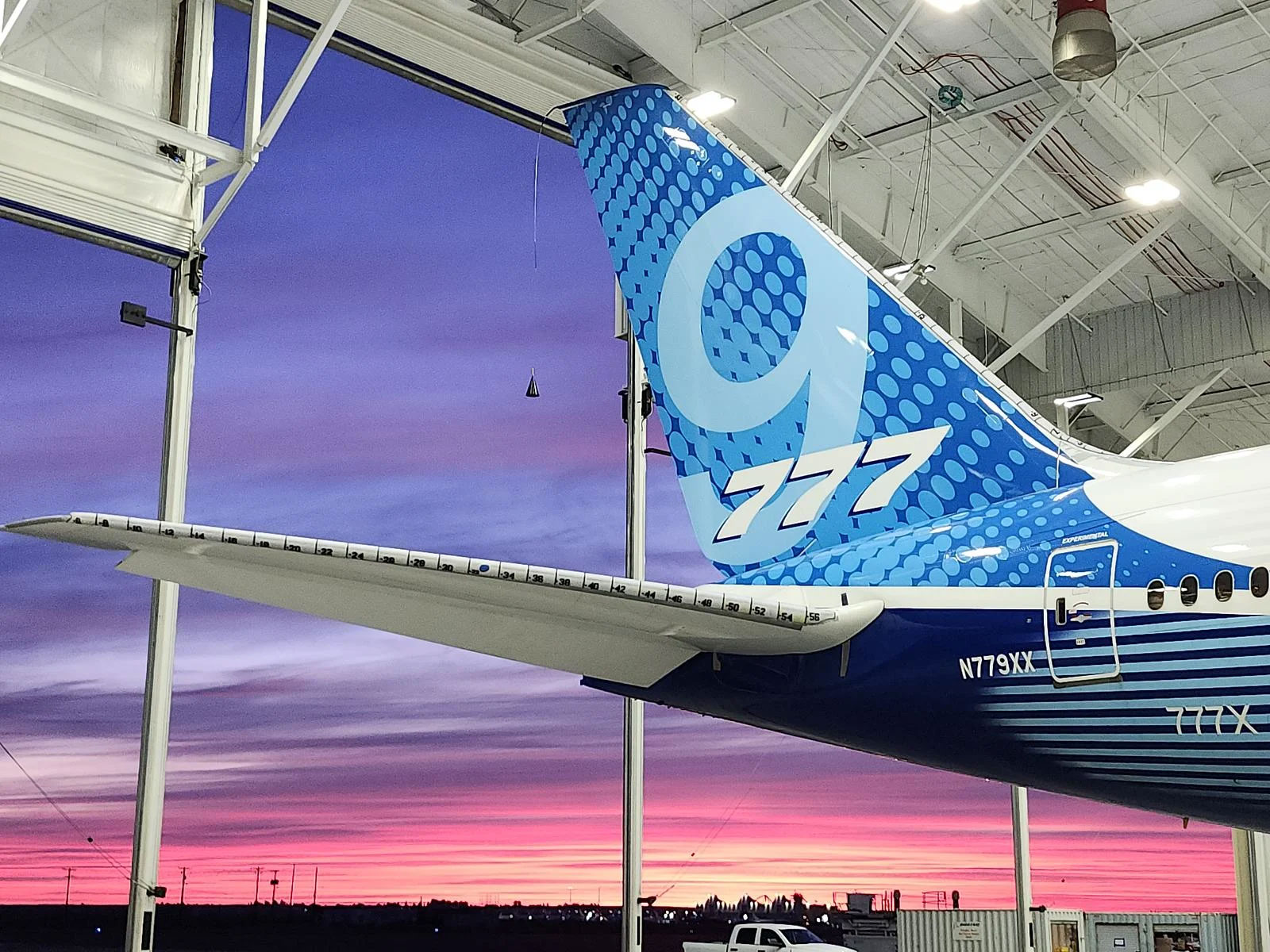 Hundreds of 3D-printed shapes simulate the buildup of ice on the 777-9 for certification testing out of Moses Lake, Washington. (Bill Westbrook photo)
What they tested: Engineering teams developed a total of 600 required shapes and designs, produced drawings, and oversaw their printing.
- “Regulations outline a variety of icing scenarios,” said Brad Hood, aerodynamics engineer. “We evaluate different phases of flight, speeds and weights to capture the most critical shapes for compliance.”
- Each shape varies in thickness and geometry, collectively simulating worse-case icing conditions an airplane may encounter during flight.
Once the designs are finished, they are handed off to Matt Goldor, Structures lead engineer, who worked with his team to create the digital datasets for production.
- “For this latest round of testing, we added more than 60 new shapes to our library of designs,” Goldor said.
The ice shapes are fabricated in a Boeing Test & Evaluation lab in Puget Sound.
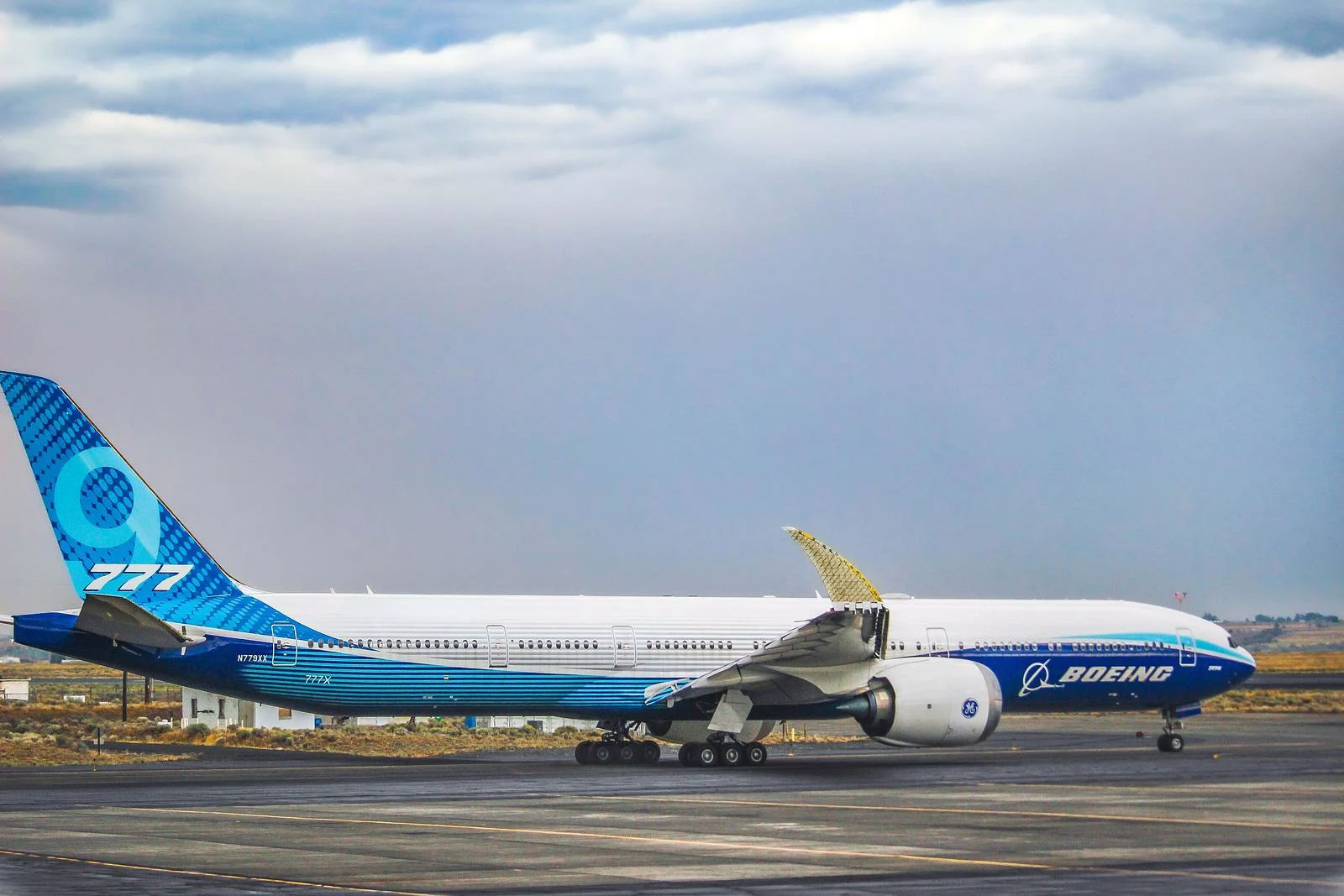 The 777-9 team completed the simulated ice shapes testing after an 85-day remote. (Bill Westbrook photo)
Testing, certification, delivery: The team has logged more than 1,600 flights and 4,500 flight-hours with the 777-9, conducting Boeing testing and certification testing with the U.S. Federal Aviation Administration to gather data required for certification. First delivery of the 777-9 is anticipated in 2027.
The bottom line: “Our teams had a great mindset to tackle challenges and unlock the work we needed to,” Hood said. “We learned some valuable ways to work together, and we’ll keep applying those going forward.”